About the author
Published December 8, 2025 · Last reviewed October 6, 2026 · 13 min read
In this article · 6 sections
- Why Thick Paper Is a Game Changer for Your Coloring Experience
- Decoding Paper Weight: What GSM Really Means for Your Art
- Pairing Your Tools With the Right Paper
- Discover the Ideal Canvas for Mindful Coloring
- Pro Tips for Preserving Your Coloring Book Masterpieces
- Got Questions About Thick Paper? We've Got Answers.
We’ve all been there. You pour hours into a beautiful, intricate design, getting lost in the flow of color, only to flip the page and find that your markers have bled right through, ruining the next masterpiece. It’s a gut-wrenching feeling for any colorist, and it proves one thing: your art supplies are only ever as good as the canvas you’re working on.
If you want to truly elevate your coloring sessions, choosing coloring books with thick paper is the single best decision you can make.
In short: the best coloring book paper is thick enough to prevent bleed-through, which usually means at least 120 gsm and ideally around 150 to 160 gsm. Heavier stock with a slightly toothy surface holds pigment well and lets you use markers, gel pens, and colored pencils on both sides without ghosting or damage.
Coloring books with thick paper use stock heavy enough to stop ink from bleeding through, usually at least 120 gsm and ideally around 150 to 160 gsm. GSM, grams per square meter, measures paper density: the 140 to 170 range resists alcohol and water-based markers and survives heavy pencil layering without pilling, tearing or ghosting onto the next page.
Why Thick Paper Is a Game Changer for Your Coloring Experience
Think about trying to paint a watercolor scene on a flimsy paper towel. It would instantly buckle, tear, and turn into a soggy mess, right? The same logic applies to coloring. The thin, almost transparent paper you find in most mass-market coloring books just wasn't built to handle the rich inks of alcohol markers or the firm pressure required for beautiful pencil blending.
This is where the magic of a hefty, high-quality paper comes into play.
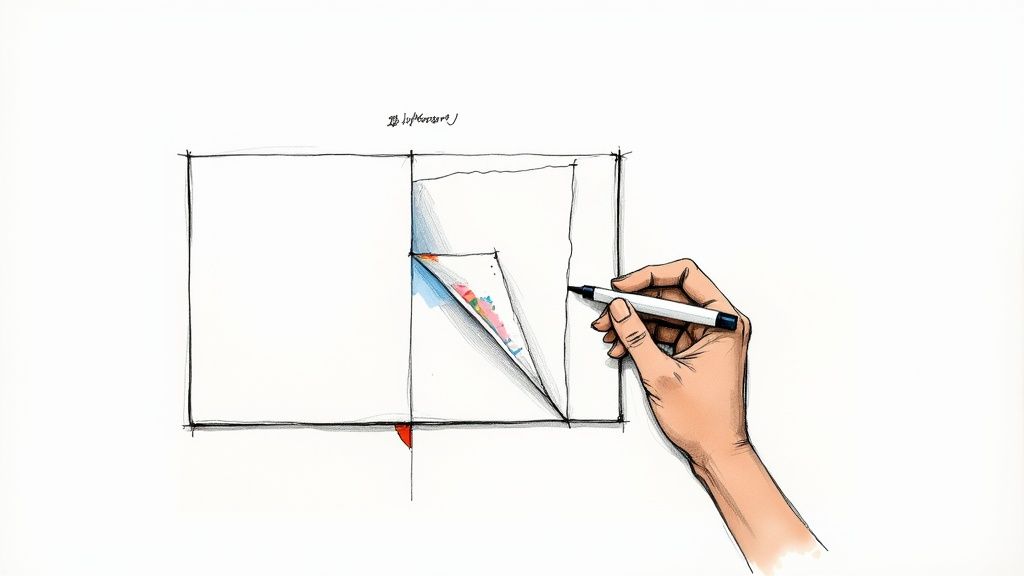
A dense, premium paper is more than just a page; it’s a proper foundation. It’s what turns coloring from a casual hobby into a deeply satisfying and immersive artistic practice, giving you the freedom to create without holding back.
The True Benefits of a Sturdy Page
When you finally make the switch to a coloring book with substantial paper weight, you’ll immediately notice a world of difference. Here’s what you unlock:
- Bleed-Through Becomes a Thing of the Past: Thick paper has a tight, dense fiber structure that acts as a barrier, stopping inks from seeping through to the other side. You can color with confidence, knowing the next page is safe.
- Layering and Blending Are Effortless: Ever tried to blend two marker colors or layer colored pencils for that rich, burnished look, only to have the paper start pilling and tearing? Thick paper can take the pressure, allowing for multiple layers without falling apart.
- A Superior Tactile Experience: There's something incredibly satisfying about the feel of a premium, smooth, and heavy page under your pen. It’s a joy to work on, providing a perfect surface that lets your tools glide smoothly.
The quality of your paper is the bedrock of a frustration-free coloring session. It's the difference between fighting your materials and flowing with your creativity.
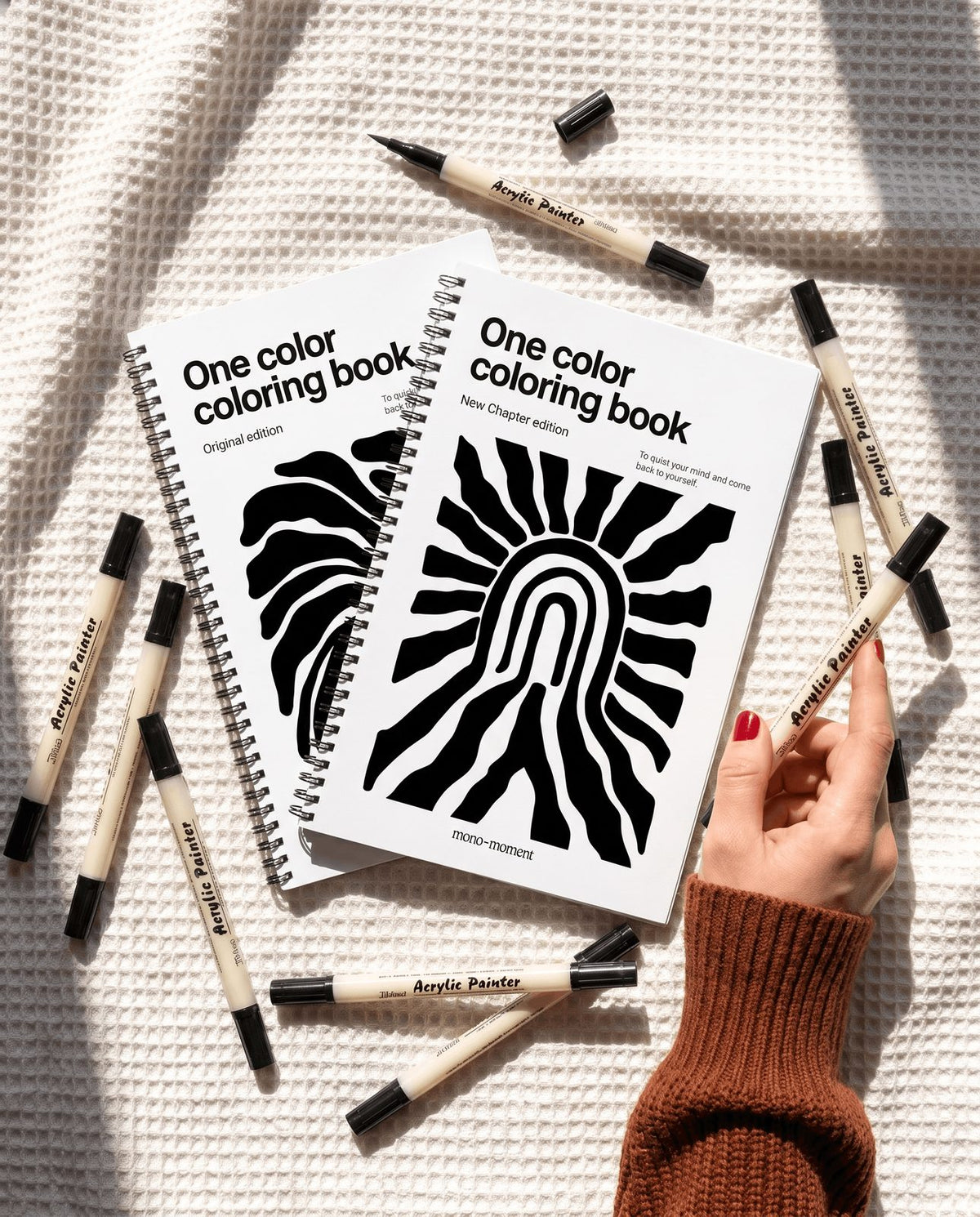
Ultimately, investing in a coloring book with thick paper means you can stop worrying about technical problems and start focusing on the art itself. It removes the barriers and lets you get completely lost in the moment. That’s precisely why premium options like the Mono Moment One Color Coloring Book were created—to ensure every single page is a perfect canvas for your mindful escape.
Decoding Paper Weight: What GSM Really Means for Your Art
When you're on the hunt for a great coloring book with thick paper, you'll keep bumping into one little acronym: GSM. It stands for Grams per Square Meter, and honestly, it’s the single most important clue to a paper’s quality and toughness. Don't let the technical name throw you off—the idea behind it is super simple.
Think of GSM like the thread count in high-end bedsheets. A higher thread count means the sheets feel richer, denser, and last longer. It’s the exact same story with paper. A higher GSM number means the paper is heavier, thicker, and a whole lot more forgiving. It’s a direct measure of its density.
Understanding the GSM Spectrum
To really get a feel for this, let's compare it to paper you already know:
- Standard Printer Paper (75-90 GSM): You know this stuff. It's the thin, flimsy paper in the office printer that can barely handle a highlighter without the ink showing through the other side.
- Decent Quality Letterhead (100-120 GSM): This paper has a bit more heft. It feels more professional in your hands but still isn't quite ready for a full-on artistic assault with markers or layered pencils.
- Premium Coloring Paper (120-200+ GSM): Now we're talking. This is the sweet spot for colorists. Paper in this range feels more like a light cardstock, giving you a sturdy, reliable canvas that practically begs for markers and heavy pencil blending.
When you pick up a book with 160 GSM paper, you feel the difference instantly. Each page has a satisfying weight and a smooth, durable surface that’s just a joy to work on. It’s a sign of real quality before you even lay down your first color.
Here’s a quick guide to help you visualize how different paper weights stack up and what they’re good for.
Paper Weight (GSM) Guide for Colorists
| GSM Range | Common Use | Best For | Bleed-Through Risk |
|---|---|---|---|
| 75-100 GSM | Office printers, notebooks | Dry media only (graphite, light-colored pencils) | High. Markers and pens will almost certainly bleed through. |
| 100-130 GSM | Brochures, better kids' coloring books | Colored pencils, gel pens, some fine-liners (with a light touch). | Moderate. Heavy marker use or layering will likely cause bleeding. |
| 140-170 GSM | Quality art journals, premium coloring books | Alcohol markers, water-based markers, heavy pencil blending. | Low. Excellent resistance, but very heavy saturation might show a faint ghosting. |
| 180-250+ GSM | Cardstock, watercolor paper, artist-grade prints | All media, including light watercolor washes and paint pens. | Very Low to None. Built to handle almost anything you throw at it. |
As you can see, hitting that 140-170 GSM range is where you get the perfect balance of durability and feel for a fantastic coloring experience.
Why a Higher GSM is a Game-Changer for Serious Colorists
The real-world benefits of high GSM paper are what truly separate a premium coloring book from a frustrating one. That higher number directly translates to a better time coloring because it solves the most common headaches right out of the gate. A dense paper structure physically stops ink from soaking straight through, which is why bleed-through is practically a non-issue on pages rated 160 GSM or higher.
This sturdiness also means the paper can take a beating. Love blending your colored pencils until they look like smooth, creamy paint? Thicker paper won't tear or start pilling up with little fuzzballs. Want to layer three different marker colors to get that perfect shade of sunset orange? A high-GSM page won't get oversaturated and start to fall apart.
A paper’s GSM is its promise to you, the artist. It promises that your creativity won’t be held back by bleed-through, pilling, or warping, letting you just focus on creating without fear.
Of course, making something this good costs more. The adult coloring book market is a tough business, and a big reason is that premium paper is expensive. Quality books use paper ranging from 120 to 200 GSM to prevent ink bleed, and choosing this superior material can hike up production costs by 20-50% compared to standard paper. You can dig deeper into these market realities in this detailed industry analysis. That’s why investing in a book with proven thick paper is so worth it—you're getting a product engineered from the ground up for a frustration-free, truly creative experience.
Pairing Your Tools With the Right Paper
Finding the perfect coloring book isn't just about the illustrations. It’s about creating a successful partnership between your favorite art supplies and the paper they’ll live on. Get it right, and you're in for a smooth, joyful experience. Get it wrong, and you’ll face frustrating bleed-through and ruined pages.
Let's make sure your next coloring session is a masterpiece, not a mess.
The tools you love to use are the single biggest factor in choosing your paper. Different media place unique demands on the page—water-based markers behave differently than alcohol-based ones, and colored pencils need a surface that can take some serious pressure.
The Best Paper for Markers
Alcohol markers are a colorist's dream for blending, but their solvent base is notoriously aggressive. It’s designed to saturate paper fibers to create those seamless gradients, which means it will slice right through thin paper and bleed onto the next page.
For these tools, you absolutely need coloring books with thick paper. Look for a weight of 160 GSM or higher. This density acts as a strong barrier, stopping the ink in its tracks and protecting the design on the other side.
Water-based markers and gel pens are a bit more forgiving. Their ink tends to sit on top of the paper, so you can often get away with a mid-range paper around 120-140 GSM. Still, if you want to layer colors with total confidence, a thicker page is always the safer and more satisfying choice.
This quick guide cuts right to the chase.
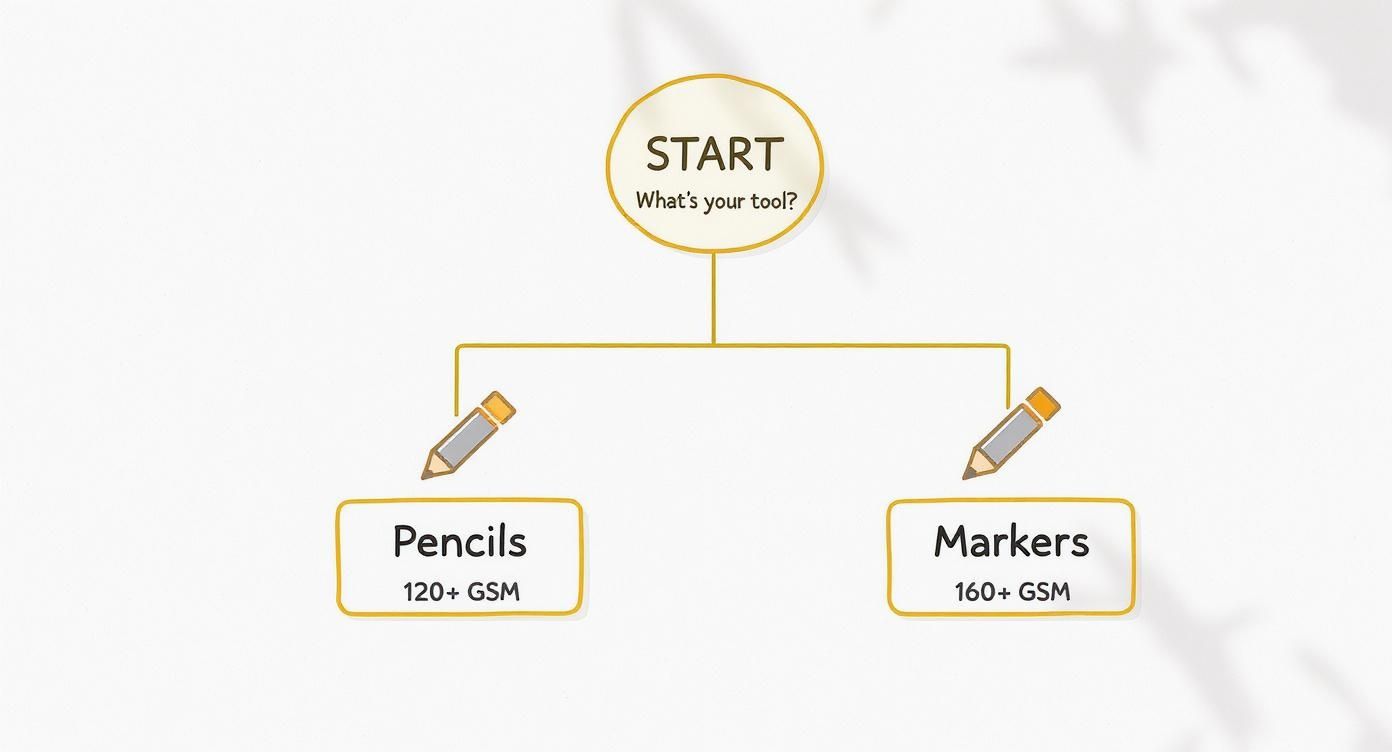
The takeaway is simple: Pencils are flexible, but markers demand a thick, durable canvas to prevent bleeding.
Why Pencils Also Love Thick Paper
You might think any old paper will do for colored pencils, and while that's technically true, they truly come alive on a more substantial page.
Advanced techniques like burnishing—where you apply heavy pressure to blend colors into a smooth, waxy finish—can easily tear or warp flimsy paper. A robust paper with a bit of texture (or "tooth") actually grips the pigment, allowing you to lay down richer, more vibrant colors with less effort.
This isn't just an artist's preference; it's a market reality. As adult coloring exploded in popularity between 2015 and 2024, people quickly learned they needed better paper for their new tools. By 2018, coloring books with thick, high-quality paper were outselling their thinner counterparts by an estimated 3-to-1 ratio in the US. The reason? Everyone wanted to use their fancy new markers and gel pens without ruining their books.
When your paper can handle any tool you throw at it, your creative freedom expands. You're no longer limited by your canvas; you're empowered by it.
A well-chosen book supports every medium, from the lightest pencil stroke to the deepest marker blend. It’s why pairing a premium book with the right tools, like a versatile three-piece coloring pen set, creates such a harmonious and stress-free experience.
Paper is half the story. The binding is the other half: see my guide to spiral bound coloring books for adults.
Discover the Ideal Canvas for Mindful Coloring
All this technical talk about paper weight and art supplies really boils down to one simple, powerful idea: the right paper can completely transform coloring into a truly mindful and restorative practice.
When your canvas is built to handle your creativity, you can finally let go of the fear of making a mistake and just lose yourself in the moment. This is the entire philosophy behind the Mono Moment One Color Coloring Book.
We didn't just stumble upon thick paper; we engineered our entire book around it. Every single page is a premium 160 GSM, giving you a durable, reliable foundation for your art. We specifically chose this weight to solve the most common frustration for colorists—bleed-through—once and for all. It’s a canvas that gives you complete creative freedom.
Imagine gliding your favorite marker across a page that feels as smooth as silk. Picture yourself layering vibrant colors to get that perfect depth, feeling confident that the paper won’t buckle, pill, or tear under the pressure. That’s the experience we designed, letting you focus purely on the calming repetition of filling in shapes and lines.
A Real-World Case for Superior Paper
Investing in a high-quality coloring book isn't just about buying a product; it’s about investing in your peace of mind. The adult coloring book market, valued at approximately USD 1.2 billion in 2024, is built on this very principle. People are seeking out premium paper because it’s absolutely essential for a satisfying experience, allowing them to use the markers and gel pens they love without any issues. To see the numbers yourself, you can read the full research on the adult coloring book market.
This dedication to quality elevates the entire process from a simple hobby into a legitimate self-care ritual.
When your tools work with you, not against you, the path to a calm, focused mind becomes clear. You stop managing the materials and start experiencing the moment.
The Mono Moment coloring book is the practical application of everything we've talked about. It's a tangible solution built to eliminate friction and maximize the therapeutic benefits of coloring. That 160 GSM paper is your permission slip to experiment, to blend, and to simply create without worry.
For those who enjoy a different kind of artistic challenge, thick paper also provides an excellent base for other techniques. You can explore how paper quality impacts various styles in our guide on how to approach grayscale coloring books, where a sturdy page is just as crucial for achieving beautiful results.
Ultimately, the right canvas makes all the difference.
Pro Tips for Preserving Your Coloring Book Masterpieces
Choosing coloring books with thick paper is a great start, but protecting that investment is how you make sure your art stays vibrant for years. A few simple habits can make a huge difference, protecting both the pages you’ve finished and the blank ones just waiting for a splash of color.
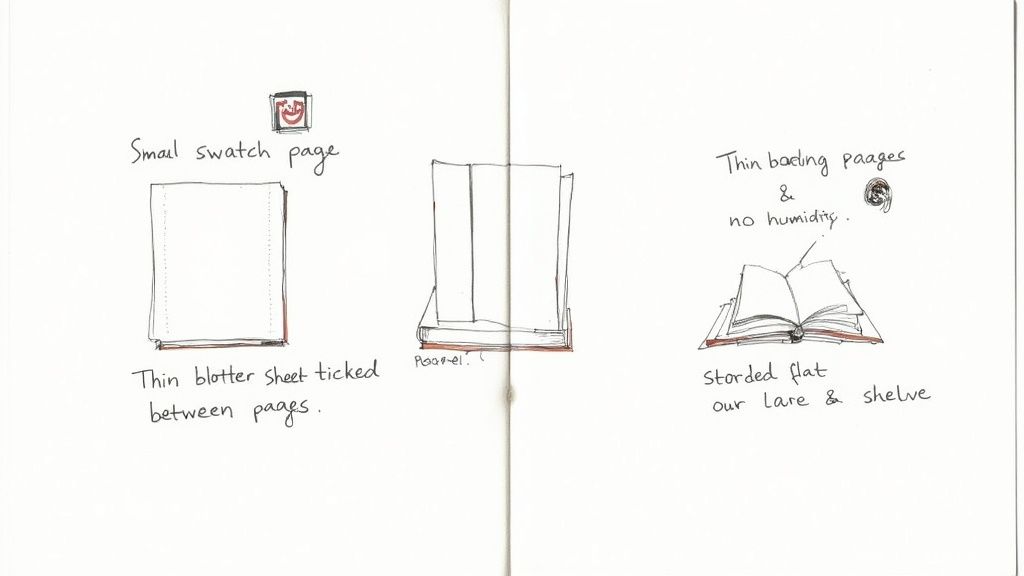
One of the best things you can do? Dedicate a "swatch page" at the back of your book. Before you dive into a new piece, test your markers, pens, and color combos on that last page. It’s a tiny step that saves you from the horror of an unexpectedly aggressive ink ruining a design you’ve poured hours into.
Proper Care and Storage
Believe it or not, how you store your coloring book matters just as much as how you use it. Get this right, and you can prevent warping, fading, and other accidental damage that can take the fun out of it.
- Store It Flat: This is a big one. Always lay your coloring books flat. Standing them up on a bookshelf might look tidy, but over time it can cause the pages and spine to bend and warp.
- Keep It Dry: Paper and humidity are sworn enemies. Find a cool, dry spot away from direct sunlight to keep your books. This simple move prevents the pages from getting wavy or brittle.
A simple piece of blotter paper placed between the page you're coloring and the one underneath is your ultimate insurance policy. Even with the best paper, this extra layer provides total peace of mind against highly saturated inks.
Using a Blotter Sheet
Even though 160 GSM paper offers fantastic protection, a blotter sheet is that little pro-level trick for absolute, guaranteed confidence. Just find a loose piece of thick paper or thin cardstock and slide it behind the page you're working on.
Think of it as the final line of defense, catching any ink that might push through if you’re laying down a lot of color. It's an easy, zero-cost habit that ensures the next page in your book stays perfectly clean and ready for you.
Got Questions About Thick Paper? We've Got Answers.
Stepping into the world of different paper weights and art supplies can feel a little overwhelming at first. To clear things up, let's tackle some of the most common questions people have about thick-paper coloring books. Think of this as your personal cheat sheet for making the perfect choice.
Is 120 GSM Paper Really Thick Enough for Markers?
For a lot of folks using standard water-based markers or gel pens, 120 GSM paper is a pretty decent starting point. It'll hold its own against lighter touches and prevent most minor bleed-through.
But let's be honest—if you're a fan of alcohol markers like Copics or even a trusty Sharpie, you need more muscle. Pushing up to 160 GSM or higher is where the magic happens, giving you a near-guaranteed barrier against ink bleeding through to the other side. Pro-tip: even with the best paper, slipping a blotter page underneath is never a bad idea.
What’s the Big Deal with Thick Paper and Colored Pencils?
Oh, this is where it gets good. For anyone who loves colored pencils, thick paper is a total game-changer. It's tough enough to handle the serious pressure you need for advanced techniques like layering colors and burnishing them to a smooth, painterly finish. Thinner paper would just buckle or tear.
The secret is the paper's "tooth"—that subtle texture you can feel on the surface. Thicker, high-quality paper has just the right amount of tooth to grab the pigment from your pencil, letting you lay down rich, vibrant color with less effort.
Okay, But Why Do These Coloring Books Cost More?
It really just boils down to the quality of the ingredients. Making thick, smooth, and acid-free paper is a much more involved and expensive process than churning out standard, flimsy printer paper.
But for anyone who colors regularly, the slightly higher price is an investment that pays off big time. You're not just buying paper; you're buying peace of mind. No more frustration over ruined artwork, no more worrying about damaging the page underneath, and the freedom to use whatever medium you're in the mood for. It’s about making sure every single coloring session is a joy, not a gamble.
What makes coloring book paper good?
Good coloring book paper is thick enough to stop ink from bleeding or ghosting to the other side, with a smooth but slightly toothy surface that grips pigment. Weight, measured in gsm, matters most. Heavier stock lets you use markers, gel pens, and pencils without worrying about ruining the page underneath.
What gsm is best for a coloring book?
For markers and mixed media, aim for at least 120 gsm, and 150 gsm or more is better if you want zero bleed-through. Around 160 gsm handles almost any pen or pencil with confidence. Lighter 90 to 100 gsm paper is fine for pencils only but tends to bleed with wet inks.
Ready to feel the difference for yourself? The Mono Moment One Color Coloring Book was designed with this exact experience in mind. Its 160gsm paper provides the perfect, worry-free canvas to calm your mind and handle any creative tool you throw at it.

The One Color Coloring Book
A single-pen, decision-free coloring book on 160 gsm cream paper — engineered for the wind-down ritual described above.
 Pair it with the 3 Dual Tip Brush Pens — $5 instead of $9.95 in the Book + Pens bundle.