About the author
Published December 13, 2025 · Last reviewed April 26, 2026 · 15 min read
In this article · 7 sections
Here's the secret: making time for self-care isn't about magically finding extra hours in the day. It’s about reclaiming the small, forgotten moments you already have. This is all about a mental shift—seeing self-care not as a luxury, but as the essential tool that fuels your focus and energy.
The "I Have No Time" Myth
Let's be real. The thought of cramming "self-care" into a to-do list that's already bursting at the seams feels absurd. When your day is a blur of work deadlines, family needs, and a mountain of chores, prioritizing yourself can feel like a distant dream. Our culture often puts busyness on a pedestal, which makes taking a moment to rest feel unproductive, or worse, selfish.
This creates a vicious cycle. The more overwhelmed you get, the more desperately you need to recharge, but the less time you feel you have to do it.
Shifting from Luxury to Necessity
The very first step is to completely dismantle the idea that self-care has to be some grand, time-consuming event. You don’t need an expensive spa day or a weekend getaway to reap the rewards.
Sustainable self-care is built from small, intentional actions woven right into the fabric of your day. It’s about understanding that taking ten minutes to reset isn't taking time away from your responsibilities; it’s investing in your ability to handle them without falling apart.
Self-care isn't selfish. It’s the essential maintenance required to show up as your best self—for your work, your family, and most importantly, for you.
Think of it this way: you wouldn't expect your car to run on an empty tank. These small moments are your fuel. They are the antidote to burnout, the key to better concentration, and the secret to lowering the stress that makes every single task feel ten times harder.
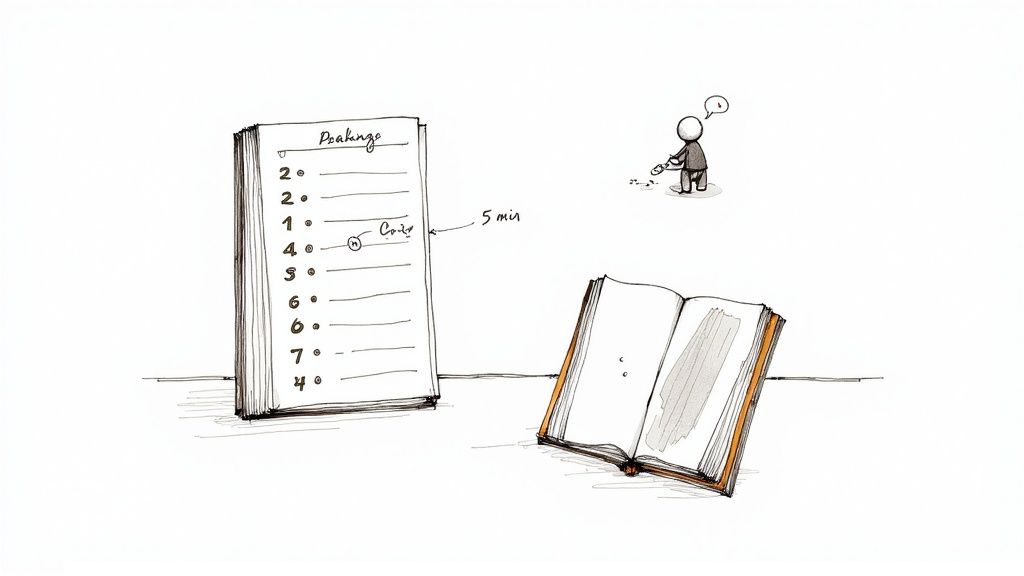
Start Small with Tangible Escapes
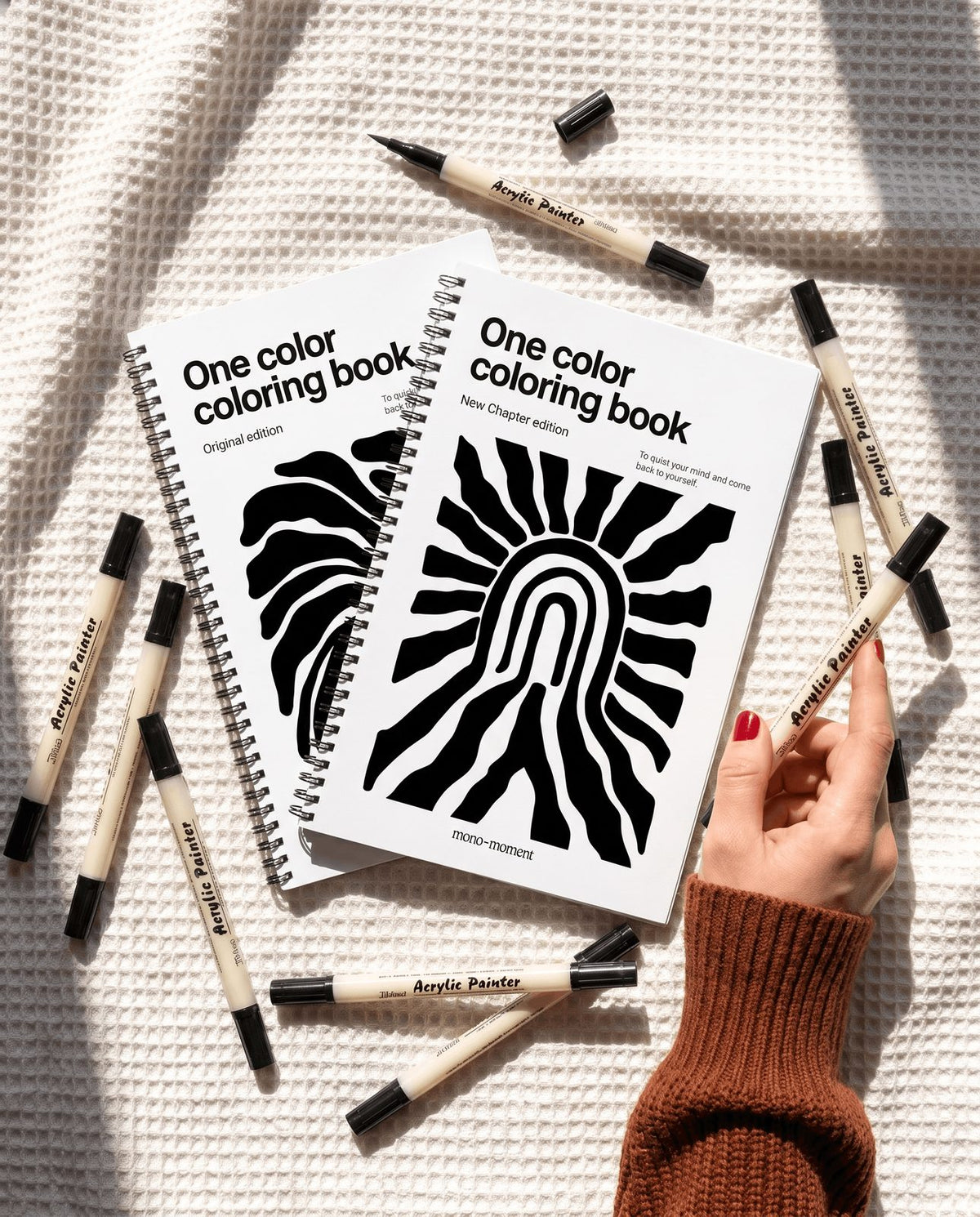
The next time you have a short break, resist the urge to grab your phone. Instead, try a simple, tangible escape. This is where tools designed for quick mental resets, like the Mono Moment monochrome coloring book, can be a game-changer. Just a few minutes with its elegant, decision-free designs can give your brain a surprisingly powerful break.
This simple act proves that meaningful self-care can fit into even the most packed schedules. The trick is to find little rituals that are:
- Accessible: Easy to start and stop without a ton of prep. A Mono Moment coloring book and a single pen are all you need.
- Engaging: Captures your attention just enough to quiet a racing mind.
- Restorative: Leaves you feeling calmer and more centered than you were before.
Consider this guide your official permission slip to start small and put yourself first, one reclaimed moment at a time. I promise you have the time—it's just hiding in plain sight.
Find Your Hidden Pockets of Time
If I asked you where all your time goes, you’d probably list the big-ticket items: the 8-hour workday, the commute, cooking dinner, getting the kids ready. But what about all the little gaps in between? The 5, 10, or 15-minute moments that just seem to... disappear?
That’s where your self-care opportunity is hiding. In plain sight.
The first step is to figure out where that time is actually going. The best way I’ve found to do this is with a quick "time audit." Don't let the name scare you; this isn't about micromanaging your life with complicated spreadsheets. It’s simply about awareness. For just two or three days, grab a notebook or use the notes app on your phone and jot down what you’re doing in rough 30-minute blocks.
No judgment, no pressure. You're just a detective gathering clues.
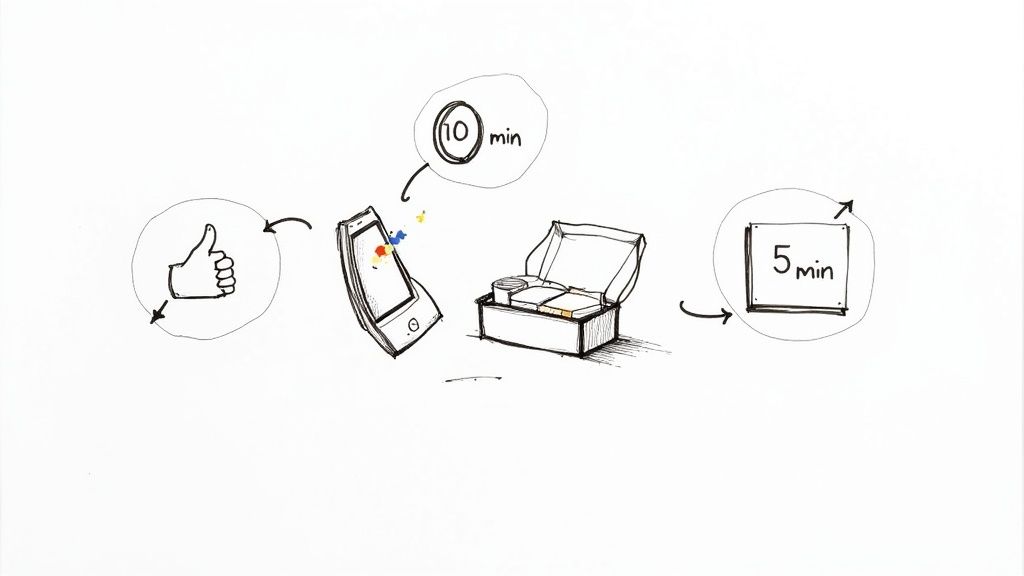
Where Is Your Time Really Going?
After a couple of days, you’ll start to see patterns. You'll spot the "time leaks"—those sneaky little habits that drain your minutes without giving you much back in terms of joy or energy. We all have them.
Here are a few common culprits I see all the time:
- The Social Media Black Hole: You pick up your phone to check one notification, and suddenly 25 minutes have vanished.
- Productivity Ping-Pong: Bouncing between your inbox, Slack messages, and that big report you're supposed to be writing. It feels busy, but it just fragments your focus.
- The Netflix Scroll of Death: Spending 15 minutes debating what to watch, only to end up too tired to watch anything at all.
This isn’t about shaming yourself or eliminating all downtime. It's about seeing where you can make a powerful swap. Realizing you lose 30 minutes to news headlines before bed means you’ve just found a perfect slot for something that will actually help you unwind.
While most of us want more self-care, there's a huge gap between wanting it and doing it. Global data shows that even with a growing interest in well-being, the time we actually spend on ourselves often falls short of what’s recommended. You can learn more about global self-care trends and see just how common this struggle is. The trick is to close that gap with practical, tiny changes.
Let's Look at a Real-World Example
I once worked with a client, Sarah, a project manager who was completely burned out. Her time audit revealed something she hadn't consciously noticed: she spent her entire 45-minute lunch break eating at her desk, mindlessly scrolling on her phone. She wasn't resting, and she wasn't working. It was dead time.
So, we made a simple plan. For the first 20 minutes of her break, she ate her lunch away from her computer. For the next 20, she pulled out a Mono Moment monochrome coloring book. The designs were simple and structured, so there was no pressure to be "creative"—it was just a quiet, tactile way to let her brain switch off.
By swapping 20 minutes of scrolling for a tangible, calming activity, Sarah not only reclaimed her lunch break but returned to her afternoon work feeling focused and genuinely refreshed.
The time audit gave her the insight she needed to make a conscious choice. She didn't have to magically invent an extra hour in her day. She just had to redirect the time that was already leaking away.
That’s the secret of how to make time for self care. It’s not about finding more time; it’s about reclaiming the time you already have, turning lost moments into restorative rituals.
Build Your Own Micro Self-Care Routine
Forget the fantasy of hour-long yoga classes or lavish weekend retreats. Let's be real—for most of us, that's just not happening. The secret to sustainable self-care isn't about grand gestures; it’s about thinking smaller. Much smaller.
We're talking about micro self-care routines. These are the brief, potent moments you can intentionally weave into the natural gaps of your day. The magic isn’t in how long they take, but in how consistently you do them. Think of it as making small, daily deposits into your well-being account. Over time, those deposits compound, calming your nervous system and refilling your tank one tiny moment at a time.
The goal is to make self-care so ridiculously accessible that it becomes a reflex, not another dreaded item on your to-do list.

Find Your Go-To Mindful Escape
If you’re an overthinker or constantly juggling a dozen professional priorities, the best micro-routines are the ones that demand absolutely zero mental gymnastics. This is where a tool like the Mono Moment monochrome coloring book becomes a game-changer. Its simple, structured patterns offer a real escape from a mind that won’t shut up, without the pressure of a complex project.
There are no colors to agonize over, no artistic talent required. You just grab a pen and let the clean lines guide you into a state of quiet focus. I’ve found that even 10-15 minutes with it before bed can dramatically quiet the mental chatter, making it so much easier to drift off to sleep. It’s the perfect example of a powerful, decision-free ritual.
Remember, the goal of a micro-routine is progress, not perfection. A five-minute breathing exercise you actually do every day is infinitely more powerful than a spa day you never get around to scheduling.
Beyond coloring, what other simple, screen-free activities could you try? Could you commit to a five-minute walk around the block, leaving your phone behind? Or maybe just ten minutes listening to a favorite album with your eyes closed, no multitasking allowed. The key is to have accessible tools ready, like the mindfulness products available from Mono Moment, so you can easily turn a few spare minutes into a genuine reset.
Your 15-Minute Self-Care Menu
To help get you started, I've created a simple "menu" of ideas. The trick is to have a few go-to options ready so you can pick whatever fits your mood in the moment—no extra thinking required.
Find the perfect micro-routine to fit your mood and schedule. Mix and match these ideas throughout your week.
| Activity (5 Minutes) | Activity (10 Minutes) | Activity (15 Minutes) |
|---|---|---|
| Deep belly breathing at your desk | A mindful walk without your phone | Coloring a page in a monochrome coloring book |
| Stretching your neck, shoulders, and back | Tidying one small area, like your nightstand | Journaling about your day's wins and challenges |
| Stepping outside for a moment of fresh air | Listening to a guided meditation | Sipping a cup of herbal tea without distractions |
| Writing down three things you are grateful for | Doing a "brain dump" of all your thoughts onto paper | Reading a chapter of a book for pure enjoyment |
Think of this as your personal toolkit for those moments when you feel overwhelmed or just need a quick reset.
This shift toward bite-sized wellness isn't just a personal hack; it's a massive trend. Since 2020, we've seen a huge rise in people using wellness apps and telehealth for time-efficient self-care, from quick guided meditations to short workouts that can be squeezed into the busiest of schedules.
Building your own micro-routine is really about giving yourself permission to start small. Just pick one or two ideas from this list and see where you can fit them into your week. You’ll be surprised at the difference it makes.
Let's Talk About Guilt and the "Busy" Trap
So, what's really stopping you from taking time for yourself? Let’s be honest, it's probably not your calendar. The real culprit is that nagging voice of guilt, whispering that you should be doing something more "productive."
Our culture has turned "busy" into a badge of honor. We’ve been conditioned to believe that a jam-packed schedule means you’re important, that exhaustion is a sign of hard work. This mindset is the single biggest thief of your time and your peace.
The first step is to completely reframe what self-care actually is. It’s not selfish. It’s not an indulgence. It's the non-negotiable maintenance you need to function as a focused employee, a present partner, or a patient parent. Running on fumes doesn't make you a hero—it just makes you a prime candidate for burnout.
Tearing Down the "Busy is Better" Myth
You have to make a conscious decision to untie your self-worth from your to-do list. When you constantly push your own needs to the bottom of the pile, you're on a fast track to exhaustion and resentment.
Think of it this way: rest isn't laziness; it's a strategic investment in your ability to show up for your life.
True productivity isn't about cramming more into your day. It’s about having the clarity and energy to do things well. That 15-minute break to decompress? That’s not lost time. It’s the very thing that allows you to return to your work with a clear head, making you far more effective than if you’d just tried to power through.
Self-care isn't another task to check off. It's about creating the space to release pressure, quiet the noise, and recharge so you can actually be the person you want to be.
Practical Mindset Shifts and How to Say "No"
Putting this into practice means setting—and defending—your boundaries. This will likely feel uncomfortable at first, especially if you’re a natural people-pleaser. The secret is to be polite but firm, treating your scheduled self-care time like any other critical appointment.
Here are a few ways to protect your time without the guilt:
- When a last-minute request lands on your desk: "I appreciate you thinking of me, but I have another commitment right now. I'd be happy to take a look first thing tomorrow."
- When perfectionism tries to take over: Remind yourself that "done is better than perfect." This is especially true for self-care. A five-minute session with your monochrome coloring book is infinitely better than the perfect hour-long meditation you never get around to.
- When that familiar guilt starts creeping in: Acknowledge it, but don't let it drive. Simply tell yourself, "I am choosing to rest now so I can be my best self later."
These small shifts are where the real change happens. At Mono Moment, we create products specifically designed to make these shifts easier, providing tangible tools for your mental well-being. It all comes down to giving yourself permission to prioritize your own well-being—without needing an excuse or an apology.
Weaving Self-Care Into Your Workday
Let’s be honest, the line between your work life and your personal well-being has practically vanished. Instead of trying to cram self-care into the few precious hours after you finally log off, what if you wove it directly into your professional routine?
This isn't about slacking off. It’s about strategically recharging your batteries to stay sharp, focused, and keep burnout at bay. Your day is already full of little pockets of time you probably don't even notice—the key is to start treating them like can't-miss appointments.
Check Out Your Workplace Resources
The good news is, a lot of employers are finally getting the memo. The global wellness economy has exploded, and companies are expanding their benefits to help their people thrive. We're talking about everything from better mental health coverage to flexible schedules, all designed to give you more breathing room.
It’s worth digging into your company’s policies to see what’s on offer. You might be surprised at the support hiding in plain sight.
Don't wait for an invitation to take a break. A five-minute pause isn't a luxury; it's a critical tool that helps you come back to your work with a clearer, more effective mind.
Create Tiny, Restorative Workday Rituals
Bringing self-care into your workday is all about small, intentional actions. The goal is to break up those long stretches of intense focus with genuine moments of rest. It creates a rhythm that feels so much more sustainable.
These little breaks are your first line of defense against mounting stress. And if you want to get a handle on your body's physical stress response, our guide on how to reduce cortisol levels naturally is packed with practical tips.
Here are a few simple ideas I've seen work wonders:
- Schedule 5-Minute Screen Breaks: Seriously, put it on your calendar. Set a recurring alarm that tells you to get up, stretch, and look away from your screen. Use that time to grab some water or just stare out a window for a few minutes.
- Try a Walking Meeting: Have a one-on-one call that doesn’t require a screen? Take it on the go. A little fresh air and movement can do wonders for creativity and shake off that dreaded meeting fatigue.
- Actually Take Your Lunch Break: Step. Away. From. The. Desk. Even if it’s just for 15 minutes, make that time a true disconnect. This is the perfect slot for something analog, like getting lost in your monochrome coloring book. Its structured patterns are a fantastic way to quiet the analytical part of your brain, helping you return to your afternoon feeling genuinely refreshed and centered.
Your Actionable Self-Care Blueprint
Alright, enough with the theory. It's time to put these ideas into practice. This is where we shift from planning to doing, focusing on real progress, not some impossible ideal of perfection. The secret to finally making time for self-care is to start small—ridiculously small—with micro-routines that actually feel good, not like another chore on your to-do list.
I want you to make just one small commitment this week. That's it. One single, tiny action is all it takes to get the ball rolling and prove to your overthinking brain that this is actually doable. Forget about overhauling your entire schedule; we just need a place to start.
Your First Move
So, what does that first step look like? Let’s make it something tangible and, importantly, screen-free.
For example, you could commit to spending just ten minutes with a One Color Coloring Book before you even think about turning on the TV at night. The structured, simple designs are fantastic for quieting a racing mind because they offer a moment of pure focus without the pressure of a blank canvas. This is the core philosophy behind all Mono Moment products—making mindfulness accessible and stress-free.
The best self-care plan is the one you’ll actually stick with. A ten-minute routine you do consistently is infinitely more powerful than a perfect hour-long ritual you never find time for.
Even tiny pauses throughout your workday can add up. The infographic below breaks down a simple way to weave these moments into your 9-to-5, turning scattered minutes into intentional acts of self-care.
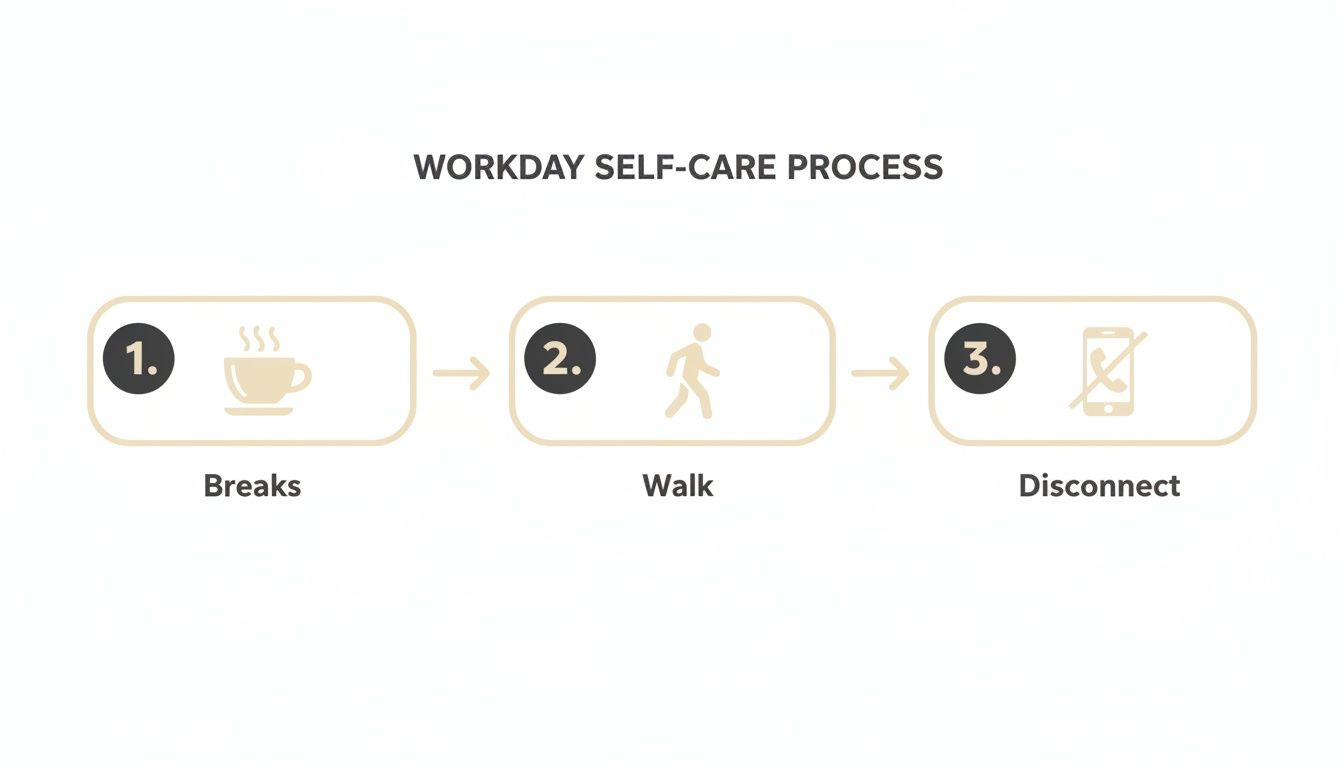
This isn't about finding huge, empty blocks of time. It's about seeing how quick breaks, a short walk, or intentionally disconnecting can make your day feel more sustainable and far less draining. Now you have a realistic plan to finally put yourself on the calendar.
Still Have Questions About Making Time for Self-Care?
Even with the best intentions, building a new self-care habit can feel a bit wobbly at first. Let's tackle some of the most common hurdles I see people face when they're just starting out.
“How Much Time Do I Really Need to Find?”
This is the big one, isn't it? The good news is, the answer is probably a lot less than you think. Forget about hour-long yoga sessions or weekend retreats for now.
We're starting small. Aim for just 5-10 minutes a day. Seriously, that's it. A short, daily ritual builds momentum and rewires your brain far more effectively than a rare, lengthy session ever could. Consistency is the name of the game.
“But I Feel So Guilty Taking Time for Myself…”
Ah, the guilt. It’s a powerful barrier, often rooted in the false belief that self-care is a selfish indulgence. It's time to flip that script.
Think of it as essential maintenance, like charging your phone. Taking 15 minutes to recharge isn't taking away from your responsibilities; it’s what enables you to show up as a more patient parent, a more engaged partner, and a more focused professional. You simply can't pour from an empty cup.
Self-care isn't a reward you get after the work is done. It's the fuel you need to do the work in the first place.
“What’s the ‘Best’ Self-Care Activity to Do?”
The best activity is the one you’ll actually look forward to doing. It’s that simple. There’s no single right answer, but for overthinkers and busy professionals, I've found that simple, screen-free rituals are a game-changer.
This is exactly why something like a monochrome coloring book can be so effective. It strips away the pressure of choice—no need to pick colors or decide what to create. It offers a structured, tangible way to quiet a racing mind without the intimidation of a blank page. It’s the perfect, low-stakes way to decompress.
Ready to reclaim your quiet moments? The Mono Moment monochrome coloring book is designed for busy minds seeking a simple, calming escape. Find your perfect moment of peace today at mono-moment.com.

The One Color Coloring Book
A single-pen, decision-free coloring book on 160 gsm cream paper — engineered for the wind-down ritual described above.
 Pair it with the 3 Dual Tip Brush Pens — $5 instead of $9.95 in the Book + Pens bundle.