About the author
Published December 10, 2025 · Last reviewed April 26, 2026 · 20 min read
In this article · 7 sections
Learning how to reduce cortisol levels naturally isn't about some complicated bio-hack. It's about making simple, yet powerful, shifts in your daily habits. It all boils down to a few key areas: managing your stress in the moment, getting serious about sleep, eating smart, and moving your body gently.
These aren't just separate tactics; they work together, creating a lifestyle that naturally soothes your body's stress response system.
What Is Cortisol and Why Does It Matter
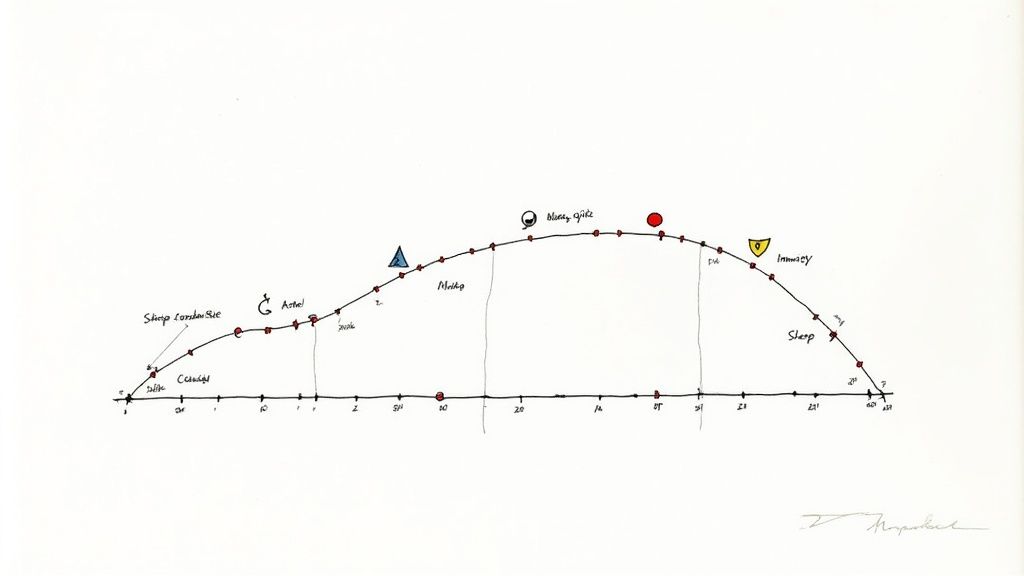
Cortisol gets a bad rap as the "stress hormone," but it's so much more than a simple alarm bell. Produced by your adrenal glands, it’s a crucial player in your body’s internal communication network, influencing everything from your daily energy to your immune defenses. Think of it as your body's built-in manager, helping you rise to the occasion when challenges pop up.
When you're up against a perceived threat—whether it's a looming work deadline or an unexpected traffic jam—your brain cues a cortisol release. That surge gives you a jolt of energy and sharpens your focus, gearing you up to handle whatever is in front of you. This is cortisol working for you, a brilliant survival mechanism honed over thousands of years. In a healthy cycle, once the stressor is gone, cortisol levels dip back down, and your body returns to its natural balance.
The Natural Rhythm of Cortisol
Your cortisol levels aren't supposed to be flat all day. They follow a predictable daily pattern, or diurnal rhythm. Levels are naturally at their peak in the morning, usually about 30-45 minutes after you wake up.
This morning spike is called the Cortisol Awakening Response (CAR), and it's what pulls you out of a sleepy state and makes you feel alert and ready to tackle the day. From that morning high, your cortisol should steadily decline, hitting its lowest point in the evening. This wind-down is essential for helping your body prepare for deep, restorative sleep. When this rhythm gets thrown off, that's when the trouble starts.
When Cortisol Becomes a Problem
The real issue isn't cortisol itself—it's chronically elevated cortisol. When stress becomes a constant companion from a high-pressure job, ongoing relationship troubles, or just a habit of worrying, your body stays stuck in that high-alert mode. The adrenal glands never get a break, and your system never receives the "all-clear" signal.
This constant overflow is what connects high cortisol to so many modern health problems. It’s not just a feeling of being "stressed out"; it's a physical state with very real consequences.
Chronic stress keeps your cortisol faucet stuck on, disrupting the natural hormonal rhythm that governs your energy, mood, and sleep. The goal isn't to eliminate cortisol, but to restore its intended, helpful cycle.
This prolonged exposure can lead to some familiar issues:
- Persistent Fatigue: That classic "wired but tired" feeling, especially if your cortisol is high at night when it should be at its lowest.
- Stubborn Weight Gain: High cortisol can rev up your appetite, making you crave sugary or fatty foods, and it specifically encourages fat storage around your midsection.
- Weakened Immune System: It can suppress your immune defenses, making you more likely to catch every cold that goes around.
- Sleep Disturbances: Trouble falling asleep or waking up in the middle of the night is a hallmark of elevated evening cortisol.
Grasping the difference between a helpful, short-term cortisol spike and a damaging, chronic elevation is the first step toward getting back in control. It's the "why" behind all the natural strategies we're about to cover, empowering you to manage your body’s stress response with real intention.
Natural Cortisol Reduction At a Glance
To help you get started, here's a quick look at the most effective, evidence-based strategies for bringing your cortisol back into balance.
| Strategy | Primary Mechanism | Best For |
|---|---|---|
| Mindful Breathing | Activates the parasympathetic (rest-and-digest) nervous system. | Immediate stress relief, calming anxiety in the moment. |
| Morning Sunlight | Helps set the body's natural circadian rhythm. | Regulating the Cortisol Awakening Response and improving sleep quality. |
| Strategic Exercise | Reduces cortisol post-workout, improves stress resilience over time. | Releasing physical tension, improving mood, and long-term regulation. |
| Magnesium-Rich Diet | Plays a key role in regulating neurotransmitters and the stress response. | Calming the nervous system, improving sleep, and reducing muscle tension. |
| Consistent Sleep Schedule | Aligns the body's internal clock with the natural light-dark cycle. | Anyone with sleep disturbances or daytime fatigue. |
| Adaptogenic Herbs | Helps the body adapt to and resist physical and mental stress. | Individuals with chronic stress, burnout, or persistent fatigue. |
Think of these as your core toolkit. Each one offers a different way to support your body's natural rhythm and build resilience against the pressures of modern life.
Your Emergency Brake for High Cortisol
We've all been there. The tense meeting, the unexpected bad news, that sinking feeling you're falling hopelessly behind. In moments like these, you don’t need a five-year plan; you need an emergency brake for stress, right now.
Think of these techniques as your immediate toolkit for pulling your body out of its fight-or-flight spiral. The goal is to flip the switch from high alert back to "rest and digest," telling your system that the immediate danger has passed. It’s a powerful way to manually dial down cortisol when you feel the storm brewing.
Breathe Your Way Back to Calm
Your breath is the fastest, most direct line you have to your nervous system. When you're stressed, your breathing gets shallow and quick, sending a panic signal straight to your brain. By consciously taking control of your breath, you can send a new, more powerful message: you are safe.
The most effective way to do this is with diaphragmatic breathing, or what most people call belly breathing. It's simple but profoundly effective.
- Get comfortable. Sit in a chair with your feet on the floor, or lie flat on your back.
- Place your hands. Put one hand on your upper chest and the other on your belly, right below your rib cage.
- Breathe into your belly. Inhale slowly through your nose for a count of four. You should feel your belly rise and push against your hand. Try to keep the hand on your chest relatively still.
- Pause. Hold the breath for just a second or two.
- Exhale long and slow. Breathe out slowly through your mouth for a count of six. Feel your belly fall as you gently release the air.
Do this for just three to five minutes. You'll be amazed at how quickly your body shifts from agitated to calm. This simple exercise is a direct command to your adrenal glands to back off the cortisol production.
When your mind is a frantic mess, your breath is your anchor. A slow, deep exhale is one of the quickest ways to signal safety to your brain and slam the brakes on the stress response.
Ground Yourself in the Here and Now
Anxiety loves to spin stories about the past ("I should have...") and the future ("What if...?"). Grounding techniques yank you out of that mental chaos and plant you firmly in the present moment by engaging your physical senses. They are unbelievably good at stopping a cortisol surge dead in its tracks.
The easiest one to remember is the 5-4-3-2-1 technique. No matter where you are, pause and quietly identify:
- 5 things you can see: Look around you. Name five distinct objects. Don't just list them; notice a detail about each one. My blue pen. The wood grain on my desk. A scuff mark on the wall.
- 4 things you can feel: Bring your awareness to physical sensations. The smooth, cool surface of my phone. The texture of my jeans against my skin. My feet feeling solid on the floor.
- 3 things you can hear: Listen closely. What sounds are in the background? The hum of my computer. A distant siren. The sound of my own breathing.
- 2 things you can smell: This one might take a moment. What scents are in the air? The faint aroma of old coffee. The soap on my hands.
- 1 thing you can taste: What is the last taste in your mouth? You can also take a sip of water to focus on a fresh taste.
This little exercise forces your brain to pivot from abstract worry to concrete sensory input. The stress loop simply can't compete. It’s a reset button you can press anywhere, anytime.
Get Absorbed in a Mindful Activity
Sometimes the best way to quiet the noise in your head is to give it something simple and absorbing to do. This isn't about distraction; it's about channeling that frantic energy into a gentle, focused task that induces a state of mindfulness.
Activities like monochrome coloring are perfect for this. When you take the pressure of choosing colors off the table, you can drop into a state of flow much faster. The simple, repetitive motion is incredibly soothing for the amygdala—your brain's fear center—and helps create a meditative calm. You can learn more about how mindfulness coloring books for adults are a fantastic tool for this kind of immediate self-care.
Music is another powerhouse. Certain kinds of music, particularly slow-tempo instrumental pieces or even nature sounds, have been shown to physically lower cortisol levels. Pop in your headphones, put on a calming playlist, and give yourself just 10-15 minutes. You’ll feel a real, tangible shift.
Building a Stress-Resilient Daily Routine
While quick-fix techniques are great for hitting the emergency brake on stress, real, lasting calm comes from building a life that isn't constantly flooring the cortisol accelerator. True cortisol control isn’t about a massive, painful overhaul. It's about weaving small, consistent habits into your day that act as anchors.
Think of your daily routine as your best line of defense. It creates a predictable rhythm that reassures your body on a primal level that it’s safe. This isn't about piling more onto your already-full plate. It’s about being smarter with the things you’re already doing—sleep, light, and movement—to support your body’s natural hormonal flow.
Master Your Sleep-Wake Cycle
If you do only one thing, get this right. Your single most powerful tool for taming cortisol is a rock-solid sleep schedule. Your body’s internal clock, your circadian rhythm, absolutely thrives on predictability. Hitting the pillow and waking up at roughly the same time every day (yes, even on weekends) is the master key to a healthy cortisol curve.
When your sleep schedule is all over the place, it throws your Cortisol Awakening Response (CAR) into chaos. You’ll feel that classic "tired but wired" sensation—groggy and dragging all morning, yet strangely wide-eyed and buzzing at midnight. That’s a telltale sign your cortisol rhythm is flipped.
Here’s how to get it back on track:
- Create a "Power-Down" Hour: An hour before bed, kill the bright lights and put away the screens. That blue light from your phone is notorious for suppressing melatonin and keeping cortisol stubbornly high when it should be dropping.
- Turn Your Bedroom Into a Cave: Make it cool, dark, and quiet. This environment sends a powerful signal to your brain that it’s time for rest, not for high alert.
- Skip the Late-Night Stimulants: That glass of wine or late-night coffee might feel like a good idea, but both alcohol and caffeine can wreak havoc on your sleep quality and cause cortisol spikes in the middle of the night.
These aren't just nice-to-haves; they are powerful cues that help your body wind down and get the deep, restorative sleep it needs to reset.
Let the Morning Light In
Just as crucial as what you do at night is what you do the moment you wake up. Getting 10-15 minutes of direct sunlight within the first hour of your day is an absolute game-changer for locking in your circadian rhythm.
This blast of morning light sends a loud-and-clear message to your brain: shut down melatonin production and kick off that healthy morning cortisol spike. This is the good kind of cortisol spike—the one that gets you going and sets the stage for a steady, graceful decline throughout the day.
You don't need to block out a huge chunk of time for this. Just sip your coffee by a sunny window, take the dog for a quick walk around the block, or stand on the balcony while you check your emails. The point is to let that natural light hit your eyes. If you find your mind is already racing with a million to-dos, our guide on how to stop overthinking has some great strategies for calming that morning mental chatter.
Time Your Exercise Strategically
Movement is one of the best stress-busters out there, but when you do it matters. A lot. Exercise is a form of physical stress, and it temporarily raises cortisol. Timed correctly, this is incredibly beneficial.
A morning or early afternoon workout is fantastic. It syncs up perfectly with your body’s natural cortisol peak, helps you burn off nervous energy, and builds your resilience to stress over time. Think brisk walks, yoga, or some light strength training.
The trouble starts with intense, high-octane workouts late at night. Pushing your body hard right before bed can spike cortisol just when it should be at its lowest point of the day. This can leave you feeling wired, interfere with your ability to fall asleep, and throw your whole rhythm out of whack.
This simple visual breaks down a few quick actions you can take anytime you feel overwhelmed.
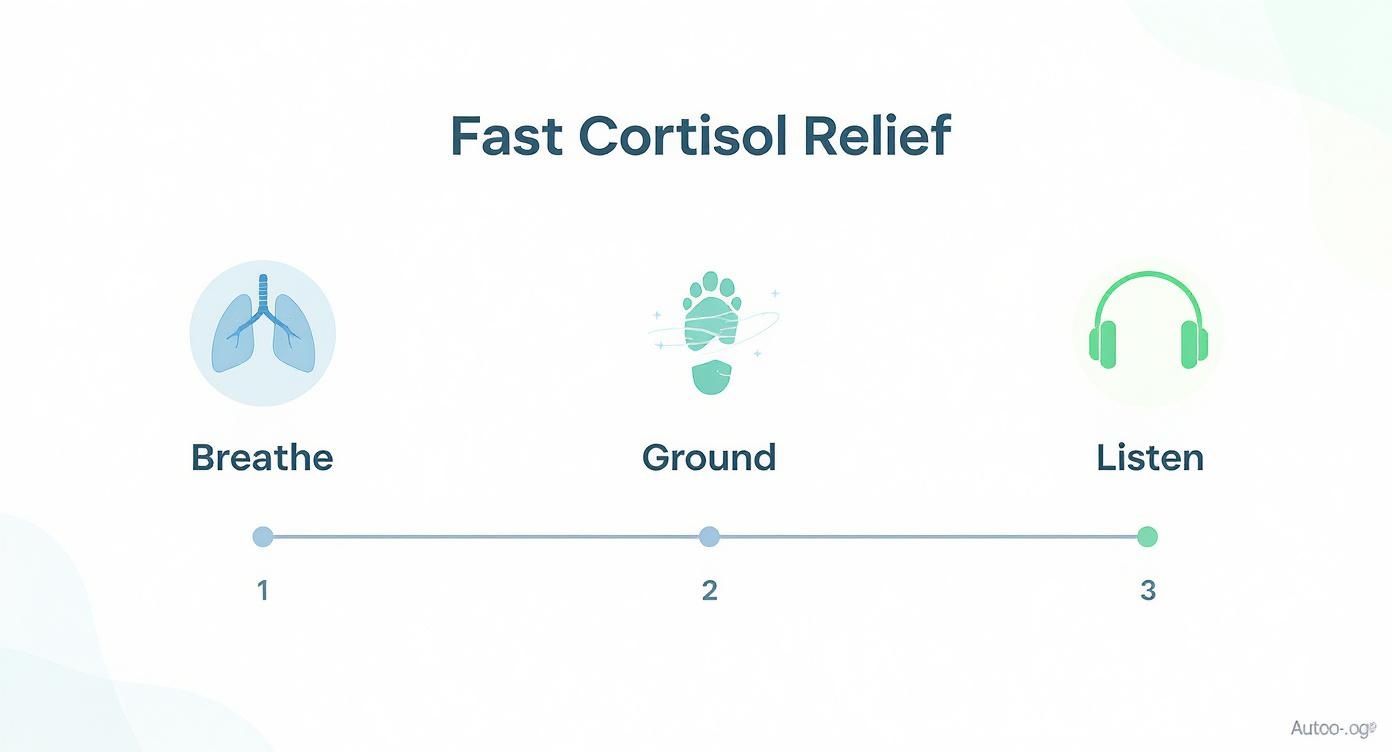
As you can see, immediate relief often comes from simple sensory inputs—breathing, grounding yourself, and just listening. These actions directly tap into your body’s built-in relaxation response.
Your daily routine is a constant conversation with your nervous system. Consistent sleep, morning light, and well-timed movement are how you tell it, "Everything is okay. You can stand down." This consistency is the absolute foundation of learning how to reduce cortisol levels naturally.
Ultimately, you have to listen to your body. If a gentle evening stretch helps you unwind, that's perfect. But if you notice that late-night HIIT class leaves you staring at the ceiling at 2 AM, it’s probably a good idea to shift it earlier. The goal is to make exercise work with your body’s internal clock, not against it.
The Anti-Stress Diet: Foods That Lower Cortisol

Let's be clear: what you put on your plate is one of the most powerful tools in your stress-management arsenal. Your food choices can either crank up your cortisol or help guide it back down to a healthy baseline. It’s not about restriction, but about making smart, intentional choices that build an anti-stress diet.
Think of it as eating for hormonal harmony. By focusing on whole, nutrient-dense foods, you can actively fight inflammation, stabilize your blood sugar, and give your body the exact resources it needs to handle stress effectively.
Foods That Fight Back Against Stress
Certain nutrients are absolute superstars when it comes to keeping your stress response in check. Getting enough of them is a non-negotiable step in learning how to reduce cortisol levels naturally.
The core strategy here is to build a diet rich in anti-inflammatory compounds. Research consistently shows that foods packed with omega-3s, magnesium, and specific vitamins are critical for taming cortisol. Essentially, an anti-inflammatory diet built from real food helps prevent the cortisol spikes that are so often tied to systemic inflammation. For a deeper dive into this connection, OSF HealthCare offers excellent insights on diet's role in cortisol management.
So, what should you be eating? Let's break it down.
- Omega-3 Fatty Acids: Found in fatty fish like salmon and mackerel, plus walnuts and flaxseeds, these fats are potent anti-inflammatories. Chronic inflammation is a major stress trigger, so calming it down is crucial.
- Magnesium-Rich Foods: Think of magnesium as nature's relaxant. It helps soothe the nervous system and is absolutely vital for deep, restorative sleep. Load up on leafy greens like spinach, avocados, bananas, and even a little high-quality dark chocolate.
- Vitamin C Powerhouses: Your adrenal glands—the little glands that produce cortisol—burn through Vitamin C during stressful periods. Replenish your supply with citrus fruits, bell peppers, and broccoli.
You don't need a complete diet overhaul to make this happen. A handful of walnuts for a snack, a side of steamed broccoli with dinner, or an orange for dessert—these small additions really do make a difference.
Why Stable Blood Sugar Is Your Secret Weapon
One of the biggest dietary villains behind runaway cortisol is unstable blood sugar. When you eat a bunch of simple sugars or refined carbs, your blood sugar goes on a wild ride—first a huge spike, then a dramatic crash. Your body sees that crash as a five-alarm fire and pumps out cortisol to get your blood sugar back up.
To get off this rollercoaster, you need to prioritize complex carbs and fiber. These foods break down slowly, giving you a steady, reliable stream of energy without the drama.
A meal heavy in sugar and refined carbs is like throwing gasoline on your stress fire. It creates a vicious cycle of energy crashes and cortisol surges that leaves you feeling drained and anxious.
Focus on bringing these stabilizing foods into your meals:
- Whole Grains: Oats, quinoa, and brown rice.
- Legumes: Lentils, chickpeas, and black beans.
- Starchy Vegetables: Sweet potatoes and squash.
For an even better effect, always pair these carbs with a good source of protein and healthy fat. This slows digestion even further, keeping you full and your hormones balanced for hours. So instead of a plain bagel, try a slice of whole-wheat toast with mashed avocado and a sliced egg. See the difference?
What to Limit for Lower Cortisol
Just as important as what you add to your diet is what you decide to limit. Some foods and drinks are just notorious for sending your stress hormones into overdrive.
- Processed Sugars: The obvious culprits—candy, soda, and most packaged baked goods are the primary drivers of that blood sugar rollercoaster.
- Excessive Caffeine: Look, I get it. A morning coffee is a ritual for many and is usually fine. But relying on caffeine all day long keeps your body in a state of fake alertness, which can definitely elevate cortisol.
- Highly Processed Foods: These are often loaded with unhealthy fats, refined grains, and chemicals that promote the low-grade inflammation we're trying to avoid.
This isn’t about being perfect or never having a treat again. It’s simply about being mindful. It’s about understanding the cause-and-effect relationship between what you eat and how you feel. The next time that 3 p.m. slump hits, try reaching for a handful of almonds and an apple instead of a cookie. Your body, and your brain, will thank you.
Strategic Movement for Cortisol Control
When it comes to managing stress, physical movement can be your greatest ally or a hidden saboteur. It’s a bit of a paradox, isn't it? Exercise is a form of physical stress, which means it temporarily spikes your cortisol. This isn't a bad thing—in fact, a well-timed workout can make your system more resilient over time. But the secret to learning how to reduce cortisol levels naturally lies in understanding the difference between restorative and depleting movement.
The real key is matching the intensity of your movement to what your body can actually handle on any given day. Feeling rested and energized? A tougher workout might be just what you need. But if you're already feeling frayed and exhausted, pushing through a grueling session can completely backfire. It's like pouring gasoline on an already raging fire, leaving you feeling even more drained. The goal is to work with your body, not against it.
Embrace Restorative Movement
For those of us dealing with chronic stress, the primary mission is to calm the nervous system, not jolt it further. This is where restorative, low-impact activities absolutely shine. I like to think of them less as "workouts" and more as "work-ins"—practices that soothe your body while still delivering all the benefits of movement.
These types of exercises are cortisol-lowering champions for a reason. They gently nudge your body into its parasympathetic "rest and digest" state, which is the natural antidote to the "fight or flight" response.
- Yoga: The combination of physical postures and mindful breathing is a powerful one-two punch against stress.
- Tai Chi: Often called "meditation in motion," this gentle, flowing practice is fantastic for improving balance and melting away tension.
- Brisk Walking: It’s so simple, yet incredibly effective. The magic happens when you sync your breath to the rhythm of your steps.
The point here isn't to burn the maximum number of calories or hit a new personal best. It's about releasing stored tension, boosting circulation, and giving your body a clear signal that it's safe to relax.
The Nuance of High-Intensity Workouts
Let's be clear: High-intensity interval training (HIIT) and other tough workouts have some incredible health benefits, but they demand respect. These sessions trigger a significant, though temporary, surge in cortisol. For someone who is well-rested, this spike is followed by a healthy drop and, over the long term, better stress resilience.
However, if your cortisol is already chronically high, piling an intense workout on top can push your system over the edge. You might find it messes with your sleep, cranks up your fatigue, and just makes it harder for your body to recover. If you truly love intense exercise, smart recovery is non-negotiable. This means making sleep a top priority, refueling with enough protein and carbs post-workout, and scheduling active recovery days with more gentle movement.
Don’t use an intense workout to punish a stressed-out body. Listen to your energy levels. Some days, a quiet walk is far more productive for lowering cortisol than a grueling gym session.
The Amplifying Power of Nature
Want to supercharge the stress-reducing benefits of your movement? Take it outside. Moving your body in a natural environment has a unique, scientifically-backed ability to lower cortisol levels. While any physical activity helps with hormone regulation, the setting matters more than you might think.
Research has shown that walking in a forest can significantly decrease salivary cortisol, an effect that just doesn't happen when walking in a city. In one landmark study, nearly 69% of participants saw their cortisol drop during forest walks. This practice, known as shinrin-yoku or "forest bathing," is a powerful tool. You can dive deeper into the benefits of exercising in nature yourself. It’s a simple shift that combines the power of movement and nature into one potent, accessible anti-stress strategy.
When It's Time to Call in a Professional
Learning how to manage your cortisol naturally is a huge step toward taking control of your health. But it's just as crucial to know when your own efforts aren't enough. If you feel like you're doing everything right but still hitting a wall, or if your symptoms feel severe and unrelenting, it’s probably time to talk to a healthcare professional.
Think of it this way: knowing the limits of these lifestyle strategies is part of responsible self-care. Some symptoms aren't just about stress; they can be signals of a deeper medical issue, like adrenal dysfunction or, in rare cases, a condition called Cushing's syndrome.
Don't Ignore These Red Flags
If you’re diligently practicing your new routines but a handful of the following symptoms persist, take it as a clear sign to get an expert opinion:
- Significant and unexplained weight gain, particularly packed around your midsection and upper back.
- A noticeably rounded or puffy face (often called "moon face") and sometimes a fatty lump between the shoulders.
- High blood pressure that just won't budge, even with a healthy diet and exercise.
- A feeling of muscle weakness or noticing that your skin seems thin and bruises very easily.
- Crushing fatigue that no amount of rest or good sleep seems to fix.
These are more than just the downstream effects of a stressful week; they're clues that something more might be going on under the hood and definitely warrant a clinical workup.
Self-care strategies are fantastic for managing the flow from your cortisol faucet. A doctor is the one who can check if the underlying plumbing is intact.
When you bring in a professional, they can run specific tests to get a precise, objective look at what’s happening. This usually involves collecting saliva, urine, or blood samples at different times of the day to map out your body's unique cortisol rhythm. This data gives you a definitive answer, moving you from guesswork to facts.
Getting a medical evaluation doesn't mean your efforts were wasted. It means you’re graduating to a more comprehensive plan that targets the real root cause. Partnering with an expert is the smartest way to make sure you're on the safest and most effective path back to feeling like yourself again.
Answering Your Top Questions About Cortisol
As you start putting these ideas into practice, some questions will naturally come up. I've heard them all over the years. Getting clear on the practical side of things can make all the difference, so let's walk through what people most often ask when they're working to get their cortisol back in check.
How Long Until I Actually Feel Better?
This is usually the first thing everyone wants to know, and the answer really has two speeds.
Some changes you can feel almost instantly. Things like deep, diaphragmatic breathing or stepping outside for a few minutes of grounding can interrupt an acute stress response in real-time. We're talking about feeling a shift within minutes—that immediate sense of relief when you pull the emergency brake on "fight or flight."
But for the bigger, more foundational changes—like waking up feeling truly rested, having steady energy all day, and just feeling less on edge—that takes a bit more time. When you're consistent with your daily routines, diet, and movement, you'll likely start to notice a real, lasting difference within about two to four weeks.
Think of it this way: immediate relief comes from what you do in the moment, but lasting change is the result of what you do every day. Your body needs time to find its rhythm again, so be patient with it.
Is It Possible to Lower My Cortisol Too Much?
It’s a smart question, but honestly, it’s not something you need to worry about with natural lifestyle adjustments. It is incredibly difficult—if not impossible—to push your cortisol to dangerously low levels just through diet, exercise, and mindfulness.
Your body has powerful, built-in feedback loops to make sure it produces the cortisol it needs for basic functions. These strategies are all about regulation, not elimination. The whole point is to guide your body back to its healthy, natural rhythm—high in the morning to get you going and low at night so you can rest. We're not trying to get rid of it.
What if My Routine Isn't Perfect?
Welcome to the real world! Life happens. A perfect routine is a myth. What matters isn't perfection, but consistent, good-enough effort.
Please, let go of the "all-or-nothing" mindset. It's the fastest way to give up. If you miss your morning sunlight, can you still take five deep breaths at your desk? If you have a less-than-ideal lunch, can you make sure dinner is packed with protein and veggies? Each healthy choice is a step in the right direction.
The key is to have a toolkit of small, accessible actions you can turn to. For example, spending just 15 minutes with a simple, creative activity can do wonders. Our guide to grayscale coloring books for anxiety explains how something this easy can be a surprisingly effective way to hit the reset button on a stressful day.
At Mono Moment, we're all about making calm simple and accessible. Our monochrome coloring books are designed to be a decision-free escape, helping you quiet your mind and soothe your nervous system, one pen stroke at a time. Discover your moment of peace today.

The One Color Coloring Book
A single-pen, decision-free coloring book on 160 gsm cream paper — engineered for the wind-down ritual described above.
 Pair it with the 3 Dual Tip Brush Pens — $5 instead of $9.95 in the Book + Pens bundle.