About the author
Published February 1, 2026 · Last reviewed April 26, 2026 · 14 min read
In this article · 6 sections
Using a brush pen is all about mastering pressure. The whole secret is learning to create thin lines with light pressure on upstrokes and thick lines with heavy pressure on downstrokes. That simple "thick-and-thin" contrast is what gives brush pen art and lettering its signature, beautiful flow, especially when coloring in the intricate designs of the One Color Coloring Book.
Your First Strokes with a Brush Pen
Getting the hang of a brush pen should feel exciting, not intimidating. Forget everything you know about standard pens—a brush pen is a whole different animal, one that actually responds to your touch. The key isn't some innate artistic talent; it's all about building a little bit of muscle memory.
Before you even put pen to paper, let's talk about your grip. Hold your brush pen at a comfortable 45-degree angle to the page. Don't hold it straight up and down like you would a ballpoint. This relaxed angle lets the flexible tip do its work, gliding across the paper instead of digging into it.
Mastering Pressure Control
If there's one skill that unlocks everything else with brush pens, it's pressure control. This is what creates those dynamic, expressive lines that make the art form so captivating. You only need to focus on two fundamental strokes to start:
- The Upstroke: As you move the pen up the page, use the lightest touch you can manage. Imagine you're just skimming the surface. This creates a beautifully delicate, thin line.
- The Downstroke: Now, when you move the pen down the page, apply firm, even pressure. This lets the full width of the brush tip connect with the paper, creating a bold, thick line.
This simple visual breaks down exactly how it works.
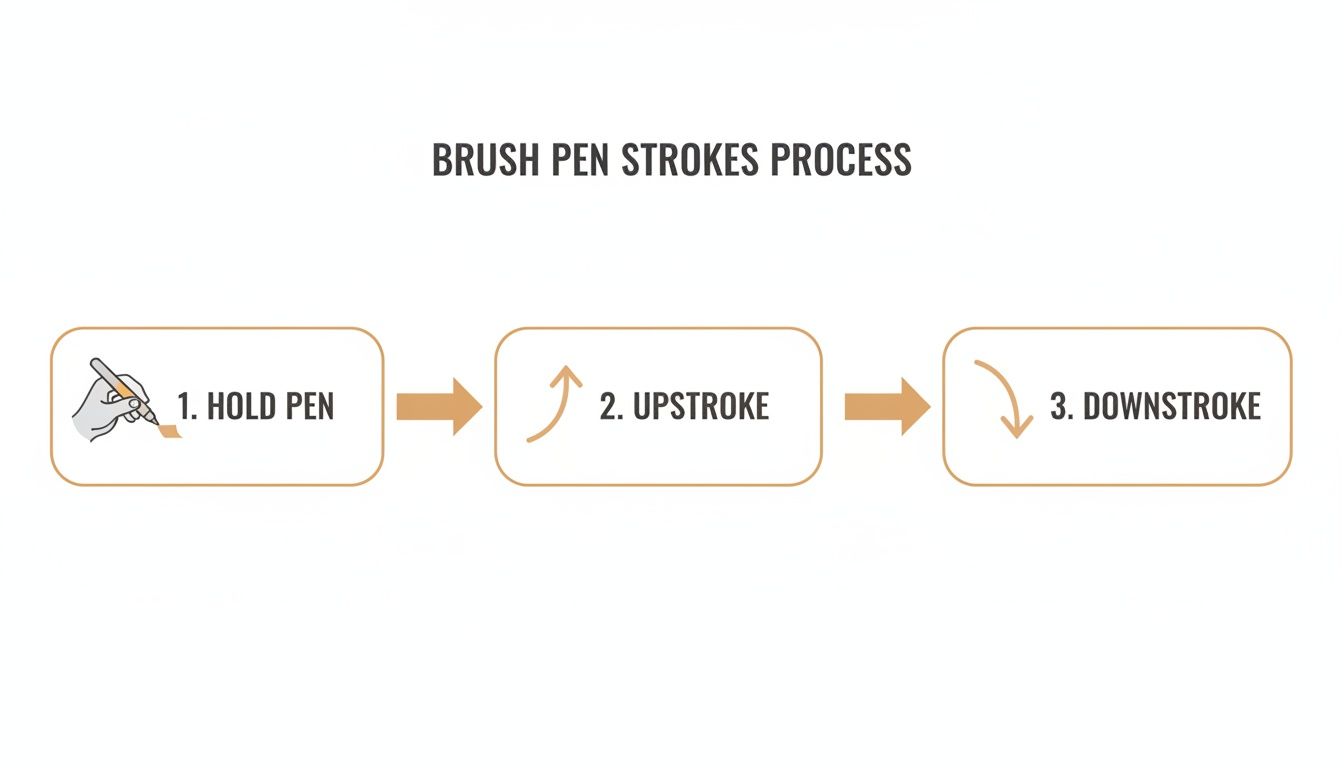
Seeing the flow from the proper grip to the light upstroke and heavy downstroke really helps cement the technique in your mind.
Your First 15-Minute Brush Pen Drill
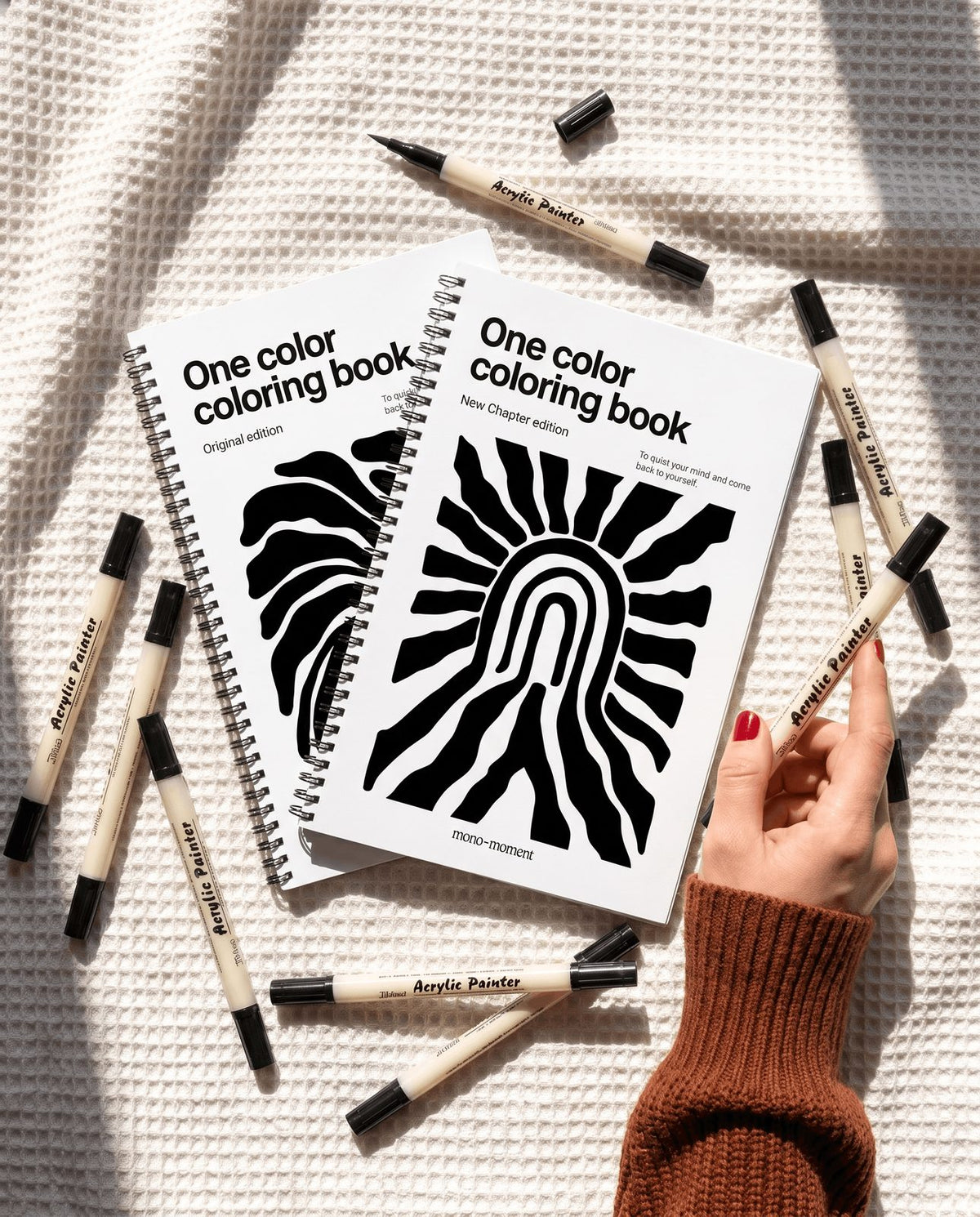
Ready to try it out? This quick exercise is designed to build that essential muscle memory. Grab a pen from your Mono Moment three-pen set, a spare piece of paper, and let's get started.
| Stroke Type | Pen Angle | Pressure Level | Goal |
|---|---|---|---|
| Upstroke | ~45 degrees | Light (skimming) | Create a consistent, thin line. |
| Downstroke | ~45 degrees | Firm (pressing) | Create a consistent, thick line. |
| Alternating | ~45 degrees | Light, then Firm | Smoothly transition between the two. |
Set a timer for just 15 minutes and fill a page with these alternating strokes. Seriously, that’s it.
Don't aim for perfection right now. The point of this drill is to feel the difference, not to create flawless lines. Just focus on the rhythm and the changing pressure in your hand.
This simple, repetitive motion is what trains your hand to make that light-to-heavy transition feel second nature. It's the groundwork for everything else you'll do, whether you're filling in the gorgeous designs in your One Color Coloring Book or creating your own lettering from scratch.
If you're curious about other tools, you can explore our guide on the best pens for adult coloring books to see how they stack up. But after this one drill, you'll have the confidence you need to make your first beautiful marks.
The Perfect Pairing of Pen and Paper
Anyone who’s tried to use a beautiful new pen on cheap, flimsy paper knows the frustration. The ink bleeds, the tip gets chewed up, and the whole experience falls flat. That’s why we were so intentional when we paired our Mono Moment brush pens with the paper inside the One Color Coloring Book. It's a partnership designed to make your creative time seamless.
Why Paper Quality Is Everything
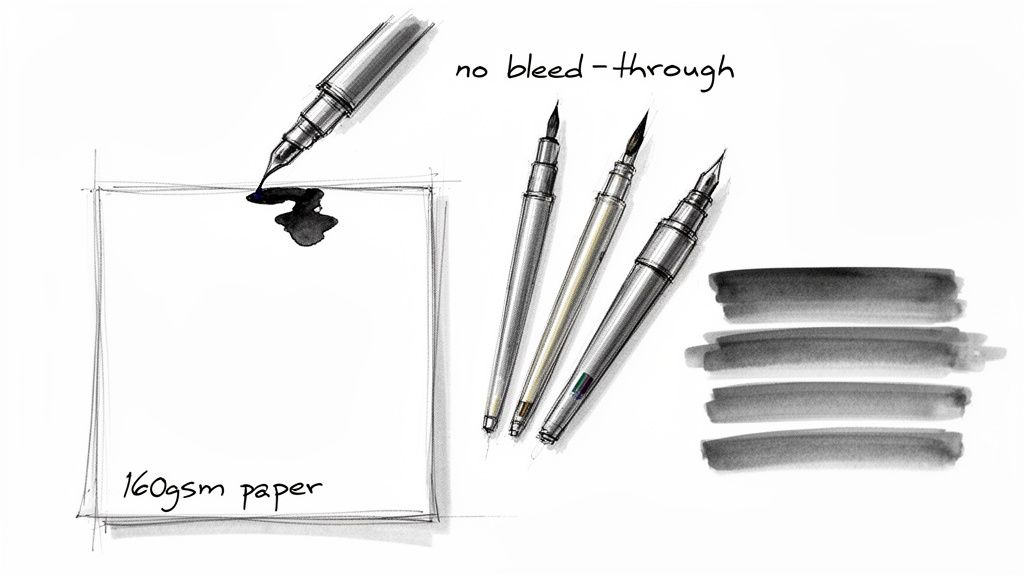
Let's get into the nitty-gritty. The secret to a flawless coloring session is all in the paper's weight and texture. The One Color Coloring Book features 160gsm paper—a thickness we landed on after a ton of testing. It's the sweet spot, giving you a surface that's both buttery smooth and incredibly absorbent.
Think of it as your creative safety net. You can confidently layer your colors, blend different shades, and experiment to your heart's content without ever worrying about ink bleeding through to the next page. A smooth surface also does wonders for your pens, protecting their delicate tips from the fraying that rough, low-quality paper can cause. We explore this more in our guide to coloring books with thick paper.
This focus on quality tools isn't just a niche interest anymore. The art marker market hit a staggering $2.3 billion and is projected to reach $4.4 billion by 2034, proving just how much people value these instruments for mindfulness and self-care.
The whole point of a creative session is to escape from decision fatigue. Your tools should make that easier, not harder. The right paper lets you focus on the simple joy of coloring instead of fighting with your supplies.
Getting to Know Your Mono Moment Pens
Our pens are the other half of this perfect creative equation. The Mono Moment brush pen set is filled with a vibrant, water-based ink that’s a dream for both beginners and seasoned artists. Unlike aggressive alcohol-based markers, our ink plays nicely with the 160gsm paper, letting you build up beautiful layers without turning the page into a soggy mess.
But the real magic is in the flexible nylon tip. This is what puts the "brush" in brush pen, and it’s what gives you that gorgeous, expressive line work.
Here’s why it’s so special:
- Responsive Control: The tip reacts instantly to every little change in pressure from your hand, creating those satisfying thick and thin strokes.
- Built to Last: We chose nylon fibers that are designed to bounce right back to their original fine point, so you can rely on them for detailed work, time and time again.
- Smooth as Silk: The ink flow is consistent and even, helping you fill in larger areas without those annoying streaks.
Just a quick tip from experience: always cap your pens tightly when you're done. It's a simple habit, but it's the best way to keep the water-based ink from drying out and protect those amazing nylon tips. A little care ensures your Mono Moment brush pens are always ready for your next creative escape.
Adding Depth with Blending and Layering
Once you get the hang of those basic thick and thin strokes, a whole new world of artistry opens up: blending and layering. This is where you start transforming simple lines into designs with real dimension and life. It's the secret sauce for creating those beautiful gradients and realistic shadows that will make the images in your One Color Coloring Book truly pop.
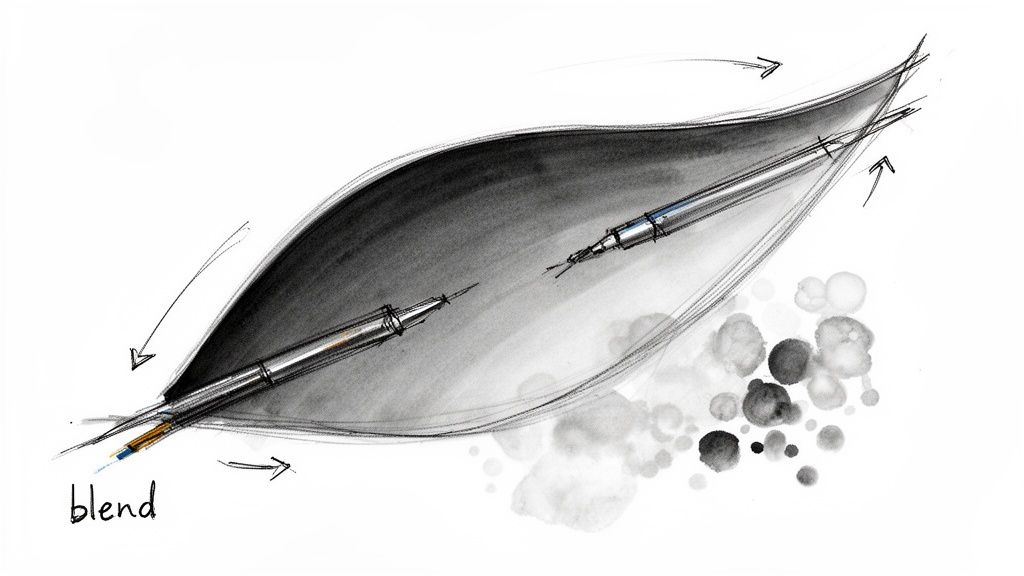
The water-based ink in your Mono Moment pens is absolutely perfect for this. Because the ink reacts to water, it stays "active" on the page for a short time. This gives you a precious window to create soft, seamless transitions. You’re not just coloring anymore; you're essentially painting with a pen.
Creating Smooth Gradients on the Page
A gradient is just a smooth fade from one color to another. In the monochrome world, this means creating those gorgeous transitions from a solid black to dark gray, then to a whisper of light gray, and finally to the crisp white of the paper.
Let's walk through a real scenario. Imagine you're coloring a flower petal in the One Color Coloring Book. You want the base to be deep and dark, fading to a light, delicate tip to give it that curved, 3D feel.
Here’s how I’d tackle that:
- Lay Down Your Darkest Color First: Start right at the base of the petal with your black brush pen. Go ahead and color in the first third of the shape using firm, even pressure.
- Bring in the Lighter Shade: Without waiting, grab your light gray pen and start coloring right where the black ink ends, making sure to overlap them just a little.
- Blend the Seam: Now for the magic. Use the tip of that light gray pen to gently "pull" the black ink into the lighter area. I find that small, circular motions work best right on the seam where the two colors meet. The water in the lighter ink will reactivate the darker ink, and they'll blend together beautifully.
- Fade It Out: Keep working with the light gray pen, easing up on your pressure as you move toward the tip of the petal until the color just fades away into the paper.
This technique is a dream on the 160gsm paper in your book. It’s got enough heft to take the extra ink without getting fuzzy or bleeding through.
The key to a seamless blend is speed. You want to work while the ink from your first color is still slightly damp. Don't hesitate—just dive in and let the colors do their magic together.
Layering for Richness and Shadow
Layering is a bit more straightforward but just as powerful. Instead of blending wet inks, you let each layer dry completely before adding the next one. This is my go-to technique for building up really rich, deep tones and adding crisp, defined shadows.
For example, say you're working on a geometric pattern in the One Color Coloring Book. You could fill an entire shape with your light gray pen. Once you’re positive it’s dry, you can go back over it with your dark gray or black pen to add a sharp shadow along one edge. Since that first layer is dry, the new color sits right on top, creating a clean line instead of a soft blend.
This approach gives you incredible control. To really get a feel for the different effects you can achieve, it helps to understand how different markers behave. We dive deeper into this in our article comparing water-based markers vs alcohol-based ones.
When you start combining these blending and layering skills, you’re no longer just filling in the lines. You're wielding your Mono Moment pens as true artistic tools, adding personality, depth, and a professional flair to every single page.
Weaving a Ritual of Mindful Coloring
Let’s be honest, brush pens are more than just a creative tool—they’re a ticket to a calmer state of mind. Coloring isn’t just for kids; it's a surprisingly potent way to hit pause on a busy brain and ground yourself in the here and now. This is where we turn a simple creative habit into a genuinely restorative ritual.
The whole point isn't to create a gallery-worthy masterpiece. It's about finding a moment of peace. That's why the designs in the One Color Coloring Book are specifically made to be finished in just 15 to 30 minutes. Think of it not as a huge project, but as a small, achievable pocket of calm you can carve out of your day.
Carving Out Your Creative Sanctuary
The right environment can be a game-changer. You don't need a dedicated art studio—just a quiet corner where you won't be disturbed for twenty minutes or so.
Here’s how to set the stage:
- Declutter Your Zone: A clean surface really does help clear your head. Move aside the mail, the laptop, and anything else that screams "to-do list."
- Tune the Atmosphere: Maybe you lower the lights and play some instrumental music. Or maybe you just crave pure silence. Whatever helps you unwind, do that.
- Lay Out Your Tools: Grab your One Color Coloring Book and Mono Moment pens. Having everything within reach means you can sink right into the creative process without any friction.
Taking a minute to do this sends a signal to your brain: it’s time to shift from the daily grind to intentional relaxation. You’re building a simple, gentle routine that becomes something to look forward to.
Tapping into the Flow
You know that feeling when you're so absorbed in something that time just disappears? That's the "flow state," and coloring is one of the best ways to get there. The secret is to tune into the physical experience of it all.
Try this: Close your eyes for a second, take a breath, and then really notice the sensations. Feel the buttery glide of the brush tip across that thick, 160gsm paper. Hear the faint, satisfying whisper it makes. Focus on the steady, calm rhythm of your hand moving across the page.
This becomes more than just filling in shapes; it’s a full-on sensory exercise. By zeroing in on these little details, you gently nudge your mind away from those nagging, looping thoughts. Your focus shifts from the outcome to the simple, satisfying process of making a mark, one stroke at a time. The practice of using brush pens can open the door to many other calming mindfulness art therapy activities that build on this very principle.
The beauty of the One Color Coloring Book is its simplicity. By taking color choice out of the equation, it frees you up to just create. This is your time. Breathe, focus, and let the rest of the world fade away for a little while.
Navigating Common Brush Pen Problems
Even seasoned artists run into little hiccups now and then. When you're just getting the hang of brush pens, a bit of troubleshooting is simply part of the journey. Don't let it get you down! Think of these moments as learning opportunities that help you get to know your tools on a deeper level. With a few quick fixes, you can keep your coloring time serene and satisfying.
One of the first things people worry about is a frayed brush pen tip. This usually happens from pressing too hard on upstrokes or coloring on paper with a rough texture. It’s a good reminder that the delicate nylon tips on your Mono Moment pens really shine with a light, gentle touch, especially on the premium paper inside the One Color Coloring Book. And always cap them tightly—a dry tip makes the fibers brittle and much more likely to fray.
How to Handle Shaky Lines and Streaky Color
Are your lines looking a little wobbly? That’s completely normal when you’re starting out. Shaky lines just mean your hand is still building up the muscle memory for those fluid strokes. The best remedy is to go back to basics. Spend some time on those foundational drills—practicing smooth upstrokes and downstrokes will build a steadier hand over time.
Getting streaky results when filling in larger areas is another common hurdle. To get that beautifully smooth, even coverage in your One Color Coloring Book, try one of these methods:
- Small, Overlapping Circles: Instead of long, back-and-forth strokes, fill the space with tiny circular motions. This lets the ink blend seamlessly.
- Work While the Ink is Wet: Try to move quickly enough so the edge of your last stroke is still damp when you start the next. This allows the water-based ink to merge perfectly.
- Color in One Direction: For a more stylized look, fill an area with clean, parallel strokes, all going the same way. This creates a really intentional, textured effect.
Remember, the goal isn't perfection. A slightly wobbly line or a minor streak is just part of the charm of handmade art. The most important thing is to keep your hand moving and soak up the process.
To keep that creative momentum going, it really helps to organize your craft supplies effectively. When you know exactly where your favorite pens and your coloring book are, you can jump right into your mindful practice without any fuss.
Why Everyone Is Picking Up Brush Pens
If these challenges seem common, it's because more and more people are discovering just how wonderful brush pens are. The global market was valued at over $1.2 billion and is expected to soar past $2.1 billion by 2033. This boom comes from a massive resurgence in hands-on hobbies like calligraphy and hand-lettering, which has made incredible tools like the Mono Moment brush pens accessible to everyone. You can read more about these exciting market trends on MarketIntelo.com.
This explosion in popularity means you’re joining a huge, vibrant community of creators. Every artist, from novice to pro, navigates these same little issues. By learning to solve them, you’re not just coloring a page—you’re sharpening a real skill and deepening your connection to your craft.
Your Brush Pen Questions, Answered
Let's be honest, anytime you pick up a new creative tool, a few questions are bound to pop up. It’s all part of the process! We've listened to our community and put together answers to the most common queries about using brush pens, especially with your Mono Moment coloring book.
Can I Use Other Kinds of Pens in My One Color Coloring Book?
You absolutely can! In fact, we encourage it. We specifically chose a premium 160gsm paper for the One Color Coloring Book because it's a dream to work on. It’s got a beautiful, smooth surface and enough heft to stand up to most water-based markers, fineliners, and gel pens without bleeding through.
Think of our Mono Moment three-pen set as your perfect starting point, but consider the book your personal creative sandbox. The paper is designed to handle your experiments, so you can focus on finding your flow instead of worrying about your tools.
My Brush Pen Tip Is Fraying! What Do I Do?
Ugh, a frayed tip is the worst. It can feel like your favorite pen is ruined, but don't panic! This is usually a sign of one of two things: either too much pressure (especially on those delicate upstrokes) or using paper that's too rough. A toothy paper surface acts like fine-grit sandpaper on the soft nylon fibers of your Mono Moment pens.
First, take a look at your technique. Are you gliding the pen for your thin lines, or are you still pressing down? A light touch is key.
If the fraying is minor, you might be able to gently coax the fibers back into place by drawing a few slow, straight lines on a super smooth piece of paper. But prevention is the best fix: always stick to smooth surfaces like the 160gsm paper in our books, and make sure you hear that satisfying 'click' when you cap your pens.
How Can I Fill in Areas Without Getting Streaky?
That smooth, flawless finish you see from the pros? It's all about technique. It’s about working with the ink, not fighting it. The water-based ink in your Mono Moment pens is designed to blend beautifully, and the paper in the One Color Coloring Book is just absorbent enough to help you out.
Instead of scribbling back and forth, try a more deliberate approach.
- Small, overlapping circles: This is my go-to method. By working in tiny circular motions, you allow the wet edges of the ink to melt into each other.
- One-way traffic: Coloring in one consistent direction with parallel strokes creates a really clean, intentional look and makes any overlap far less noticeable.
- Keep it wet: The secret to seamless blending is speed. You want to lay down a new stroke right next to the previous one while its edge is still damp.
The real trick is to apply an even layer of ink so it can settle into the paper as one solid color. Once you get the hang of these little adjustments, you’ll be amazed at how easily you can get that polished, streak-free look.
These small shifts in how you color will make a massive difference in your finished pages, giving you that satisfying, professional result every single time.
Ready to put this into practice and start your own mindful coloring ritual? The Mono Moment One Color Coloring Book and our custom three-pen set are waiting to help you find a moment of creative calm, without any pressure to be perfect.

The One Color Coloring Book
A single-pen, decision-free coloring book on 160 gsm cream paper — engineered for the wind-down ritual described above.
 Pair it with the 3 Dual Tip Brush Pens — $5 instead of $9.95 in the Book + Pens bundle.