About the author
Published February 2, 2026 · Last reviewed April 26, 2026 · 10 min read
In this article · 6 sections
If you’ve ever wondered how to wind down before bed, the first step is figuring out why you feel so alert when you should be exhausted. The answer isn't about trying to force yourself to relax; it's about creating a deliberate, decision-free routine that gives your mind the signal that it's finally safe to switch off.
Why You're Tired but Still Feel Wired at Night

It’s a frustratingly common paradox: your body is physically drained, but your brain is running a marathon. This happens because the "alert" system in your brain, constantly fueled by daily stress and endless stimulation, stays switched on long after your body is ready to clock out.
Here's the thing: your mind doesn't have an off switch. It needs a gradual transition, a gentle off-ramp from the high-speed highway of your day to the quiet side street of sleep. Just lying in bed and demanding that you relax often makes things worse, sparking a whole new cycle of anxiety about not being able to sleep. The real secret is creating the right conditions for your brain to calm down naturally.
The Science of a Restless Mind
Think about everything your brain juggles during the day—thousands of tiny decisions, looming deadlines, and personal worries. This constant mental load keeps your nervous system humming in a low-grade state of fight-or-flight.
When you finally hit the pillow, that mental momentum doesn't just vanish. It keeps going, replaying conversations, adding items to tomorrow's to-do list, and fretting about the future.
A deliberate wind-down routine isn’t about forcing sleep. It’s a research-backed practice that actively lowers cortisol (the stress hormone) and signals to your brain that the day’s threats are over, making it safe to rest.
This internal battle is a modern epidemic. A massive Sleep Cycle report, drawing data from over 105 million tracked nights, revealed a significant dip in global sleep quality. The numbers don't lie—learning how to properly wind down is no longer a luxury but a crucial skill. You can dive into the specifics in the full Sleep Cycle report on global sleep trends.
Introducing a Decision-Free Ritual
The key to breaking the "tired but wired" cycle is to anchor your evening in a simple, predictable activity that requires zero mental heavy lifting. This is a game-changer for an overthinking mind.
This is where a decision-free anchor activity comes in, like using the Mono Moment monochrome coloring book, a product designed specifically for adults. By removing the pressure of choosing colors or trying to create a masterpiece, you give your mind a gentle, focused task that quiets the noise.
This simple ritual becomes a powerful cue. Over time, it trains your brain that when the coloring book comes out, it’s time to begin the process of shutting down for the night. It's a practical, tangible step toward reclaiming your peace. If your mind still races, we have a complete guide on how to stop overthinking at night.
Crafting Your Ideal Sleep Environment
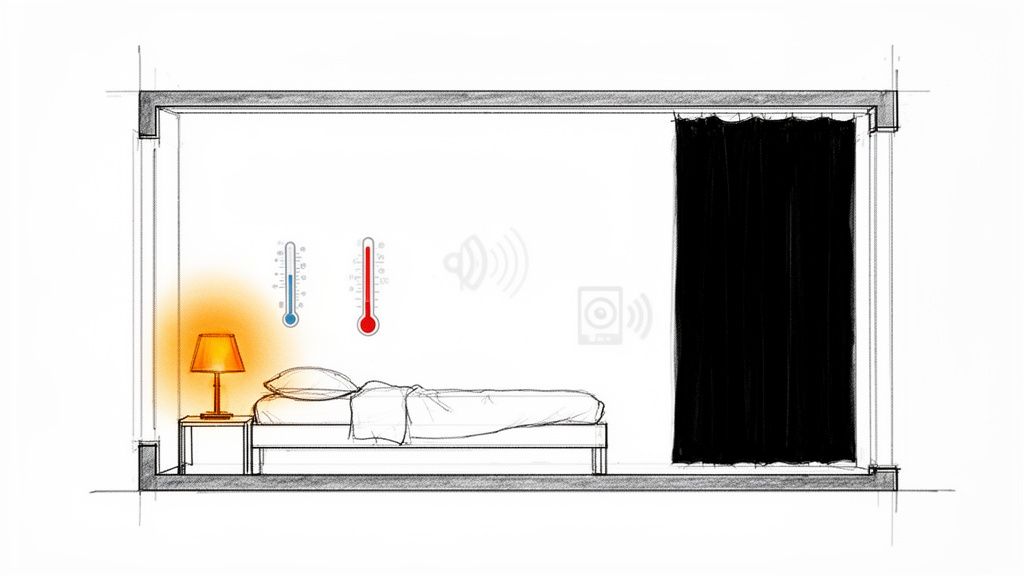
Your bedroom should be a sanctuary for rest, not a multi-purpose room doubling as your office or movie theater. Think of it this way: creating the right atmosphere is the first real, physical step you can take to tell your brain the day is officially done.
This isn't about a full-blown renovation. It’s about making small, deliberate tweaks that have a massive impact on your ability to truly wind down before bed. You're setting the stage for sleep, and your brain is paying close attention to these cues.
Lower the Lights and Temperature
Bright, blue-toned light—the kind blasting from our screens and most overhead fixtures—is a well-known enemy of sleep. It actively suppresses melatonin, the crucial hormone that runs your sleep-wake cycle. About an hour before you plan to sleep, start dimming the lights and switch to warmer tones, almost like an indoor sunset.
Temperature is just as important. Your body's core temperature needs to drop to initiate sleep, and a cool room helps that process along. Most sleep experts agree that a room between 60 and 67 degrees Fahrenheit is the sweet spot for a great night's rest.
Simple swaps can make all the difference. I use smart bulbs scheduled to automatically dim and warm up in the evening. Cracking a window to let in some cool night air works just as well. These are powerful, non-verbal cues that tell your body it's time to power down.
Curate Your Soundscape
The final piece of the puzzle is sound. For some people, absolute silence is bliss. It clears the way for the mind to settle without any distractions. But for others, the quiet can make a racing mind feel ten times louder.
If you fall into that second camp, don't be afraid to add a layer of ambient sound. The gentle hum of a fan, a dedicated white noise machine, or even a playlist of calming nature sounds can work wonders. It helps mask startling noises from outside and gives your brain a consistent, soothing backdrop to focus on.
As you're getting your space just right, find a cozy, well-lit nook for your wind-down ritual. Having your Mono Moment monochrome coloring book and a comfortable pen waiting for you in this calm spot removes any last-minute friction. It makes it effortless to slip into that state of mindful relaxation, turning this little corner into the cornerstone of your entire evening routine. All our store's products are designed to support this moment of peace.
The Magic of a Decision-Free Creative Ritual

Let's be honest—for anyone with a busy mind, some "relaxing" activities are anything but. Staring at a blank page can feel like a performance, sparking a fresh wave of anxiety: “What should I even draw?” or “Is this good enough?”
This is exactly why the heart of a truly effective wind-down routine is a creative ritual completely free of decisions. The point isn’t to produce a masterpiece. It’s to give your brain a simple, absorbing task that quiets the mental chatter keeping you wired and awake.
Why Monochrome Coloring Just Works
This is where the unique power of our Mono Moment monochrome coloring book comes into play. It’s designed from the ground up to switch off your brain's stress mode, not just to give your hands something to do.
By taking color choice completely out of the equation, you sidestep a huge source of creative pressure and that nagging need for perfection.
Think about the simple, physical sensation of a pen gliding across our extra-thick 160gsm paper. There's no annoying bleed-through, just the satisfying, smooth feedback of each stroke. This is what helps anchor you in the here and now, pulling your focus away from tomorrow's to-do list or yesterday's worries. This premium quality is a hallmark of all Mono Moment products.
The patterns in the Mono Moment book are designed to be finished in one go, usually in a 15–30 minute session. This gives you a quick hit of accomplishment—a clear beginning and end—making it the perfect self-contained ritual to close out your day.
It's More Than Just Coloring
This isn't about arts and crafts; it's a practical mindfulness tool. The pre-drawn patterns provide just enough structure to occupy your mind without overwhelming it. This focused state helps calm the amygdala—the brain’s alarm system—which is key to paving the way for deep, restorative sleep.
The ritual itself becomes a powerful signal. You’re not just filling in shapes; you're creating a predictable, peaceful pocket of time for yourself. It tells your mind and body, "Okay, the day is done. It's time to rest now."
If you want to dive deeper into the technique, we’ve got some great tips on how to color a coloring book to get the most relaxing results.
By setting aside just 15–30 minutes for this simple, decision-free activity, you build a crucial buffer between the chaos of your day and the calm you need to sleep well. It’s a tiny investment that delivers huge returns in mental clarity and rest.
Building Your Nightly Wind-Down Ritual
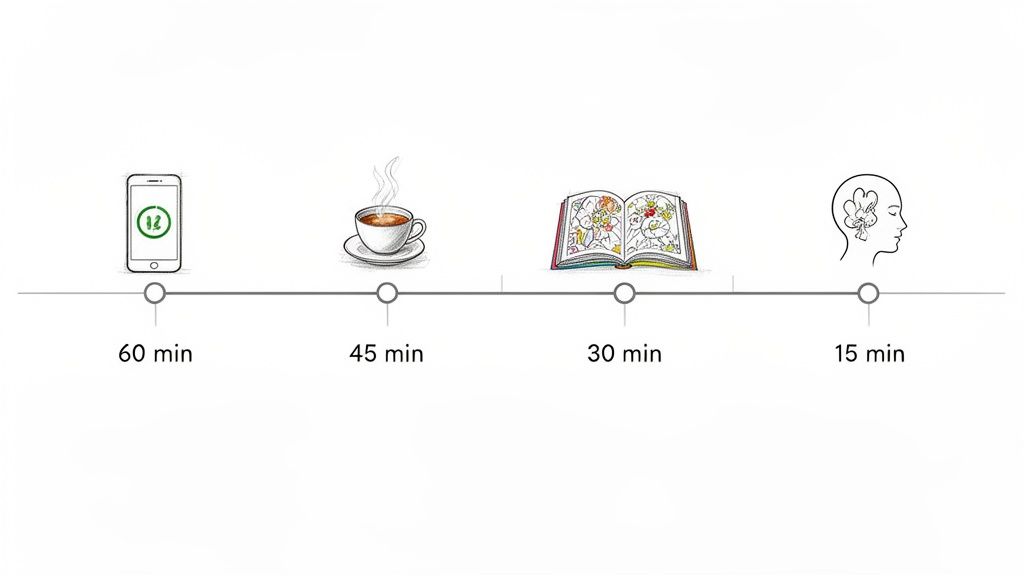
The real magic happens with consistency. A predictable evening routine is the most powerful signal you can send your brain that it’s time to switch off and prepare for deep rest. Think of it as creating a runway for sleep.
Let's walk through a sample timeline you can adapt. This isn't about rigid rules; it's a flexible framework. The key is to find a sequence that feels right for you and stick with it most nights. The one non-negotiable part? That dedicated time to unplug and let your creative, non-analytical brain take over.
A Practical Wind-Down Timeline
-
60 Minutes Out: This is your digital sunset. It's time to put all screens to bed—your phone, tablet, and laptop. That blue light actively works against your body's natural sleep signals. As you do this, start dimming the lights around you to set a calmer mood.
-
45 Minutes Out: Time for a warm, caffeine-free drink. I'm a big fan of chamomile or peppermint tea. The warmth is incredibly soothing, and the simple act of preparing it becomes a small, mindful ritual in itself.
-
30 Minutes Out: Grab your Mono Moment monochrome coloring book. This is the heart of your wind-down. It's a protected block of time—a mini-sanctuary—where you can disconnect from the day's noise and reconnect with yourself through a simple, absorbing creative act.
-
15 Minutes Out: As you bring your coloring to a close, shift your focus to your breath. Just a few slow, deep inhales and exhales. Notice how the calm from your coloring session settles over you. Tidy up your space for a moment so you can slide into bed without any last-minute fuss.
This predictable sequence is more than just relaxing; it’s a powerful psychological cue. With a little time, your brain learns that this exact chain of events means sleep is coming, making the entire process feel more natural and effortless.
And this isn't just a nice-to-have; it's a necessity. The latest sleep statistics are pretty sobering: 60% of US adults don't get enough sleep, and almost 70% report struggling to stay asleep. A deliberate, screen-free routine is one of the most reliable ways to fight back. If you're curious about the data, you can explore the global sleep duration findings on mapthos.org.
Making Your New Evening Ritual Stick
Let's be honest: the best evening routine in the world is useless if you don't actually do it. It’s one thing to design a perfect wind-down, but it’s another to follow through when you’re exhausted from a long day. The real secret is making it so easy and inviting that it doesn’t feel like another chore.
So, how do you get past that initial resistance? Here's a simple trick I swear by: I "set a promise" for myself each morning. I leave my Mono Moment coloring book—our star product—and a nice pen right on my pillow. When I walk into my bedroom at night, it’s waiting for me—a gentle, visual nudge that removes the need to make yet another decision.
Start Small For Big Wins
Feeling like you just don't have the time is the number one reason routines fail. The fix is surprisingly simple: don't start with a full 30-minute session. Just aim for five. Seriously, that's it.
The patterns in our monochrome coloring book were designed with this in mind. Each one can be finished in a single, short sitting, giving you an immediate and satisfying sense of accomplishment. That little dopamine hit from finishing something makes you far more likely to crave it again the next night.
It’s not about perfection; it’s about presence. Making your wind-down ritual stick is about creating an effortless, rewarding experience that you genuinely look forward to, rather than another task to check off.
This "start small" philosophy can be a game-changer for your entire evening. If you want more ideas on building sustainable habits, you can learn how to create a self-care routine that actually fits your life.
Still Tossing and Turning? Let's Troubleshoot
Even with a solid plan, creating a new habit always comes with a few hurdles. It’s completely normal for questions to pop up as you figure out what works for you. Let's walk through some of the most common sticking points I see.
"My Mind Is Still Racing After I've Finished My Routine. Now What?"
First off, take a deep breath. This is the most common issue people face, so don't beat yourself up about it. The absolute worst thing you can do is lie there, forcing it. That just creates a cycle of anxiety around your bed.
If you’ve been in bed for 15-20 minutes and you’re still wide awake, get up. Go to another room and do something quietly relaxing for a little while. Maybe color another simple pattern in your Mono Moment book or read a few pages of a (boring) book.
The real aim here isn't to force sleep on demand. It's about consistently creating a peaceful, screen-free environment. Your brain will eventually get the memo and start associating this quiet time with powering down.
"How Long Until This Actually Starts Working?"
Patience and consistency are your best friends here. You might feel a subtle shift on the very first night, but for this routine to become second nature, you need to give it time. Think of it like learning any new skill—it takes practice. Aim for at least a few solid weeks of sticking with it.
And if you're struggling, know that you're in good company. Over a third of adults globally deal with insomnia, and an incredible 80% report having trouble sleeping at some point. You can dig into more of these sleep-related findings on singlecare.com.
Building this habit is your way of refusing to be just another statistic. That small investment of time each evening really does pay off in the long run.
Ready to build a simple, decision-free ritual that finally quiets your mind? The Mono Moment monochrome coloring book and our other carefully curated products were designed to be the perfect anchor for your wind-down routine. Start your journey to calmer nights at mono-moment.com.

The One Color Coloring Book
A single-pen, decision-free coloring book on 160 gsm cream paper — engineered for the wind-down ritual described above.
 Pair it with the 3 Dual Tip Brush Pens — $5 instead of $9.95 in the Book + Pens bundle.