About the author
Published January 8, 2026 · Last reviewed April 26, 2026 · 16 min read
In this article · 6 sections
A good bedtime routine for better sleep is pretty simple, really. It’s all about giving yourself 30-60 minutes to wind down with quiet, screen-free activities that tell your brain, "Hey, it's time to rest now." But for overthinkers, it’s more than that—it’s about intentionally swapping out habits that fuel a racing mind for calming rituals that finally give it a break, like the ones our Mono Moment products are designed for.
Why Your Evening Routine Is Sabotaging Your Sleep
Ever find yourself scrolling through social media or getting sucked into "just one more episode" to relax, only to find you're more wired than ever? It’s a common trap. We think these things are helping us unwind, but they're actually blasting our brains with stimulation. You’re feeding it a stream of information, emotional triggers, and blue light, all of which kickstart a state of cognitive arousal—the mortal enemy of a good night's sleep.
For busy professionals and those of us who tend to overthink everything, this cycle is particularly brutal. Your brain has been running a marathon all day, solving problems and making one decision after another. When you jump straight from that high-stress environment to a stimulating screen, you're not giving your mind the off-ramp it desperately needs. You're just keeping the engine revving, which is why you get that frustrating "tired but wired" feeling when you finally try to sleep.
The Overthinker's Dilemma
Here’s the thing: the problem isn't just about the screen. It’s about the missing transition. A racing mind at night is often a symptom of a day's worth of stress and mental clutter with nowhere to go.
A proper evening ritual acts as that release valve. It’s a predictable, calming sequence that signals to your brain that the day is officially over and it’s safe to power down. The real goal here is to create a peaceful, decision-free buffer zone between the chaos of your day and the quiet of your bed.
A structured bedtime routine doesn't just help you fall asleep faster; it fundamentally changes your relationship with rest. By creating a consistent practice, you teach your mind to anticipate and welcome sleep, rather than fighting it.
Shifting to a Decision-Free Ritual
This is where swapping your phone for something simple and engaging can be a game-changer. An activity like coloring in a Mono Moment monochrome coloring book does something brilliant: it removes the mental burden of making yet another choice. It gives your mind a gentle, single point of focus, which is often enough to break the cycle of anxious, looping thoughts.
If that sounds like what you’re dealing with, we have a whole guide on how to stop overthinking at night with more strategies to quiet your mind.
You're not alone in this. More than one-third of adults worldwide don't get the recommended seven hours of sleep. But here's the hopeful part: research consistently shows that a personalized, consistent bedtime routine is one of the most powerful predictors of well-being. PNAS research highlights that a stable schedule is key. By building a simple, repeatable ritual, you’re doing more than just prepping for bed—you're investing in a calmer mind and a much better tomorrow.
The Science Behind a Restful Wind-Down
Believe it or not, your brain craves predictability. When you establish a consistent evening ritual, it’s like sending a clear signal to your mind that the day—with all its pressures and deadlines—is officially over. It’s time to power down.
This simple act of repetition has a profound effect on the amygdala, your brain’s built-in alarm system. For many of us, especially overthinkers, this system is stuck in overdrive, flooding our bodies with cortisol, the infamous stress hormone. That feeling of being "wired and tired"? That's cortisol at work, keeping you on high alert when all you want to do is sleep. A well-designed bedtime routine for better sleep is your biological off-ramp from that stress highway.
Taming the Anxious Brain
A great wind-down isn't just about making you feel sleepy; it's about reducing what scientists call cognitive arousal. Think of it as the mental "buzz" that keeps your thoughts racing long after your head hits the pillow. One of the best ways to quiet that internal chatter is with simple, repetitive, low-stakes activities.
This is exactly why something like coloring in a Mono Moment monochrome coloring book can be so effective. By stripping away the need to choose colors, it offers a single, gentle point of focus. This almost meditative process helps lower cortisol levels naturally, guiding your brain out of anxious thought loops and into a state of calm.
Without a deliberate wind-down, it's easy to fall into a pattern of sleep sabotage. That doomscroll at 9 PM or the "one last episode" at 10:30 PM often leads directly to a racing mind at midnight.
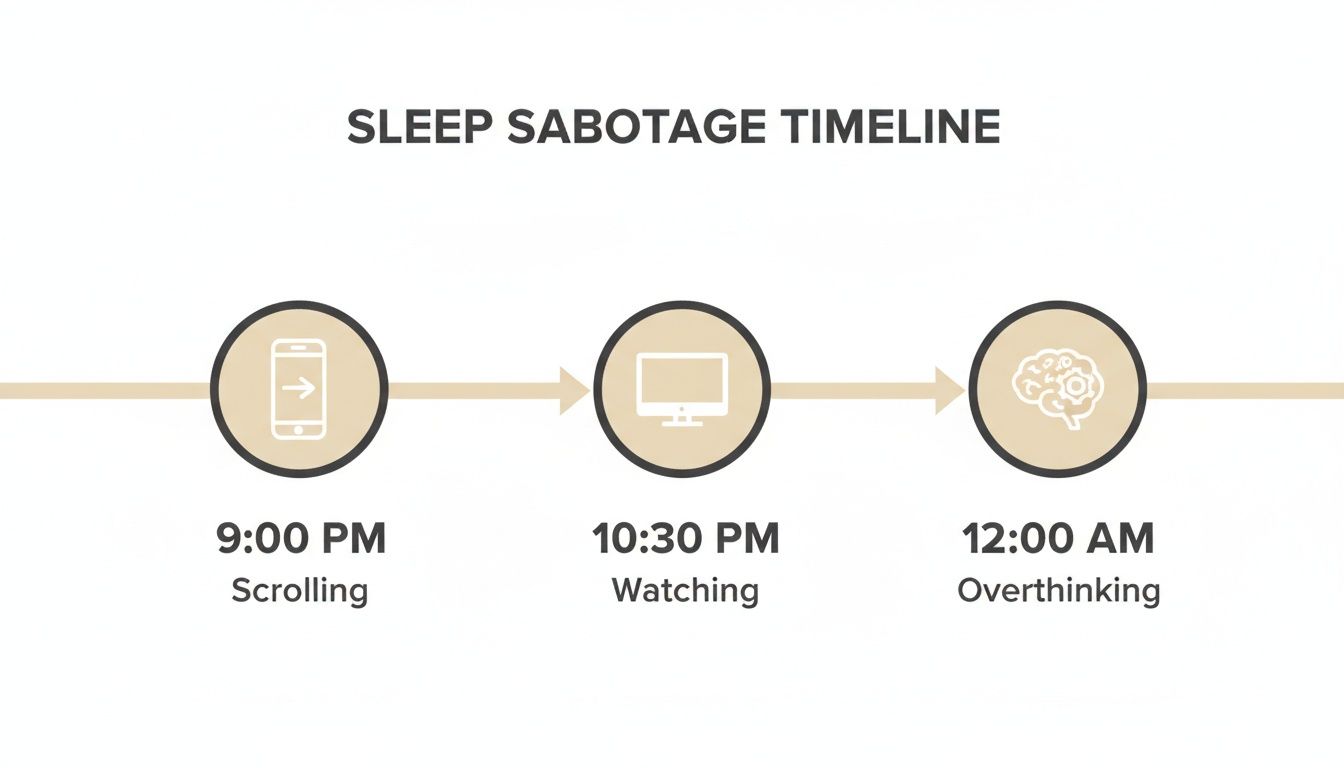
This cycle is frustratingly common, but it also shows us exactly where we have the power to make a change: that crucial hour or two before bed.
The 10-3-2-1-0 Rule for a Perfect Wind-Down
Putting this science into practice doesn't have to be complicated. In fact, some of the best advice I’ve seen comes from a simple, memorable framework that sleep experts often recommend. It's called the "10-3-2-1-0" rule, and it provides a clear roadmap for your evening.
| Time Before Bed | Action to Take | Why It Works |
|---|---|---|
| 10 Hours | No more caffeine. | Caffeine has a long half-life and can disrupt your natural sleep cycle long after you've finished your cup. |
| 3 Hours | Finish large meals and alcohol. | This gives your body time to digest and prevents heartburn or the sleep-disrupting effects of alcohol. |
| 2 Hours | Stop all work. | Disengages your brain from problem-solving mode, reducing that "on" feeling when you try to rest. |
| 1 Hour | Power down all screens. | Blue light from phones, TVs, and tablets suppresses melatonin, the hormone that signals sleep time. |
| 0 Times | Hit the snooze button. | Waking up consistently teaches your body to respond to its natural alarm clock, avoiding grogginess. |
This isn't just a list of things to avoid—it's about consciously creating space for calming activities to take their place. That final hour is your golden window, the perfect time to introduce your new ritual. It's a proven strategy: a reliable bedtime routine helps you regulate your emotions by cutting out the late-night cognitive overload and digital stimulation that so often trigger insomnia.
By embracing a simple, repeatable framework, you stop hoping for better sleep and start systematically creating the ideal conditions for it. This isn't magic; it's just neuroscience in action.
Let's Build Your 30-Minute Calming Ritual
Alright, enough with the theory. Let's get practical. Building a powerful bedtime routine for better sleep isn't about jamming more tasks into an already packed day. It's about carving out a simple, repeatable ritual that puts a firm, clear boundary at the end of it.
A 30-minute window is the perfect place to start. It's long enough to actually work, but short enough that it never feels like a burden—even on those nights when you’re completely wiped out.
Think of this half-hour as your personal sanctuary. It's protected time. The goal is to create a seamless transition that gently coaxes your mind away from the day's chaos and quiets your nervous system for deep, restorative rest. Trust me, consistency will always beat complexity here.
The Heart of Your Ritual: A Mono Moment
The centerpiece of this entire routine is what I call a "Mono Moment"—a 15 to 20-minute session with our One Color Coloring Book and a simple pen. The real magic here is in what it lacks: choice.
For a brain that’s made hundreds of tiny (and not-so-tiny) decisions all day long, the absolute last thing it needs is more.
By stripping away the need to pick colors, match palettes, or fret about the finished product, you instantly silence a huge source of mental chatter. Your focus shifts entirely to the simple, rhythmic sensation of pen on paper. This single-minded focus helps quiet the analytical, problem-solving part of your brain, letting you ease into a meditative state without even trying. It's one of the most effective mindfulness exercises for stress relief because it gets you into the present moment effortlessly.
Here’s a glimpse of what that simple, decision-free canvas looks like, ready to help you unwind.
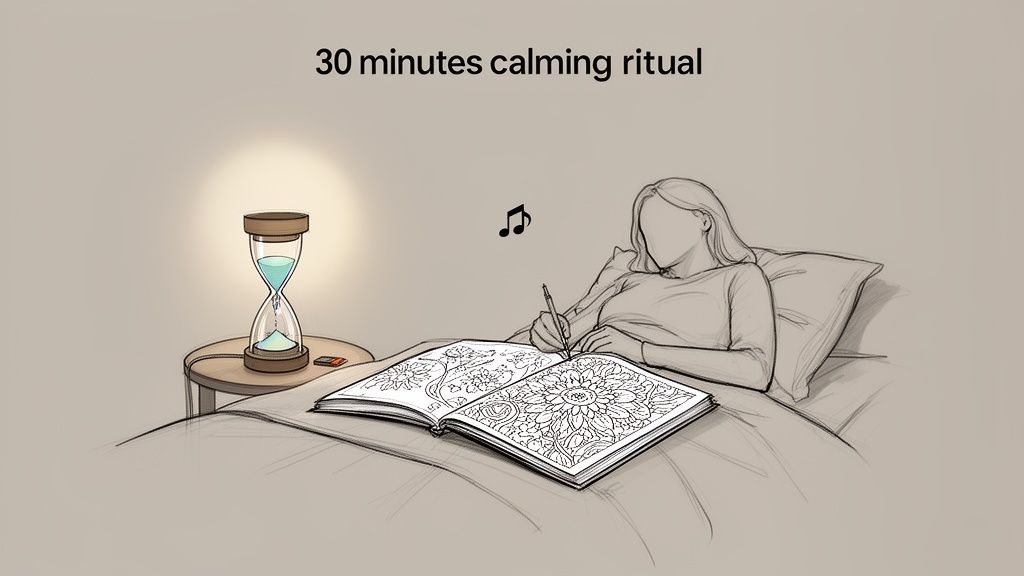
This image really captures the essence of a peaceful wind-down, where one focused, uncomplicated activity becomes the anchor for your whole evening.
A Sample 30-Minute Wind-Down Timeline
To make this super practical, here’s a rough sketch of what those 30 minutes could look like. Remember, this is just a template—feel free to adjust it until it feels right for you.
-
Minutes 1–5: Set the Scene
This is your signal to start the transition. Dim the lights to a warm, soft glow. Turn on a calming playlist—think instrumental tracks, ambient music, or nature sounds. The key is to avoid anything with lyrics that could hook your brain and pull you into a story. -
Minutes 6–25: Your Mono Moment
Time to settle in with your Mono Moment One Color Coloring Book. Find a comfy spot, maybe propped up in bed or in a favorite chair. Take a few slow, deep breaths and just begin. Don't rush it or try to make it perfect. The goal is the process, not the product. Just let your mind follow the intricate lines and patterns. -
Minutes 26–30: The Final Touches
When you’re done coloring, close the book and just sit for a moment. This is a great time for a few gentle stretches to release any lingering physical tension. You could also spritz a little lavender spray on your pillow or take a final sip of a warm, caffeine-free herbal tea.
This simple, structured timeline does more than just fill 30 minutes. It creates a predictable sequence that your brain learns to associate with sleep, making the entire process more automatic and effective over time.
By dedicating just half an hour to this calming ritual, you're doing more than just getting ready for bed. You are actively training your brain to let go of the day, dial down the anxiety, and finally get the deep, restorative sleep you actually deserve.
Your Screen-Free Sanctuary with Mono Moment

The true hero of your new bedtime routine for better sleep is a tool built from the ground up to quiet a racing mind. Let’s talk about why the Mono Moment One Color Coloring Book is more than just a creative outlet—it’s a purpose-built sanctuary for overthinkers.
Its real power is in its simplicity. By taking the choice of color completely off the table, we sidestep one of the biggest sources of mental friction in any creative project. There's no pressure to pick the perfect palette or fret about how it will look when you're done. There is only the simple, soothing motion of pen on paper. This decision-free process is what allows your brain to finally shift gears, moving from the day’s endless analysis into a gentle, meditative state.
More Than Just a Coloring Book
We were intentional with every detail of the Mono Moment experience. This isn’t just about filling in patterns; it’s about giving you a reliable, calming ritual you can genuinely look forward to each night with all our products, especially our flagship coloring book.
- Premium 160gsm Paper: We chose thick, high-quality paper for one reason: no marker bleed-through. You can use your favorite pens or our custom Mono Moment brush pen set and completely lose yourself in the moment without worrying about ruining the next page.
- Intricate, Scoped Illustrations: Every design is crafted to be finished in a single 15–30 minute session. This is so important because it gives you a sense of completion without feeling overwhelming—the perfect length for a nightly wind-down.
- A Focus on Flow: The patterns are just complex enough to capture your attention but repetitive enough to feel incredibly calming. This is the sweet spot where you find a state of "flow," where your mind is so engaged in what you're doing that anxious thoughts just fade into the background.
This kind of thoughtful design is what turns a simple coloring session into a powerful tool for mental peace.
The goal of a 'Mono Moment' isn't to create a masterpiece. It's to create a moment of quiet. By giving your mind a single, gentle focus with our One Color Coloring Book, you provide an off-ramp from the day's racing thoughts, making space for genuine rest.
Finding Your Calm in a Busy World
Let’s be honest—truly unplugging is way harder than it sounds. Recent survey data shows that only about 30% of people actually put their electronics away before bed. While many others turn to reading or meditation, a low-effort, screen-free activity like monochrome coloring fits perfectly into that pre-sleep window. It offers a cognitively gentle way to bridge the gap between stimulation and rest. You can see more on these bedtime routine trends and insights from the AASM.
When you swap your screen for a pen and paper, you're doing more than just avoiding blue light. You are actively engaging in a practice that calms your nervous system. The Mono Moment book gives you a tangible, beautiful way to reclaim the last moments of your day and turn them into a peaceful sanctuary before you drift off to sleep.
What To Do When Your New Routine Isn’t Working
Let's be real: starting a new habit is never a straight line. You’ll have a few amazing nights with your new bedtime routine, feeling calm and sleepy, and then suddenly hit a wall. Maybe you’re too exhausted to even think about it, or maybe you do the whole thing and still find your mind racing.
This is completely normal. The goal isn't perfection; it's consistency and a little bit of self-compassion.
Instead of throwing in the towel when things get tough, think of these moments as a chance to tweak your approach. A truly effective routine isn't set in stone. It’s flexible, designed to fit the messy reality of your life, not the other way around. Let's dig into a couple of the most common roadblocks and figure out how to navigate them.
When Consistency Feels Impossible
Life happens. A brutal day at work, an unexpected family thing—suddenly, you’re drained and have zero energy for a 30-minute ritual. This is where the all-or-nothing mindset becomes your worst enemy.
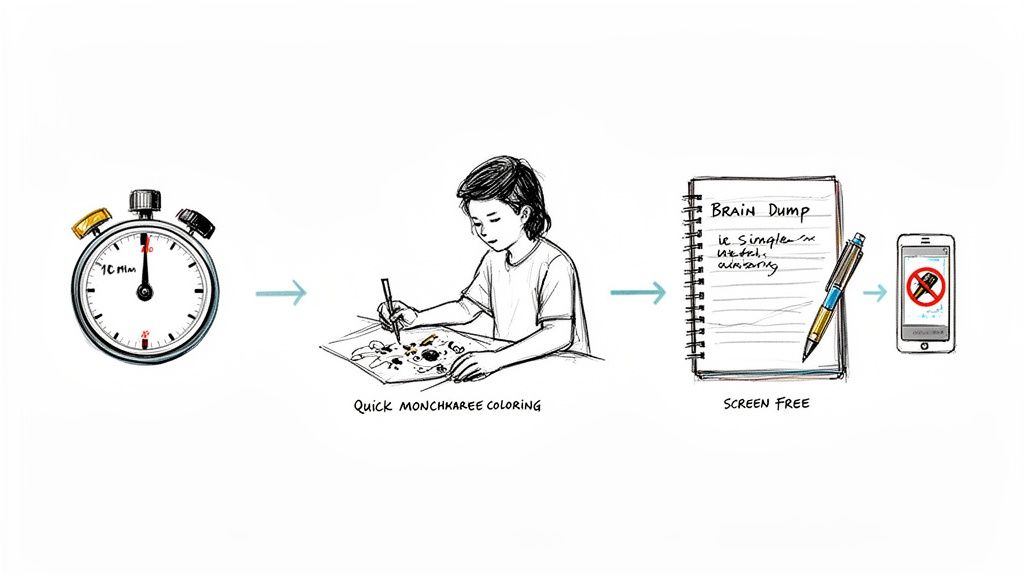
The trick? Have a "micro-routine" in your back pocket. This is your bare-minimum, better-than-nothing wind-down that you can knock out in just 10 minutes.
-
Your 10-Minute Lifesaver:
- Minutes 1-2: Dim the lights. Put your phone on its charger across the room.
- Minutes 3-8: Grab your Mono Moment One Color Coloring Book and color for just five minutes. No pressure to finish a page or make it perfect. Just focus on the simple motion.
- Minutes 9-10: Close the book, take three deep, slow breaths, and climb into bed.
This tiny ritual still sends that crucial "it's time for sleep" signal to your brain. Trust me, a short but consistent routine is way more powerful than a long one you only manage to do once a week.
When Anxiety Crashes The Party
So you’ve dimmed the lights and had a relaxing coloring session, but the second your head hits the pillow, anxious thoughts come flooding back. The day's worries, the endless to-do list for tomorrow—they’re all there, ready to keep you awake.
If this sounds familiar, your routine might just need one extra step to help fully quiet your mind. This is where the "brain dump" becomes an absolute game-changer. It's as simple as it sounds: get all those swirling thoughts out of your head and onto a piece of paper.
Before you even open your coloring book, spend five minutes just writing. Scribble down every worry, task, or random idea bouncing around in your brain. This act of getting it all out prevents those thoughts from hijacking your quiet time.
By putting it all on paper, you’re giving your brain permission to let go for the night. You’ve captured it, so it won’t be forgotten. This clears the mental clutter, allowing the meditative focus of coloring to truly work its magic. Your routine isn't broken; it just needed a small adjustment to meet your mind where it’s at.
Even with the best intentions, a new routine can hit snags. Here’s a quick guide to some common hurdles and how to get past them.
Common Bedtime Routine Hurdles and Solutions
| Challenge | Why It Happens | Actionable Solution |
|---|---|---|
| "I'm too tired to do anything." | Exhaustion or decision fatigue from a long day makes even small tasks feel monumental. | Default to your 10-minute micro-routine using your Mono Moment book. It's short enough to feel manageable but effective enough to signal sleep. |
| "I get distracted by my phone." | The pull of notifications and endless scrolling is a powerful, ingrained habit that's hard to break. | Physically move your phone out of arm's reach 30 minutes before you plan to start your routine. Charge it in another room if you have to. |
| "My mind is still racing afterward." | You might need a more active way to process the day's events before you can switch to a passive, relaxing activity. | Add a 5-minute "brain dump" before you start your Mono Moment coloring session. Write down everything on your mind to clear your mental cache. |
| "It feels like a chore." | The routine might not genuinely feel enjoyable or relaxing to you. Personal preference is key to long-term success. | Experiment with the elements. Try a different calming activity like gentle stretching or listening to an ambient soundscape instead of coloring one night. Find what you actually look forward to. |
Remember, the point of this routine is to reduce stress, not add to it. If something isn't working, don't force it. Just adjust, adapt, and give yourself the grace to figure out what your mind and body truly need to unwind.
Still Have a Few Questions?
Starting a new bedtime routine is a big step, and it's totally normal to have questions before you dive in. I've heard a lot of them over the years, so let's tackle the most common ones. My hope is to give you the clarity you need to build a ritual that feels right for you and finally helps you get the deep rest you’ve been missing.
How Long Does It Really Take for a New Routine to Work?
I get this one a lot. While you might feel a little calmer after just one or two nights, the real magic happens with consistency. Give it a solid 1-2 weeks for your mind and body to truly catch on.
Think of it this way: you're forging a new habit, creating a powerful psychological cue. You're teaching your brain that when you sit down with your Mono Moment book, it's the official signal to start powering down for sleep. The more you stick with it—yep, even on weekends—the stronger that connection becomes, and the better your results will be.
What If I Only Have 10 Minutes a Night?
Perfect. Seriously. A short, consistent ritual that you actually do is infinitely better than an ambitious hour-long routine that you skip half the time. The power is in the repetition, not the duration.
If you’re crunched for time, just create a "micro-routine." It can be as simple as dimming the lights, putting on some quiet music, and coloring just one small part of a Mono Moment page. That’s it. Even that tiny, focused act is enough to start sending the "it's time for sleep" memo to your brain.
Can I Listen to a Podcast While I Color?
You absolutely can, but choose your audio wisely. Whatever you listen to should be a supporting actor in your wind-down show, not the star.
- Good choices: Calming ambient music, nature sounds, or a very low-key podcast with a soothing, monotone voice.
- What to avoid: Anything with a gripping story, heated debates, or loud, jarring ads. Those will just kick your analytical brain back into high gear, which is exactly what we're trying to prevent.
Think of your audio as the wallpaper for your quiet space. It should add to the peaceful atmosphere, not demand your attention.
Why Is Monochrome Coloring Better for Sleep?
This is the key. Monochrome coloring is built from the ground up to quiet an overthinking mind because it removes one major source of mental chatter: decision fatigue.
When you open a typical adult coloring book, your brain immediately starts working. Which color should I use here? Will these two clash? What should the final product look like?
That's a lot of mental work right before bed.
The Mono Moment experience is different. By using just one or two pens, you strip away all those choices. The act becomes a simple, meditative rhythm of filling in patterns. You're not trying to create a masterpiece; you're creating a moment of mental quiet. This lets your mind naturally drift into a restful state without being burdened by one more set of decisions. Our entire line of products is built on this philosophy.
Ready to build a routine that finally silences your racing mind? The Mono Moment One Color Coloring Book is designed to be the centerpiece of your new screen-free sanctuary. Discover the perfect tool to start your journey to better sleep tonight at mono-moment.com.

The One Color Coloring Book
A single-pen, decision-free coloring book on 160 gsm cream paper — engineered for the wind-down ritual described above.
 Pair it with the 3 Dual Tip Brush Pens — $5 instead of $9.95 in the Book + Pens bundle.