About the author
Published December 29, 2025 · Last reviewed April 26, 2026 · 20 min read
In this article · 7 sections
- Your Practical Toolkit for Natural Anxiety Relief
- Ground Yourself with Your Breath and Senses
- Find Your Flow with Mindful Activities
- Build a Lifestyle That Supports Lasting Calm
- Build Your Own Anxiety-Calming Rituals
- Knowing When It's Time for Professional Support
- Got Questions? Let's Talk Natural Anxiety Relief
When anxiety starts to spiral, the last thing you need is a complicated solution. The secret to calming yourself down naturally is having a few simple, powerful tools ready to go.
It really comes down to shifting your focus from the storm in your head to your immediate, physical reality. We'll get into specific techniques, but they all revolve around three core ideas: intentional breathing, sensory engagement, and structured creative outlets. These methods work fast because they send a direct signal to your nervous system that you’re safe and in control.
Your Practical Toolkit for Natural Anxiety Relief
Think of this as your go-to toolkit for those moments when you feel the overwhelm creeping in. Forget abstract theories for now. We're talking about tangible, in-the-moment actions you can take to ground yourself and quiet the internal noise. This is about building a set of reliable skills that help you reclaim a sense of calm whenever you need it most.
And if you’re feeling this way, you are far from alone. Anxiety is the most common mental health concern in the U.S. and worldwide.
As you can see, there's a significant gender disparity, with women experiencing anxiety at nearly twice the rate of men. These numbers just go to show how many of us are looking for accessible, effective ways to manage anxiety in our daily lives.
Why Simple, Structured Activities Work
When you're in the thick of anxiety, your brain is essentially in "fight or flight" mode. Even small, simple decisions can feel absolutely monumental. This is exactly why structured, decision-free creative activities are such a game-changer. They give your busy mind a gentle, predetermined path to follow, which drastically reduces the mental load and invites a state of calm focus.
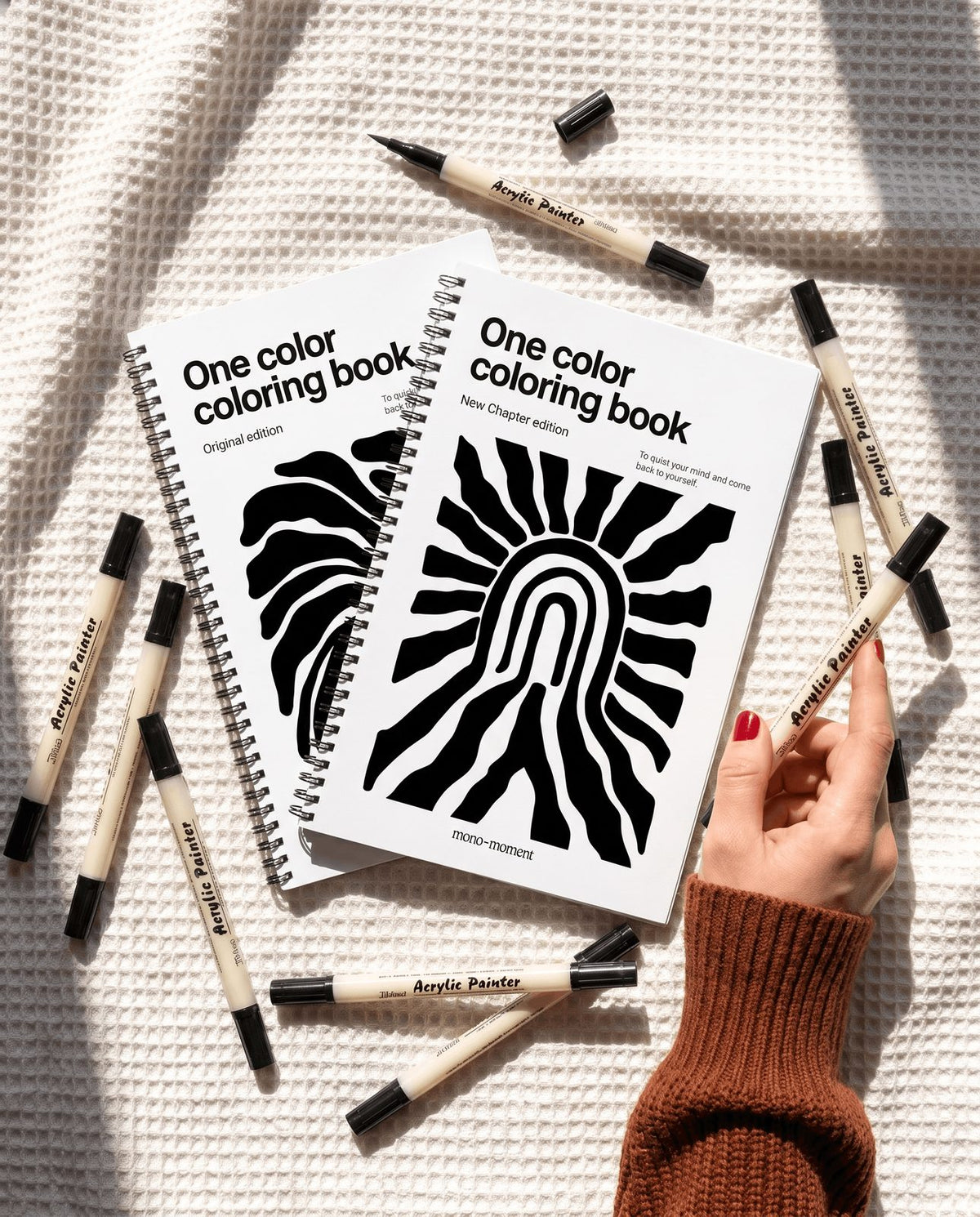
For example, an activity that removes choices—like what colors to use or what to draw—lets you just do. You can simply engage with the process without the pressure of getting it "right." This is the core principle behind our Mono Moment coloring book. We designed it specifically for overthinkers by taking all the color decisions off the table.
The goal isn't to create a masterpiece. It's to give your mind a structured escape. By focusing on the simple, repetitive act of filling in a pattern, you quiet the part of your brain that's stuck on a loop of anxious thoughts.
This simple shift transforms a creative act into a powerful and reliable self-care ritual.
Three Pillars of Natural Anxiety Management
All the techniques we'll cover in this guide are built on three foundational pillars. Understanding them will help you pick the right tool for the right moment, creating a solid strategy for both immediate relief and long-term resilience.
Here’s a quick overview of these pillars:
Three Pillars of Natural Anxiety Management
| Pillar | Core Action | Why It Works |
|---|---|---|
| Regulate the Nervous System | Using your breath to activate your body's relaxation response (the parasympathetic nervous system). | This is the fastest way to physically slow a racing heart, ease muscle tension, and tell your body it's safe. |
| Ground Your Senses | Pulling your attention out of your thoughts and into the present by focusing on what you can see, hear, touch, taste, or smell. | It interrupts the cycle of worry by anchoring you in the immediate, tangible world, proving you're not in danger. |
| Engage in Mindful Flow | Immersing yourself in activities that hold your focus without causing stress, creating a meditative state. | It gives your "anxiety brain" a break, allowing you to get lost in a simple task and quiet the mental chatter. |
By mastering a few simple practices within each of these pillars, you’ll be well-equipped to handle anxiety when it arises and build a more peaceful baseline over time.
Ground Yourself with Your Breath and Senses
When your mind starts racing and the world feels like too much, your own body can be your strongest anchor. Anxious thoughts love to drag you into catastrophic future scenarios or replay past mistakes, but your breath and your five senses? They only exist right now. This is why so many powerful, natural ways to calm anxiety begin with simple, body-based techniques that pull you back to the present moment.
There’s a real biological reason these methods work so well. When anxiety hits, your sympathetic nervous system—your body’s “fight or flight” alarm—goes into overdrive, making your heart pound and your muscles tense up. Intentionally slowing your breath or focusing on your senses sends a direct message to your parasympathetic nervous system, the “rest and digest” system, telling it that the danger has passed and it's safe to stand down.
Master Your Breath to Master Your Mind
You can't just tell your heart to stop racing, but you can take control of your breathing. And when you do, your heart gets the message. Your breath is the most direct lever you have to shift your entire physiological state from panicked to peaceful. One of the most tried-and-true techniques I recommend is the 4-7-8 breathing method.
It’s incredibly simple. Here’s how you do it:
- Find a comfortable spot, either sitting or lying down.
- Let out all your air with a gentle whoosh sound.
- Close your mouth and breathe in quietly through your nose to a count of four.
- Hold that breath for a count of seven.
- Exhale completely through your mouth, making that same whoosh sound, for a count of eight.
- Do this for three or four full cycles.
The real magic here is in that long exhale. It physically forces your heart rate to slow down, kicking that calming parasympathetic response into gear. Think of it as a physiological reset button you can press anytime, anywhere—right before a big meeting, in a crowded grocery store, or when you jolt awake at 3 a.m. with a racing mind.
Use Your Senses to Interrupt Anxious Thoughts
Ever been stuck in a worry loop where trying to "think" your way out only makes it worse? It's a frustratingly common experience. Grounding techniques are the antidote because they shift your focus from your chaotic internal world to the stable external one. The 5-4-3-2-1 method is a classic for a reason: it works.
Picture this: you're about to give a presentation and you feel that familiar wave of panic rising. Instead of getting swept away by it, pause. Silently, just to yourself, name:
- 5 things you can see: The subtle wood grain on the table, the blue cap on your pen, a light fixture on the ceiling, the pattern on a colleague's tie, a crack in the plaster. Get specific.
- 4 things you can feel: The cool, smooth surface of the desk under your hands, the texture of your trousers, the gentle pressure of your feet inside your shoes, the weight of your phone in your pocket.
- 3 things you can hear: The low hum of the computer fan, the distant sound of traffic, the quiet rhythm of your own breathing now that you’re paying attention to it.
- 2 things you can smell: The faint aroma of coffee in the room or maybe the clean scent from your hand sanitizer.
- 1 thing you can taste: The lingering flavor of your morning coffee or simply the neutral taste of your own mouth.
This exercise forces your brain to hit the brakes on its frantic spiral and pay attention to concrete, neutral information. It’s not about ignoring the anxiety; it’s about proving to yourself, in a very real way, that you are safe in your immediate environment.
By deliberately engaging your senses, you interrupt the anxiety cycle. You’re telling your brain, "I am here, right now, and in this moment, I am okay." It’s an incredibly effective way to reclaim your focus.
For a more structured approach, a mindful activity can be just as powerful. The simple, repetitive motion of filling in a design in the Mono Moment coloring book creates a tangible focus point for an overwhelmed mind. You can zero in on the physical sensation of the pen gliding across the premium 160gsm paper, the soft sound it makes, and the visual satisfaction of seeing black ink fill the white space. This deliberate sensory engagement offers a reliable escape hatch, turning anxious energy into a calm, creative ritual.
Find Your Flow with Mindful Activities
Let's be honest, "mindfulness" can sound intimidating. You might picture someone sitting perfectly still, meditating for hours on end. But it doesn't have to be that. True mindfulness is about finding small, intentional ways to pull your mind back to the present moment, especially when it’s spinning out with “what-if” scenarios.
Hands-on activities are one of my favorite ways to do this. They help you find a state of flow—that amazing feeling where you're so absorbed in what you're doing that the world (and your worries) just melts away.
This isn’t just a nice distraction; it’s practically a neurological reset. When you're in a flow state, the activity in your amygdala—the brain's alarm system—actually quiets down. The trick is to find an activity with simple, clear rules that gives your overactive mind a gentle, structured path to follow instead of adding more chaos.
The Power of Decision-Free Creativity
When you're already overwhelmed, even the tiniest choices can feel like climbing a mountain. What color should I use here? Which pattern looks best? Am I doing this right? This is decision fatigue, and it’s a massive barrier when you’re trying to find calm.
That's precisely why activities that remove the pressure of choice are so powerful. They eliminate the fear of messing up and let you just be.
Some great examples include:
- Knitting a simple scarf with a repeating pattern.
- Working on a jigsaw puzzle.
- Following a familiar recipe to bake bread.
- Engaging in monochrome coloring, which is the core concept of the products at Mono Moment.
Each one gives you a framework. It guides your hands and frees up your mind, allowing your entire nervous system to shift from high alert down to a state of calm focus.
A Tool for Effortless Flow
We had this exact principle in mind when we designed our Mono Moment coloring book. By stripping away color choices entirely, we took the biggest source of decision fatigue right off the table. You don't have to agonize over sky blue versus cerulean. You just pick up a black pen and start.
Imagine the relief of sitting down with a beautiful illustration knowing your only job is to fill the spaces. This isn't about creating a masterpiece; it's about giving your mind a much-needed rest.
The goal is to turn anxious energy into a calming, tangible ritual. By focusing on the simple, repetitive motion of the pen on paper, you create a mindful anchor that grounds you in the here and now.
We use premium 160gsm paper that feels solid and stops ink from bleeding through, so you can relax and use your favorite pen without worry. The illustrations are also designed to be finished in 15 to 30 minutes—the perfect structured escape that won't become another overwhelming project on your to-do list. It’s a reliable and beautiful tool for anyone learning how to calm anxiety naturally.
Why This Approach Works on a Deeper Level
This isn’t just a trendy self-care hack; its power is rooted in how our brains handle stress. And let's face it, the need for accessible mental wellness tools has never been more urgent. In 1990, about 311 million people globally had anxiety disorders. By 2019, that number had exploded to 458 million.
The pandemic then threw gasoline on the fire, triggering a 27.9% surge in cases in 2020 alone. Yet, only 27.6% of people who need support actually receive any form of treatment. This is why simple, accessible practices can be lifelines.
Peer-reviewed research shows that structured, decision-free coloring calms the amygdala by promoting that meditative flow state. Want to read the science for yourself? You can explore the full study from Frontiers to understand the global impact of anxiety and the research behind these calming methods.
When you get lost in a simple, absorbing activity, you're not just distracting yourself. You are actively helping to regulate your own nervous system. For more ideas, check out our guide on quick mindfulness activities for adults.
This kind of mindful engagement channels restless energy into something focused, beautiful, and deeply calming. Whether it's the click of knitting needles or the glide of a pen on paper, these activities offer the predictable rhythm an anxious mind craves, making them a vital part of any natural anxiety relief toolkit.
Build a Lifestyle That Supports Lasting Calm
While the quick-fix techniques are your emergency toolkit, true, lasting peace isn't found in a single moment. It’s built, day by day, through the small, consistent choices you make. Creating a lifestyle that supports your mental well-being doesn’t mean you have to overhaul your entire life overnight. It's about making small, sustainable shifts that build a strong foundation, making you far more resilient when life throws its inevitable curveballs.
Think of it this way: your nervous system is like a bucket. Every stressor—a looming deadline, a tough conversation, even just a blaring car alarm—adds a little water. The in-the-moment techniques help you bail that water out. But a supportive lifestyle? That makes the entire bucket bigger.
This is your blueprint for creating daily habits that reinforce a sense of calm, focusing on the big three: sleep, movement, and nutrition.
Design a Sleep-Friendly Evening Routine
You can't talk about a calm mind without talking about high-quality sleep. It's non-negotiable. While you sleep, your brain and body are hard at work repairing, processing emotions, and hitting the reset button. Poor sleep throws your body’s main stress hormone, cortisol, out of whack, leaving you feeling on edge before you’ve even had your morning coffee.
The secret is to create a "power-down hour" before bed. This is your dedicated time to signal to your body and brain that it's time to wind down.
- Dim the lights. An hour before bed, lower the lights in your environment. This simple act encourages your brain to start producing melatonin, the hormone that tells your body it's time for sleep.
- Disconnect from screens. We all know it, but it's worth repeating. The blue light from our phones and laptops messes with melatonin production. Put your devices away and pick up something analog.
- Find a calming ritual. This is the perfect time for a gentle, decision-free activity that quiets the mental chatter. Spending just 15 minutes with your Mono Moment coloring book is a fantastic way to do this. The simple, repetitive motion of filling in monochrome designs on that premium 160gsm paper is deeply meditative and helps silence the day's noise.
This kind of consistent routine trains your brain to associate these activities with rest, making it much easier to fall asleep and, just as importantly, stay asleep.
Move Your Body to Soothe Your Mind
When you’re already feeling anxious, the thought of a grueling workout can feel completely overwhelming. But that’s not what this is about. The goal isn't to push your body to its limits; it's to use gentle movement to release all that pent-up nervous energy and physical tension.
Movement helps your body metabolize stress hormones and gives you a nice boost of feel-good endorphins.
Instead of high-intensity training that can sometimes spike cortisol, try incorporating more soothing forms of movement into your day:
- A brisk walk outside, preferably somewhere green.
- Some gentle stretching or a slow-flow yoga session.
- Even just putting on your favorite song and dancing around the living room.
Just 20-30 minutes of moderate movement a day can have a profound impact. It shifts your entire physiological state from one of high-alert tension to one of relaxed, grounded energy.
Movement is a powerful way to communicate safety to your body. It tells your nervous system that you are not frozen by fear but are capable and in control, effectively discharging the "fight or flight" energy.
Tame Your Nervous System with Smart Nutrition
What you eat and drink has a direct line to your nervous system. While a whole-foods, balanced diet is obviously key, one of the biggest and easiest things to address is caffeine. Caffeine stimulates your adrenal glands to pump out more cortisol and adrenaline—the very hormones that drive the stress response.
If you're already prone to anxiety, that afternoon coffee could be the thing that pushes your sensitized nervous system right into overdrive.
Consider a simple swap. It can make a world of difference.
- Try replacing your second (or third) coffee of the day with a calming herbal tea. Chamomile or peppermint are excellent choices.
- If you can't quit cold turkey, no problem. Try switching to half-caff or green tea. Green tea has less caffeine and also contains L-theanine, an amino acid known for promoting a sense of relaxation.
This one small adjustment can significantly lower your baseline level of stimulation, making it so much easier to maintain a sense of calm throughout your day. If you want to dive deeper into the relationship between stress and your daily habits, you can learn more about how to reduce cortisol levels naturally in our detailed guide.
By making these mindful choices, you are actively building resilience. A calming evening ritual, a gentle walk, a thoughtful drink swap—these are the building blocks of a life that doesn't just manage anxiety but fosters a genuine, lasting sense of peace.
Build Your Own Anxiety-Calming Rituals
Knowing how to calm down is one thing. Actually finding the time to do it? That's the real battle for most of us. Self-care can start to feel like another chore on an already overflowing to-do list, which, ironically, just adds to the stress.
So, let's reframe this. This isn't about carving out an extra hour you don't have. It's about being intentional with the small pockets of time that already exist in your day. Think about the five minutes before a video call, the fifteen minutes between meetings, or the thirty minutes you spend scrolling before bed.
By creating a personalized ritual, you make these powerful practices feel less like a duty and more like a welcome, sustainable part of your life.
The 5-Minute Anxiety Reset
Five minutes might not seem like a lot, but when your heart is pounding, it’s enough to completely shift your body out of fight-or-flight mode. When you're short on time and high on stress, you need a quick, potent intervention that gets right to the point.
- Try a Physiological Sigh: This is a fantastic trick I learned, and it works wonders. It's not just any deep breath. You take two sharp inhales in a row through your nose, then one long, slow exhale through your mouth. This simple action is one of the fastest known ways to offload carbon dioxide and tell your nervous system it's safe to stand down.
- Do a Sensory Focus: Pick one thing in your room—a plant, a picture frame, a crack in the wall—and just look at it for a full minute. Notice its color, texture, and shape without judging. This tiny meditation yanks your focus out of the anxiety spiral and grounds you squarely in the present.
Your 15-Minute Mindful Break
Fifteen minutes is the sweet spot. It’s long enough to truly disengage from whatever is stressing you out and immerse yourself in something that genuinely calms your mind. This is where a simple, structured activity can be a total game-changer.
I like to think of this as the perfect midday pause—a real opportunity to step away from the screen and give your brain a gentle, predetermined path to follow instead of letting it run wild.
This is the ideal window to start a page in your Mono Moment coloring book. The illustrations are intentionally designed to be finished in about this amount of time, giving you a tangible sense of accomplishment without the pressure of a huge, multi-day project. Just filling in the monochrome designs is a beautifully focused, meditative escape.
Because you don't have to think about choosing colors, you can sink right into a state of flow, turning a short break into a deeply restorative moment. If you want to dive deeper into why this focused creativity is so effective, you can learn more about mindfulness coloring books for adults in our dedicated guide.
The 30-Minute Wind-Down Ritual
A dedicated 30-minute period, especially at the end of the day, can be a true gift to your well-being. This is your chance to create a complete sensory experience that signals to your entire body that it's time to power down, release the day's tension, and get ready for deep, restorative sleep.
Here’s how you can combine a few elements for a powerful calming sequence:
- Set the Scene: Start by brewing a cup of herbal tea, like chamomile or lavender. Put on a playlist of soft, ambient music to shift the atmosphere in the room.
- Engage Your Hands: Settle in and finish the page you started earlier in your Mono Moment coloring book. The thick 160gsm paper is a dream to work on—it ensures a smooth, satisfying experience with your favorite pens, so you can get lost in the patterns without any frustrating bleed-through.
- Reflect and Release: After you finish coloring, use the last few minutes to jot down three things from the day you're grateful for. It’s a small act, but it works wonders to shift your focus from worry to appreciation right before you sleep.
Let's be honest: the need for these kinds of accessible, natural tools has never been greater. Back in 2020, anxiety disorders became the third leading cause of Years Lived with Disability (YLDs) worldwide. And with huge gaps in treatment—where only about 1 in 4 people ever get professional help—practices like mindful coloring offer real, proven relief by lowering cortisol and calming the brain’s fear center. You can find more of these global anxiety statistics on TherapyRoute.com.
Knowing When It's Time for Professional Support
Natural strategies are fantastic for managing the day-to-day waves of anxiety. Having your Mono Moment coloring book handy or mastering a deep breathing exercise can build some serious resilience and give you a sense of control. But it's also crucial to be honest with yourself about when these tools might not be enough on their own.
Reaching out for professional help isn't admitting defeat. Far from it. It's an act of profound strength and self-care—a sign that you're taking your well-being seriously enough to bring an expert onto your team. In my experience, combining these natural, self-soothing methods with professional guidance is often the most powerful way to find lasting peace.
Signs It Might Be Time to Talk to Someone
So, how do you know when it’s time to take that step? Everyone's journey is different, but a few clear signs suggest that professional support could make a real difference. Think about reaching out if you notice anxiety is starting to:
- Interfere with daily life. Is it getting harder to focus at work? Are you constantly battling anxious thoughts just to get through your to-do list?
- Damage your relationships. Have you become more irritable or withdrawn? Is anxiety creating a wall between you and the people you love?
- Affect your physical health. Maybe you're dealing with chronic sleep issues, constant stomach upset, or tension headaches that just won't quit.
- Stop you from enjoying things. Have you found yourself turning down social invitations or giving up hobbies because the thought of them feels too overwhelming?
If any of that sounds painfully familiar, it could be a signal that it's time to seek a helping hand.
A good therapist doesn't take away your coping skills; they add to them. They give you a safe, confidential space to dig into the roots of your anxiety and help you build a stronger, more personalized toolkit.
I know that finding a therapist can feel like a huge task, but it doesn't have to be. Online directories can be a great starting point, or you can simply ask your family doctor for a trusted referral. Your first appointment is usually just a conversation—a chance to share what's been going on and see if you click with the person. Finding the right fit is everything, as that trust is the foundation for your entire wellness journey.
Got Questions? Let's Talk Natural Anxiety Relief
When you start exploring ways to manage anxiety naturally, a lot of questions pop up. It’s completely normal. Let’s walk through some of the most common ones I hear so you can feel more confident on your path to calm.
"How Fast Will This Actually Work?"
This is probably the number one question people have. The honest answer? It depends. Some techniques give you a near-instant payoff. A quick physiological sigh or planting your feet firmly on the floor can genuinely slow a racing heart in just a minute or two.
On the other hand, building lasting resilience takes a bit more time. Think of it like building a muscle. Consistently using tools like our Mono Moment coloring book helps create a new, calmer baseline for your nervous system. Many people start feeling a real, noticeable shift in their daily stress levels within a few weeks of dedicated practice.
"Can I Just Stop My Meds and Do This Instead?"
This is a really important question, and it's one that absolutely must be discussed with your doctor.
Natural strategies are incredible tools for your mental health toolkit. They can work beautifully alongside professional care and, for many, can dramatically ease symptoms. However, they are not a one-for-one replacement for medication. Never, ever stop or alter a prescribed medication without your doctor's direct guidance. It's best to see these practices as powerful allies in your overall wellness journey.
"What If I'm Too Stressed to Remember to Do Any of This?"
I get it. When you're already overwhelmed, adding another thing to your to-do list feels impossible. The secret isn't forcing it; it's making it easy.
Don't try to build a huge new routine overnight. Instead, link one small new habit to something you already do every single day. For instance, you could decide to color one page in your monochrome coloring book right after you finish dinner. By making it simple and accessible, you transform it from a chore into a genuinely enjoyable ritual you actually start to crave.
Ready to build your own calming ritual? The Mono Moment monochrome coloring book is designed to give your anxious mind a beautiful, decision-free escape.
Discover your moment of calm today at https://mono-moment.com

The One Color Coloring Book
A single-pen, decision-free coloring book on 160 gsm cream paper — engineered for the wind-down ritual described above.
 Pair it with the 3 Dual Tip Brush Pens — $5 instead of $9.95 in the Book + Pens bundle.