About the author
Published December 11, 2025 · Last reviewed April 26, 2026 · 18 min read
In this article · 12 sections
- 1. Box Breathing (4-4-4-4 Breathing)
- 2. Body Scan Micro-Practice
- 3. 5-4-3-2-1 Sensory Grounding Technique
- 4. Loving-Kindness Micro-Meditation (Metta)
- 5. Mindful Pause (STOP Technique)
- 6. Mindful Eating Micro-Practice
- 7. Walking Meditation
- 8. Breath Awareness (Anapanasati)
- 9. Gratitude Practice Micro-Meditation
- 10. Mantra or Affirmation Repetition
- 10 Quick Mindfulness Activities Comparison
- Your Next Mindful Moment Starts Here
In a world that constantly demands our attention, finding a moment of peace can feel like an unattainable luxury. The endless stream of notifications, deadlines, and responsibilities creates a persistent hum of mental noise, leaving many of us feeling overwhelmed and disconnected. But what if you could reclaim your calm and anchor yourself in the present in just a few minutes, without needing extensive training or a silent retreat? This practical guide is built for precisely that purpose. We've curated a collection of powerful, yet simple, quick mindfulness activities for adults designed to interrupt the cycle of stress and soothe an overactive mind.
Each technique is designed to fit seamlessly into your busiest days, whether you have five minutes between meetings or fifteen minutes before bed. We'll provide clear, step-by-step instructions for practices like the 5-4-3-2-1 grounding method and Box Breathing, along with variations specifically for anxious minds. Furthermore, we’ll explore how pairing these exercises with tangible tools from our store can deepen their impact. For example, a structured, sensory activity like using our signature Mono Moment One Color Coloring Book can provide a decision-free creative outlet, making it an ideal companion for quieting mental chatter. This list isn't about adding another task to your to-do list; it’s about providing accessible entry points to immediate calm.
1. Box Breathing (4-4-4-4 Breathing)
Box breathing, also known as 4-4-4-4 breathing, is a powerful technique for calming your nervous system and sharpening your focus. Praised for its simplicity and effectiveness, this method is used by U.S. Navy SEALs and emergency medical professionals to manage high-stress situations. It works by deliberately slowing your breath, which signals your brain to relax and exit its fight-or-flight response.
This structured breathing pattern is one of the most accessible quick mindfulness activities for adults because it requires no equipment and can be done anywhere. By regulating your breath, you can actively manage your body's stress hormones. For those interested in the science, you can discover how techniques like this one help reduce cortisol levels naturally.
How to Practice Box Breathing
- Step 1: Inhale slowly through your nose for a count of four.
- Step 2: Hold your breath for a count of four.
- Step 3: Exhale completely through your mouth for a count of four.
- Step 4: Hold your breath again for a final count of four.
- Repeat this cycle for 1-5 minutes until you feel centered.
Tips for Overthinkers
If a four-second hold feels too intense, start with a 3-3-3-3 count. You can also trace the outline of a square in the air with your finger to keep a steady rhythm. For a deeper sensory experience, pair this exercise with a grounding activity like coloring. The simple, repetitive motion of filling in a design in our Mono Moment One Color Coloring Book while practicing box breathing can anchor your mind and quiet racing thoughts, creating a powerful mindfulness ritual.
2. Body Scan Micro-Practice
The body scan micro-practice is a condensed yet potent method for reconnecting with your physical self and releasing stored tension. Popularized by mindfulness pioneer Jon Kabat-Zinn, this technique involves mentally sweeping your attention through your body, noticing sensations like warmth, tingling, or tightness without judgment. It’s a foundational exercise used in chronic pain management and by sleep specialists to quiet the mind before rest.
This intentional check-in grounds you firmly in the present moment, making it one of the most effective quick mindfulness activities for adults for interrupting cycles of worry. By systematically bringing awareness to different body parts, you can identify and gently release tension you didn't even realize you were holding. This practice builds a stronger mind-body connection over time, enhancing your overall self-awareness.
How to Practice a Body Scan
- Step 1: Find a comfortable position, either sitting or lying down, and close your eyes.
- Step 2: Bring your attention to your feet. Notice any sensations without needing to change them.
- Step 3: Slowly guide your awareness upward through your legs, torso, arms, and neck.
- Step 4: Finish by bringing your attention to your face, jaw, and the crown of your head.
- Repeat for 3-5 minutes, breathing naturally throughout the process.
Tips for Overthinkers
If your mind wanders, gently guide it back to the part of the body you were focusing on. Start with guided versions on apps like Calm or Insight Timer if you find it difficult to stay on track. For a more tactile grounding experience, try this practice while engaging in a simple, repetitive activity. Coloring a single pattern in a Mono Moment One Color Coloring Book while scanning your body can give your hands a task, preventing mental restlessness and helping you stay anchored in physical sensation.
3. 5-4-3-2-1 Sensory Grounding Technique
The 5-4-3-2-1 Sensory Grounding Technique is a powerful tool to pull your mind out of overwhelming thoughts and anchor it firmly in the present moment. This method systematically engages your five senses to interrupt anxiety spirals and dissociation. It is highly regarded in trauma-informed therapy and used by first responders to stay centered during high-stress calls, proving its effectiveness in calming the nervous system quickly.
This exercise is one of the most effective quick mindfulness activities for adults because it shifts your focus from what is happening inside your head to the external world. By intentionally noticing your environment, you create immediate distance from distressing emotions. It forces a cognitive shift, making it a reliable tool for anyone needing to regain a sense of control and safety.
How to Practice the 5-4-3-2-1 Technique
- Step 1 (See): Acknowledge five things you can see around you. Notice details like color, shape, and light.
- Step 2 (Touch): Become aware of four things you can feel. This could be the texture of your clothes or the surface of a table.
- Step 3 (Hear): Listen for three sounds in your environment, both near and far.
- Step 4 (Smell): Identify two distinct smells. If you can't find any, imagine your favorite scents.
- Step 5 (Taste): Focus on one thing you can taste. This can be as simple as the inside of your mouth.
- Repeat as needed to feel grounded in your surroundings.
Tips for Overthinkers
The key is to describe the sensory details to yourself rather than just listing items. For instance, instead of "I see a book," think "I see a book with a smooth, black cover." For an enhanced grounding experience, try this technique while engaging in a tactile activity. The simple act of holding a crayon and feeling the waxy texture on paper in our Mono Moment One Color Coloring Book can make the "touch" step more potent, deeply rooting your awareness in the present.
4. Loving-Kindness Micro-Meditation (Metta)
Loving-Kindness Meditation, or Metta, is a brief compassion practice designed to cultivate goodwill toward yourself and others. Originating from Buddhist traditions and popularized by teachers like Sharon Salzberg, this technique involves silently repeating phrases of kindness. It works by intentionally shifting your emotional state from one of stress or indifference to one of warmth and connection, actively rewiring your brain for empathy and positivity.
This practice is one of the most emotionally resonant quick mindfulness activities for adults because it directly targets feelings of negativity and isolation. It’s a powerful tool for counteracting self-criticism and building emotional resilience. Research from positive psychology expert Dr. Barbara Fredrickson shows that even brief, consistent practice can increase positive emotions and personal resources.
How to Practice Loving-Kindness Meditation
- Step 1: Find a comfortable position. Close your eyes and bring to mind someone easy to love.
- Step 2: Silently repeat phrases like: "May you be happy. May you be healthy. May you be safe. May you live with ease."
- Step 3: Shift the focus to yourself, repeating the same phrases: "May I be happy. May I be healthy..."
- Step 4: Gradually extend these wishes to a friend, a neutral person, and even someone you find difficult.
- Repeat for 2-5 minutes, allowing feelings of warmth to grow.
Tips for Overthinkers
If you feel disconnected from the phrases, customize them to what feels authentic to you. Visualizing a warm, gentle light enveloping the person (including yourself) can make the experience more tangible. For a deeper practice, pair this meditation with a creative activity. Spending a few minutes coloring a simple design in the Mono Moment One Color Coloring Book while holding these kind intentions can help quiet a skeptical mind, grounding your compassionate thoughts in a focused, sensory action.
5. Mindful Pause (STOP Technique)
The Mindful Pause, widely known as the STOP technique, is an incredibly efficient mental reset button designed to interrupt automatic, often unhelpful, thought patterns and behaviors. This four-step acronym, popularized in Dialectical Behavior Therapy (DBT), creates a critical space between a trigger and your reaction, allowing for more conscious and intentional decision-making. It’s a powerful tool used in corporate wellness programs and by therapists to build emotional regulation.
This practice is one of the most effective quick mindfulness activities for adults because it takes less than a minute and can be deployed in any situation, from a stressful meeting to an overwhelming inbox. By inserting a brief moment of awareness, you can shift from a reactive state to a responsive one. You can learn more about how this simple pause can help you regain control over spiraling thoughts.
How to Practice the STOP Technique
- Step 1 (S): Stop what you are doing. Physically and mentally pause for a moment.
- Step 2 (T): Take a deep breath. Focus on the sensation of the air entering and leaving your body.
- Step 3 (O): Observe your internal experience. Notice your thoughts, feelings, and bodily sensations without judgment.
- Step 4 (P): Proceed with intention. Choose how to respond in a way that aligns with your goals and values.
Tips for Overthinkers
To build this habit, set a recurring reminder on your phone or place a sticky note with "STOP" written on it where you’ll see it often. For a more immersive reset, combine the STOP technique with a five-minute coloring session. The simple, focused action of filling in a design in our Mono Moment One Color Coloring Book after you "Observe" can amplify your sense of calm and clarity before you "Proceed."
6. Mindful Eating Micro-Practice
Mindful eating is the practice of bringing your full, non-judgmental attention to the experience of eating. This micro-practice transforms a routine meal or snack into an opportunity to reconnect with your senses and body. Popularized by mindfulness pioneers like Jon Kabat-Zinn, it helps counter mindless consumption driven by stress or distraction, fostering a healthier relationship with food and promoting better digestion.
This technique is one of the most practical quick mindfulness activities for adults because it integrates seamlessly into your daily life. Instead of adding a new task, it reframes an existing one. By focusing intently on the taste, texture, and aroma of your food, you anchor yourself in the present moment, which can significantly reduce feelings of anxiety and overwhelm.
How to Practice Mindful Eating
- Step 1: Choose a small snack, like a piece of fruit or a square of chocolate.
- Step 2: Observe it fully. Notice its colors, shape, and texture.
- Step 3: Inhale its aroma, taking a moment to appreciate the scent.
- Step 4: Take a small bite and chew slowly, aiming for at least 30 chews. Notice the flavors and sensations in your mouth.
- Step 5: Swallow intentionally and pay attention to how your body feels.
- Repeat this process with each bite, eating without any distractions like screens or books.
Tips for Overthinkers
If you find it hard to focus, try setting a timer for just five minutes. The goal isn't perfection but gentle awareness. To create a dedicated calming ritual around mealtimes, consider pairing this practice with a different sensory activity. Spending ten minutes with our signature Mono Moment One Color Coloring Book before you eat can help clear your mental slate, making it easier to transition into a state of mindful awareness and fully appreciate your food without intrusive thoughts.
7. Walking Meditation
Walking meditation is a dynamic mindfulness practice that grounds you in the present moment by combining gentle movement with focused awareness. Popularized by mindfulness pioneers like Thich Nhat Hanh, this technique transforms a simple walk into a profound opportunity for connection with your body and surroundings. It works by shifting your attention to the physical sensations of movement, such as your feet touching the ground, which anchors your mind and interrupts cycles of anxious thoughts.
This practice is one of the most effective quick mindfulness activities for adults because it integrates seamlessly into daily life, whether you're in a park or walking to your car. By focusing on each deliberate step, you engage your senses fully and cultivate a state of calm presence. This active form of meditation is ideal for those who find sitting still a challenge.
How to Practice Walking Meditation
- Step 1: Find a quiet space where you can walk back and forth for 10-15 paces.
- Step 2: Begin walking at a slow, deliberate pace, much slower than you normally would.
- Step 3: Pay close attention to the sensations in your feet. Notice the feeling of lifting your foot, moving it through the air, and placing it back on the ground.
- Step 4: Sync your breath with your steps, perhaps inhaling as you lift one foot and exhaling as you place it down.
- Continue this practice for 5-10 minutes, gently bringing your focus back to the physical sensations whenever your mind wanders.
Tips for Overthinkers
If you find your mind is still racing, try counting your steps or naming the sensations (e.g., "lifting," "placing," "pressure"). To deepen the calming effect after your walk, pair it with a focused activity from our store. The simple, structured act of coloring a single-hue design in our Mono Moment One Color Coloring Book can help integrate the calm you cultivated, providing a quiet, decision-free space for your mind to rest.
8. Breath Awareness (Anapanasati)
Breath Awareness, or Anapanasati, is a foundational mindfulness practice centered on observing your natural breath without any effort to change it. Unlike controlled breathing exercises, this technique builds present-moment awareness by simply noticing the subtle sensations of each inhale and exhale. It is a cornerstone of many meditation traditions, including Mindfulness-Based Stress Reduction (MBSR), because it teaches you to anchor your attention in the face of distraction.
This gentle observation is one of the most fundamental quick mindfulness activities for adults, training your mind to find stillness by focusing on the constant, reliable rhythm of your body. By paying close attention to the physical sensations of breathing, you create a space between your thoughts and your reactions, which can significantly reduce feelings of anxiety and overwhelm. The goal is not to stop thinking but to learn to return your focus to your breath each time your mind wanders.
How to Practice Breath Awareness
- Step 1: Find a comfortable seated position with your spine relatively straight to allow for easy breathing.
- Step 2: Close your eyes gently and bring your attention to your breath.
- Step 3: Notice where you feel the sensation of breathing most vividly, whether it's the cool air at your nostrils, the rise and fall of your chest, or the expansion of your belly.
- Step 4: Simply observe the natural pace and depth of each breath without judging it or trying to alter it.
- Repeat for 3-5 minutes, gently guiding your attention back to your breath whenever you notice your mind has drifted.
Tips for Overthinkers
If you find your mind is especially busy, try silently labeling each part of the breath, thinking "in" as you inhale and "out" as you exhale. To enhance the experience, combine this practice with a tactile activity. Spending a few minutes coloring in our Mono Moment One Color Coloring Book before you begin can help settle a restless mind, making it easier to transition into the quiet observation of your breath.
9. Gratitude Practice Micro-Meditation
A Gratitude Practice Micro-Meditation is a potent, two-minute exercise that shifts your focus from what’s wrong to what’s right. This practice involves consciously acknowledging specific things you are grateful for, a technique championed by positive psychology researchers and Dr. Brené Brown to build resilience and joy. By deliberately focusing on appreciation, you can rewire your brain to notice the positive, which helps counteract the mind's natural negativity bias.
This powerful method is one of the most effective quick mindfulness activities for adults because it requires nothing but a moment of reflection. It trains your mind to find contentment in the present, fostering a sense of peace and emotional well-being that can ripple throughout your day. For those looking to deepen their mindfulness practice, combining gratitude with a creative outlet can be transformative. Our mindfulness coloring books for adults are designed to help create a dedicated space for reflection.
How to Practice Gratitude Micro-Meditation
- Step 1: Find a quiet space and take a few deep breaths to center yourself.
- Step 2: Bring to mind three to five specific things you are genuinely grateful for.
- Step 3: For each item, hold it in your mind for a moment. Notice the feeling of appreciation in your body.
- Step 4: Silently say "thank you" for each one, allowing the feeling to settle.
- Repeat daily, ideally in the morning to set a positive tone for your day.
Tips for Overthinkers
Be specific. Instead of "I'm grateful for my coffee," think "I'm grateful for the warm, comforting smell of my morning coffee." For a truly immersive experience, try this exercise while engaged in a simple, repetitive task. The focused attention required for our Mono Moment One Color Coloring Book, with its pre-defined palettes, eliminates decision fatigue and pairs perfectly with a gratitude meditation, allowing your mind to calm while your heart feels full.
10. Mantra or Affirmation Repetition
Mantra or affirmation repetition is a focused practice of silently or audibly repeating a meaningful word, phrase, or statement to calm your mind and reinforce positive beliefs. This ancient technique, used in traditions from Vedic meditation to modern cognitive behavioral therapy, anchors your attention and interrupts the cycle of distracting or negative thoughts. By concentrating on a single, powerful idea, you can shift your mindset and cultivate a sense of inner peace.
This method is one of the most personal quick mindfulness activities for adults, as it allows you to choose words that resonate with your specific needs. Whether you’re repeating a traditional mantra like "Om" to connect with a sense of universal peace or an affirmation like "I am calm and capable" to build self-confidence, the goal is to internalize the message. This practice actively rewires neural pathways, making positive self-perception a more automatic state.
How to Practice Mantra Repetition
- Step 1: Choose a mantra or affirmation that feels authentic to you. Start with simple phrases like "Peace," "I am enough," or "Let go."
- Step 2: Find a quiet space and sit comfortably. You can close your eyes if it helps you focus.
- Step 3: Repeat your chosen phrase slowly and intentionally, either silently or aloud.
- Step 4: Try to sync the repetition with your breath, inhaling on one part of the phrase and exhaling on another.
- Continue this practice for 3-5 minutes, allowing the words to fill your awareness.
Tips for Overthinkers
If your mind still wanders, try writing your mantra down. For a truly immersive experience, pair this activity with a creative outlet from our collection. As you repeat your affirmation, engage in the simple, repetitive strokes of coloring in the Mono Moment One Color Coloring Book. This combination occupies the hands and the mind, reducing mental chatter and allowing the positive message of your mantra to sink in more deeply.
10 Quick Mindfulness Activities Comparison
| Practice | Complexity 🔄 | Resources & Time ⚡ | Expected Outcomes 📊 | Effectiveness ⭐ | Ideal Use Cases | Key Tip 💡 |
|---|---|---|---|---|---|---|
| Box Breathing (4-4-4-4) | Low — structured timing, easy to learn | None; 1–2 min | Rapid calming; reduced HR and cortisol | ⭐⭐⭐⭐ | Acute stress, pre-performance, short panic relief | Start with 3-3-3-3 if 4 feels long |
| Body Scan Micro-Practice | Low–Moderate — systematic attention required | Quiet space preferred; 3–5 min | Releases tension; builds interoceptive awareness; better sleep | ⭐⭐⭐⭐ | Chronic tension, pain management, sleep prep | Scan toes→head; notice sensations without changing |
| 5-4-3-2-1 Sensory Grounding | Low — sequential, rule-based | Any location; 3–5 min | Immediate grounding; breaks rumination and panic loops | ⭐⭐⭐⭐⭐ | Panic attacks, dissociation, acute anxiety | Notice details (colors, textures); adapt senses if limited |
| Loving-Kindness (Metta) | Low–Moderate — emotional focus, phrase sequencing | Quiet preferred; 2–5 min | Increases compassion, reduces self-criticism, mood uplift | ⭐⭐⭐⭐ | Emotional resilience, relationship work, mood support | Start with someone easy to love; personalize phrases |
| Mindful Pause (STOP) | Very low — acronym-based, ultra-brief | None; 30–60 sec, repeatable often | Quick mental reset; reduces automatic reactivity | ⭐⭐⭐⭐ | Workplace triggers, impulse control, pre-conversation pause | Set reminders until it becomes automatic |
| Mindful Eating Micro-Practice | Low — sustained sensory attention while eating | Needs food; 5–10 min per session | Better satiety, digestion, reduced emotional/binge eating | ⭐⭐⭐⭐ | Habit change, weight management, eating-disorder recovery | Start with one small snack; remove screens |
| Walking Meditation | Low–Moderate — movement + focused attention | Safe walking space; 5–20 min | Mind–body integration; mood elevation; light activity | ⭐⭐⭐⭐ | Restlessness, nature therapy, those who struggle with sitting | Walk much slower than usual; focus on feet and weight shift |
| Breath Awareness (Anapanasati) | Low — simple object, needs patience | None; 3–10 min | Improves attention, foundational stress reduction over time | ⭐⭐⭐⭐ | Foundational meditation, anxiety management, daily practice | Notice where breath feels strongest; return gently when distracted |
| Gratitude Practice Micro-Meditation | Low — reflective listing | Quiet; 2–5 min | Elevates mood, increases resilience and life satisfaction | ⭐⭐⭐⭐ | Morning/evening routine, mood boosts, team-building | Be specific and vary items; write them down for stronger effect |
| Mantra / Affirmation Repetition | Low — selection matters; requires sincere engagement | None; 3–10 min | Reduces rumination, reinforces beliefs, anchors attention | ⭐⭐⭐ | Performance prep, self-talk change, transitions | Choose a resonant phrase; coordinate with breath and feeling |
Your Next Mindful Moment Starts Here
You've just explored a toolkit of powerful, quick mindfulness activities for adults, each designed to fit seamlessly into the busiest of schedules. From the stabilizing rhythm of Box Breathing to the sensory anchor of the 5-4-3-2-1 technique, these practices are not just exercises; they are invitations to return to the present moment. They prove that mindfulness isn't about finding an extra hour in your day but about transforming the minutes you already have.
The true power of these techniques lies in their consistency. A single five-minute body scan can offer immediate relief, but weaving these micro-practices into the fabric of your daily life creates a resilient foundation against stress and overwhelm. You begin to build a new relationship with your thoughts, observing them without judgment rather than being swept away by their current. This is the shift from a reactive state to a responsive one, a change that profoundly impacts your focus, emotional regulation, and overall well-being.
From Fleeting Moments to a Sustainable Practice
The goal isn't to master every single activity listed. Instead, the invitation is to experiment and discover which ones resonate most deeply with you.
- For the Overwhelmed Professional: Perhaps the Mindful Pause (STOP Technique) becomes your go-to reset between meetings.
- For the Anxious Mind: The Loving-Kindness Micro-Meditation might be the perfect antidote to a cycle of self-criticism.
- For the Restless Spirit: A short Walking Meditation can transform a mundane trip to the coffee machine into a moment of grounding.
The key takeaway is that you hold the power to reclaim your attention and find calm amidst the chaos. These tools are flexible, adaptable, and always available to you. Think of them less as a checklist to complete and more as a menu of options from our store to support your mental state, whatever the day may bring.
Anchoring Your Mindfulness with Tangible Creativity
While these mental exercises are foundational, there are days when the mind is too loud, too busy, or too tired to settle on its own. On these occasions, an external, tangible anchor can make all the difference. This is where our store's products become invaluable allies, guiding your focus and giving your hands a soothing, repetitive task.
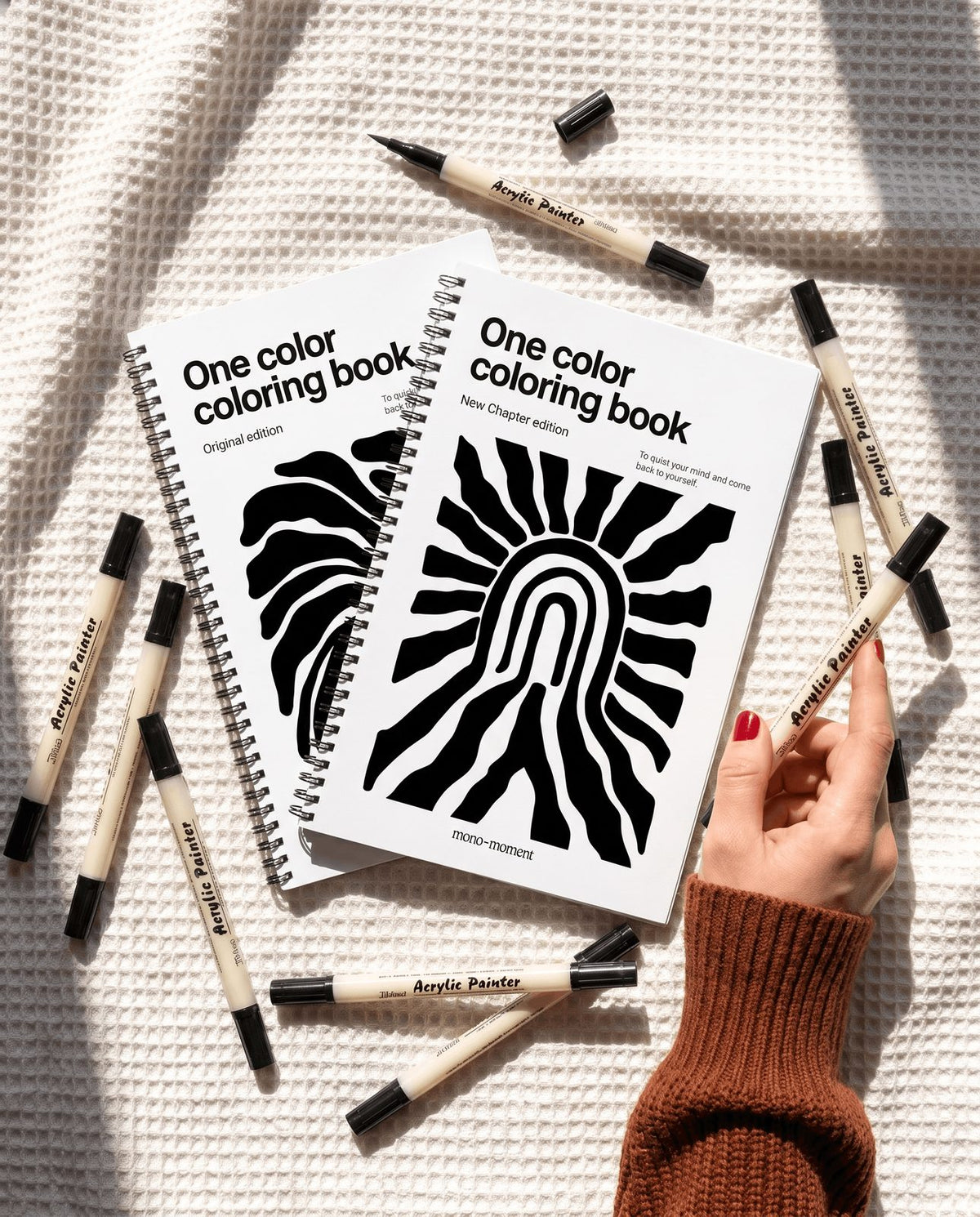
This is the principle behind the Mono Moment One Color Coloring Book. We specifically designed it for adults seeking a sanctuary from decision fatigue and mental clutter. By removing the overwhelming choice of colors, we allow you to dive directly into the meditative act of coloring. The intricate yet achievable patterns, printed on premium, bleed-proof paper, are crafted to be completed in a single 15-to-30-minute session. It’s a perfect companion to your wind-down ritual, offering a concrete way to practice mindfulness that feels both productive and deeply restorative. Your next mindful moment isn't an abstract concept; it’s a tangible experience waiting for you in our store.
Ready to turn your intention into a calming ritual? Explore the curated collection at Mono Moment and discover how our monochrome coloring book can become your favorite tool for finding peace in a busy world. Find your perfect moment of creative calm at Mono Moment today.

The One Color Coloring Book
A single-pen, decision-free coloring book on 160 gsm cream paper — engineered for the wind-down ritual described above.
 Pair it with the 3 Dual Tip Brush Pens — $5 instead of $9.95 in the Book + Pens bundle.