About the author
Published January 16, 2026 · Last reviewed April 26, 2026 · 17 min read
In this article · 7 sections
Ever feel like your brain has too many browser tabs open? That's the feeling. It’s a kind of mental static where you can’t quite land on a single thought, and it's the classic sign of cognitive overload. It's become a modern-day epidemic, this feeling of being mentally swamped, and trust me, it’s a whole lot more than just being tired.
What Cognitive Overload Actually Feels Like
Think of your brain's working memory like a small desk. It can comfortably hold a few things—a notebook, a pen, a cup of coffee. But what happens when people start piling on reports, memos, and last-minute requests? The desk gets buried. You can't find your pen, you spill the coffee, and nothing productive happens.
That’s cognitive overload in a nutshell.
It’s what happens when the sheer volume of information you're trying to process simply overwhelms your brain's capacity. Your mental "CPU" gets maxed out, and the result is a system crash: freezes, glitches, and that all-too-familiar brain fog.
The Digital Deluge
Let's be honest, our world is engineered to bombard us with information. Just scrolling through your phone unleashes a constant flood of notifications, news alerts, and social media updates. It's no wonder a major study on Problematic Smartphone Use (PSU) found a staggering global prevalence of 37.1%, with many people showing symptoms that get in the way of their daily lives. You can dig into the full research on smartphone use and cognitive strain yourself, but the takeaway is clear: this constant stream is a primary cause of cognitive overload.
Cognitive overload isn't a personal failing; it's a natural response to an unnatural amount of stimulation. Recognizing this is the first step toward reclaiming your mental space.
What you're feeling is real, it's common, and it has a name. It's a signal that your mind is working overtime and desperately needs a break from all the noise. Learning how to calm an overactive mind is one of the most important skills you can develop right now.
The good news? You can learn to start closing some of those mental tabs. By creating moments of intentional quiet—like with a Mono Moment monochrome coloring book, our signature product designed for decision-free rest—you give your brain the break it needs to reboot and find its focus again. This guide will walk you through the symptoms and, more importantly, the solutions to get you there.
Recognizing the Warning Signs of Overload
Spotting cognitive overload is a bit like noticing the check engine light on your car's dashboard. At first, it might just be a subtle flicker you're tempted to ignore. But it’s a critical signal that something under the hood needs your immediate attention. These symptoms often disguise themselves as everyday stress or simple tiredness, but when they cluster together, they paint a clear picture of a mind pushed well past its limits.
The signals aren't just in your head, either. They ripple through your emotions, your body, and even the way you act. Learning to spot these warning signs is the first step in shifting from feeling constantly drained to actively taking back control of your mental energy.
Think of it like this: a brain with too many browser tabs open is the root cause. This overload then cascades downward, leading to poor focus, constant fatigue, and a generally disrupted life.
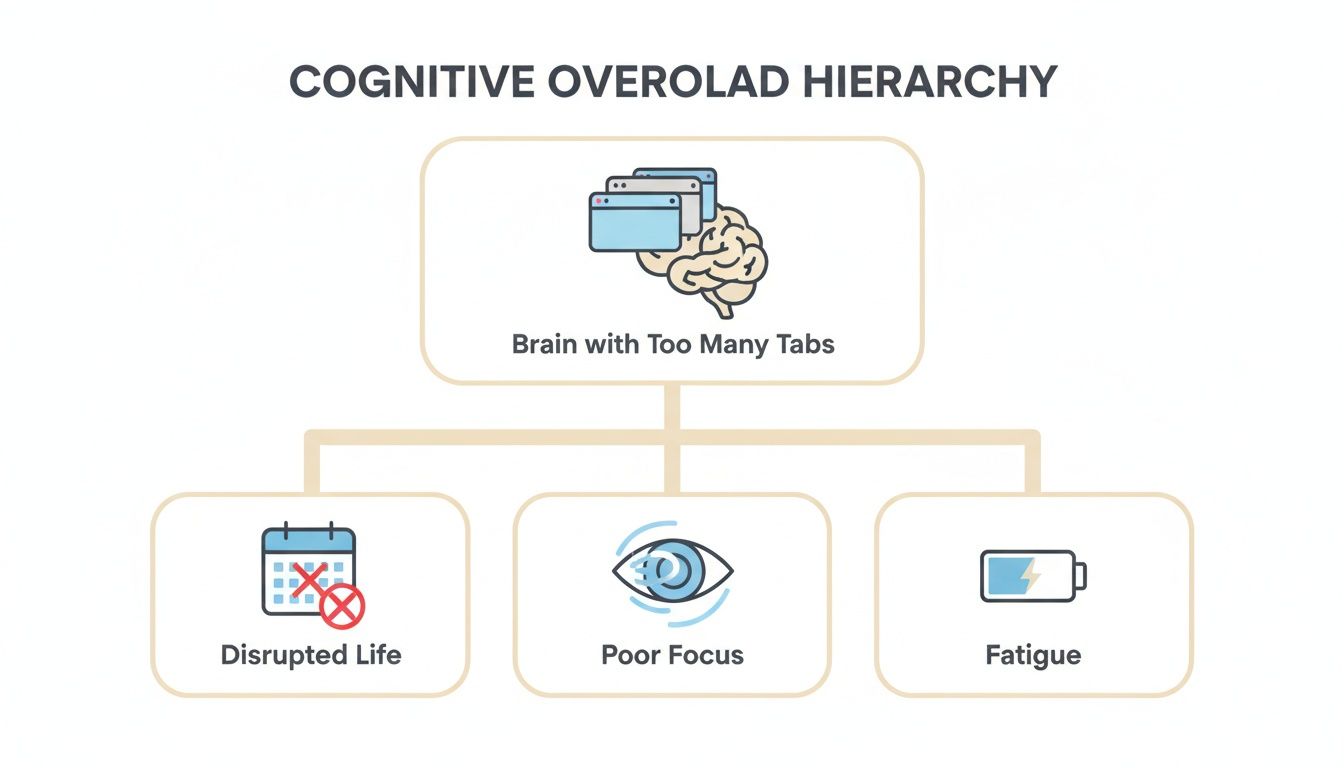
What this really shows is that a swamped mind doesn't stay a "mental" problem for long. It directly sabotages your ability to function effectively day-to-day.
Cognitive Overload Symptoms At a Glance
The signs of cognitive overload can be sneaky. To help you quickly identify what you might be experiencing, here’s a summary of the most common warning signs, broken down by category.
| Category | Common Symptoms | What It Feels Like |
|---|---|---|
| Cognitive | Difficulty concentrating, memory lapses, analysis paralysis. | "My brain feels like it has too many tabs open." |
| Emotional | Increased irritability, persistent anxiety, feeling overwhelmed. | "I have a short fuse and feel constantly on edge." |
| Physical | Tension headaches, deep fatigue that sleep doesn't fix, muscle aches. | "I'm exhausted all the time, no matter how much I rest." |
| Behavioral | Procrastinating on tasks, withdrawing socially, making more mistakes. | "I'm avoiding people and can't bring myself to start anything important." |
Recognizing yourself in this table is a crucial first step. It means you’re not just “stressed”—you’re dealing with a specific, manageable condition.
H3: The Mental Symptoms
When your brain’s processing power is completely maxed out, your thinking abilities are the first things to take a hit. These cognitive symptoms are the most direct indicators that you’ve gone way past your capacity for taking in information and making decisions.
-
Difficulty Concentrating: This is that classic "too many tabs open" feeling made real. You might find yourself re-reading the same email five times without a single word sinking in, or completely zoning out during a conversation because your mind just can't latch onto one thought.
-
Memory Problems: It’s not about forgetting your childhood. It’s about the small, important stuff—that appointment you scheduled yesterday, or why you just walked into the kitchen. Your short-term "working memory" is so full that it can’t save any new information.
-
Analysis Paralysis: Suddenly, even simple decisions feel monumental. Choosing what to have for dinner becomes an exhausting mental marathon of weighing options, so you just... don't. You get stuck.
This isn’t just a feeling; it’s a very real phenomenon. Research from post-COVID clinics, for instance, has shed light on just how common this is. A staggering 79% of non-hospitalized patients reported experiencing multiple cognitive symptoms. More specifically, 74% struggled with attention and 75% had trouble remembering new information, painting a clear picture of what "brain fog" really is. If you're curious about the details, you can dive into the full study on cognitive symptoms and mental health to see just how deeply overload impacts our thinking.
H3: Emotional and Physical Signs
Mental strain never stays neatly contained in your head. It inevitably spills over into your emotional state and your physical health. Your mind and body are in constant communication, so when one is overwhelmed, you can be sure the other is feeling it, too.
Overwhelm is often your body's way of saying, "I can't process any more." Physical and emotional symptoms are not a sign of weakness but a biological response to excessive mental demand.
Here’s what to look out for emotionally:
- Increased Irritability: You have a much shorter fuse than usual. Minor annoyances that you’d normally brush off, like a slow Wi-Fi connection, now trigger a surprising amount of frustration or even anger.
- Feeling Anxious or Stressed: It's that persistent, nagging sense of unease or dread that follows you around all day. Your nervous system is basically stuck in high-alert mode, making it almost impossible to truly relax.
And physically, the toll looks like this:
- Headaches: Tension headaches become a frequent, unwelcome guest as your brain and body literally hold onto the stress of being constantly "on."
- Fatigue: This isn't the kind of tiredness a good night's sleep can fix. It’s a deep, pervasive exhaustion that lingers because your brain hasn't had a real chance to power down and recover.
H3: Behavioral Changes
Finally, cognitive overload starts showing up in your actions—or your inaction. These behavioral shifts are often your brain’s clumsy attempt to protect itself from any more stimulation, but they can wreak havoc on your productivity and personal life.
You might catch yourself:
- Procrastinating More: You find yourself avoiding tasks, especially the complex ones, because the sheer thought of starting them is overwhelming. This isn't laziness; it's a form of self-preservation.
- Withdrawing Socially: Let's face it, interacting with other people requires a lot of mental energy. When your reserves are already empty, you might start canceling plans or avoiding conversations just to conserve what little energy you have left.
- Making More Mistakes: When your focus is scattered in a million different directions, little errors start creeping into your work and daily routines. You might send an email to the wrong person, forget a key ingredient in a recipe, or miss your exit on the highway.
Recognizing these patterns in yourself is the first, most powerful step toward finding relief. It’s an acknowledgment that your brain needs a break. Giving yourself a dedicated quiet time with a Mono Moment monochrome coloring book can be an incredibly effective antidote. By eliminating the need for decisions, you give your brain a chance to finally quiet the noise, calm the storm of symptoms, and restore your focus.
What’s Causing This Mental Overload?
Knowing the symptoms of cognitive overload is a great first step, but the real power comes from understanding what’s causing them in the first place. Think of these triggers as the unseen currents in our modern lives, slowly pulling our mental energy out to sea until we feel completely adrift. They’re the reason your brain feels like a computer with way too many programs running at once.

When you can pinpoint these sources—whether it's your overflowing inbox or the paralyzing number of shows on Netflix—you can finally start managing your mental bandwidth instead of just reacting to the chaos.
The Never-Ending Information Flood
We’re drowning in information. While having knowledge at our fingertips is amazing, our brains simply weren’t built to handle the constant, high-pressure stream of data from social media, 24-hour news, and endless notifications. Every single ping is a tiny demand for your attention, yanking you away from what you’re trying to focus on.
This isn’t just a feeling; it has real-world consequences. A national survey of over 5,000 physicians found a direct line between the cognitive load from their complex record-keeping systems and their risk of burnout. Our brains can only juggle about 3-5 items in our working memory at a time. When we push past that limit, we start to break down. This professional struggle is a perfect mirror for what so many of us face every day with a dozen open browser tabs and a relentless flow of emails. You can explore more on how cognitive load contributes to burnout in demanding jobs in this insightful study.
The Weight of Constant Choice
From the moment you wake up, you’re making decisions. What to wear? What to eat for breakfast? Which email to answer first? Most of these choices feel small, but they all draw from the same limited mental bank account. This gradual depletion of your willpower is called decision fatigue, and it’s a huge contributor to feeling mentally fried.
Imagine your decision-making power is like your phone's battery. You wake up with a full 100% charge. Every choice you make, no matter how tiny, drains a little bit of that power. By the end of the day, you’re in the red, and even simple decisions feel monumental.
This is exactly why picking a movie to watch after a long, hard day can feel like an impossible task. Your brain is just done making choices. If that hits close to home, you can learn more about decision fatigue and its impact right here.
The Damaging Myth of Multitasking
Modern life has sold us a lie: the idea that we can and should be multitasking. The truth is, our brains don't actually do multiple complex things at once. Instead, they switch between them incredibly fast. This constant back-and-forth is not only inefficient, it's profoundly draining. Every time you jump from a report to an instant message and back again, your brain pays a price.
This "cognitive cost" shows up in a few key ways:
- More Mistakes: You start making sloppy errors you normally wouldn't.
- Less Efficiency: Every task actually takes longer than if you had just focused on one at a time.
- Deeper Exhaustion: All that switching is far more tiring than an hour of deep, focused work.
This is precisely why a single-tasking activity can feel like such a relief. When you engage in something simple and focused, like our flagship Mono Moment monochrome coloring book, you’re giving your brain a much-needed break from the relentless demands of switching and choosing. It's a deliberate act of closing all those extra mental tabs and finally letting your mind recharge.
How to Build a Burnout-Proof Ritual
It’s one thing to react when you’re already feeling the strain of cognitive overload, but what if you could prevent the fire from even starting? The most powerful approach isn't about managing burnout after it hits—it's about building a daily ritual that makes you burnout-proof.
This means carving out a small sanctuary in your day, a moment that is completely free of the two things that drain our mental batteries the most: decision-making and performance pressure.
This is the whole idea behind a decision-free ritual. It's a practice intentionally designed to give your brain a genuine break from the constant analysis and choice that feel inescapable in modern life. Think of it as an intentional pause that doesn't ask for anything more than your presence.

Let's be clear: this isn't just another task to add to your already packed to-do list. It’s a protective measure, a reliable way to recharge your mental energy before you hit empty.
The Power of a Single-Task Sanctuary
A truly effective decision-free ritual quiets the endless mental noise by simplifying your focus down to one gentle, repetitive action. This is precisely why we created the Mono Moment One Color Coloring Book. It was engineered from the ground up to be the perfect tool for this kind of restorative practice, turning a simple creative act into a powerful and reliable form of self-care.
It works by systematically dismantling the very things that trigger overload in the first place.
The goal of a decision-free ritual is to short-circuit the cycle of analysis paralysis and perfectionism. By removing the pressure to choose and perform, you allow your mind to enter a state of meditative flow, which is where true recovery happens.
By stripping away the most common source of creative anxiety—choosing colors—the entire experience becomes instantly calming. There's no "right" or "wrong" way to do it. You simply pick up a pen and fill the space. This simple act helps quiet the brain's overactive amygdala, its fear and stress center, giving you a chance to step away from the mental juggling act and just be.
Why Monochrome Coloring Works
The Mono Moment coloring book is more than just a collection of pretty pictures; every single element is designed to combat the specific symptoms of cognitive overload we’ve talked about. It offers a structured path to mindfulness without the steep learning curve that often comes with traditional meditation.
Here’s what makes our flagship product so effective:
- Eliminates Decision Fatigue: With only shades of one color to work with (using our perfectly curated starter pen set), you bypass analysis paralysis completely. Your focus shifts from the outcome to the process, allowing your mind to relax and settle into a state of flow.
- Designed for a Busy Schedule: Each illustration is intentionally crafted to be completed in a 15-30 minute session. This makes it a practical, accessible sanctuary you can actually fit into an evening wind-down or a midday break, without it feeling like another overwhelming commitment.
- A Premium, Frustration-Free Experience: The book is printed on thick, premium 160gsm paper that prevents bleed-through from our high-quality pens or markers. This small detail is actually a huge deal—it removes any frustration or worry about ruining the next page, keeping the experience smooth, simple, and calming.
Building this small practice into your life is a proactive step toward reclaiming your mental clarity. It’s a way of signaling to your brain that it’s safe to power down and recover. For more ideas, you can explore how to create a self-care routine that truly sticks.
A Mono Moment ritual isn't about adding another chore; it's about carving out twenty quiet minutes to protect your peace, one pen stroke at a time.
Simple Strategies for Immediate Relief
When you feel that wave of mental exhaustion about to crash over you, you don't have time for a grand, long-term strategy. You need a lifeline—something simple you can do right now to break the cycle of overwhelm.
Think of these techniques as a mental first-aid kit. They're designed to hit the pause button on your brain's frantic activity, pulling you out of the storm of your thoughts and anchoring you in the present moment. They create an immediate pocket of breathing room when you need it most.
Try the 5-4-3-2-1 Grounding Method
This powerful sensory exercise is brilliant because it yanks your focus away from the abstract chaos in your head and plants it firmly in your physical reality. It's incredibly easy to do anywhere, anytime. You don't need anything but your own senses.
Here’s how it works:
- Notice FIVE things you can see. Just look around the room. Name five separate objects—a pen, a crack in the ceiling, the color of your shoelaces.
- Acknowledge FOUR things you can feel. Tune into the physical sensations. Maybe it's the solid ground beneath your feet, the texture of your shirt, or the cool air on your skin.
- Identify THREE things you can hear. Listen past the obvious noise. Can you hear the low hum of a computer, birds outside, or even the sound of your own breathing?
- Pinpoint TWO things you can smell. This one can be subtle. Perhaps it's the lingering scent of your morning coffee or the clean smell of soap on your hands.
- Focus on ONE thing you can taste. What's the last taste left in your mouth? A hint of mint from your toothpaste? Just notice it.
This technique is so effective because it forces your racing mind to stop ruminating and engage with the tangible world right in front of you.
Do a Quick Brain Dump
A huge part of cognitive overload is that feeling of having a million thoughts all screaming for attention at once. A brain dump is the simple act of getting all of it out of your head and onto a piece of paper. You're literally releasing the pressure.
Grab a notebook or a scrap of paper and just write for five minutes. Don't try to organize it or make it pretty. Let all the worries, to-do items, frustrations, and random ideas spill out onto the page. This simple act of externalizing the mental clutter makes it feel instantly more manageable.
The goal here is to create a moment of focused, single-tasking quiet. This is the exact same principle behind the Mono Moment monochrome coloring book, which provides a simple, decision-free activity designed to calm your mind. All our products are designed to support this goal of mental quiet.
So, When Is It Time to Call in a Pro?
Look, self-care strategies are fantastic. Things like creating a quiet, decision-free ritual with a Mono Moment coloring book can be an absolute lifesaver for taking the edge off day-to-day cognitive overload. They’re your first line of defense.
But it’s also crucial to know when the problem has outgrown your toolkit. It's like knowing the difference between a simple headache you can solve with water and a nap, versus a migraine that just won't quit.
If that feeling of being completely swamped just isn't letting up—if it's becoming your new normal and starting to get in the way of your work, relationships, or just enjoying life—that's a pretty clear signal that it's time to get some backup.
Red Flags You Shouldn't Ignore
It's probably time to reach out to a professional if you're noticing any of these things sticking around for a while:
- You're in a persistent low mood or feel down most of the time, and nothing seems to shake it.
- Your sleep or appetite has gone completely haywire—either way more or way less than usual.
- You feel like you just can't keep up with your basic daily responsibilities, no matter how hard you try.
- You've started pulling away from friends, family, or hobbies that you used to love.
Reaching out for help isn't a sign of weakness—far from it. It's a sign of strength and a smart, proactive move to take care of your long-term health. It shows you're serious about your own well-being.
Think of your mental health as just as important as your physical health. Professionals can offer specialized strategies and support that work alongside your own self-care efforts, helping you build real, lasting resilience.
Frequently Asked Questions
When you first hear the term "cognitive overload," it can feel like a lightbulb moment—finally, a name for that relentless feeling of mental exhaustion. But with that realization often come a lot of questions. Let's walk through some of the most common ones.
How Is Cognitive Overload Different From Just Being Tired?
It's a great question because they can feel so similar on the surface. Both leave you feeling completely spent, but their roots are in different places.
Physical tiredness is your body telling you it needs to rest and recover from effort. Think of it as a drained battery. Cognitive overload, on the other hand, is purely mental. It’s your brain hitting its processing limit after being bombarded with too much information, too many choices, and too many tasks at once. Your body could be perfectly rested, but your mind is completely fried.
Here’s an analogy: physical fatigue is like running a marathon. Cognitive overload is like having a hundred browser tabs open at once—your computer freezes not from a lack of power, but because its processor is overwhelmed. A good night's sleep might recharge the battery, but it won't close all those tabs for you.
Can Coloring Actually Help With Serious Stress?
It can, and the science behind it is fascinatingly simple. When you're stressed, your brain’s alarm system—the amygdala—is on high alert. To calm it down, you need to give your mind a break from the constant juggling and decision-making.
That's where an activity like coloring comes in. It's a structured, single-focus task that doesn't demand complex thought. Our Mono Moment monochrome coloring book was designed to amplify this effect. By eliminating the choice of colors, we take decision fatigue and the pressure to be "creative" right out of the equation. This simple constraint lets your mind settle into a state of gentle focus, a welcome escape from the mental chatter driving your overload.
How Can I Fit This Into An Already Packed Schedule?
We get it. The last thing someone who's overwhelmed needs is another huge commitment on their to-do list.
That’s exactly why the illustrations in the Mono Moment coloring book are designed to be finished in just 15 to 30 minutes. Think of it not as adding something to your day, but as building a small, intentional sanctuary within your day. This brief, predictable ritual acts as a mental reset button, giving your brain a much-needed buffer before you hit the point of no return. It’s a tiny investment of time that yields a massive return in focus and emotional balance.
Ready to give your brain the decision-free break it deserves? Explore the Mono Moment collection, featuring our signature monochrome coloring book and curated pen sets. Find your perfect path to quiet focus. Start your monochrome coloring ritual today.

The One Color Coloring Book
A single-pen, decision-free coloring book on 160 gsm cream paper — engineered for the wind-down ritual described above.
 Pair it with the 3 Dual Tip Brush Pens — $5 instead of $9.95 in the Book + Pens bundle.