About the author
Published January 13, 2026 · Last reviewed April 26, 2026 · 25 min read
In this article · 12 sections
- 1. 5-4-3-2-1 Sensory Grounding Technique
- 2. Progressive Muscle Relaxation (PMR)
- 3. Grounding Through Creative and Tactile Engagement (Structured Coloring & Texture Mindfulness)
- 4. Box Breathing (4-4-4-4 Technique)
- 5. Body Scan Meditation
- 6. Mindful Walking or Movement Grounding
- 7. Cold Water Immersion (Ice Water Grounding)
- 8. Anchoring Through Affirmations and Grounding Statements
- 9. Aromatherapy and Scent-Based Grounding
- 10. Weighted or Pressure-Based Grounding
- Comparison of 10 Anxiety Grounding Techniques
- Your Next Grounded Moment Starts Now
When anxiety hijacks your thoughts, it can feel like you're caught in a storm with no anchor. Your heart races, your mind spins, and the present moment vanishes, replaced by a torrent of what-ifs and worst-case scenarios. But what if you could drop an anchor, a simple, powerful tool to pull you back to solid ground? This is precisely what grounding techniques for anxiety are designed to do.
These are not just distractions; they are science-backed strategies that intentionally interrupt the anxiety cycle. By reconnecting your mind with your body and the physical world through your senses, you actively shift your focus away from overwhelming internal turmoil. This isn't about ignoring your feelings, but about giving your nervous system a crucial opportunity to reset, so you can navigate them with greater clarity and control.
In this comprehensive guide, we'll explore a curated list of distinct and actionable grounding techniques. We will move beyond generic advice to provide you with everything you need to feel confident using them:
- Clear, step-by-step instructions for immediate implementation.
- The science behind why each method works to calm your nervous system.
- Practical tips on when and how to use them in real-life situations.
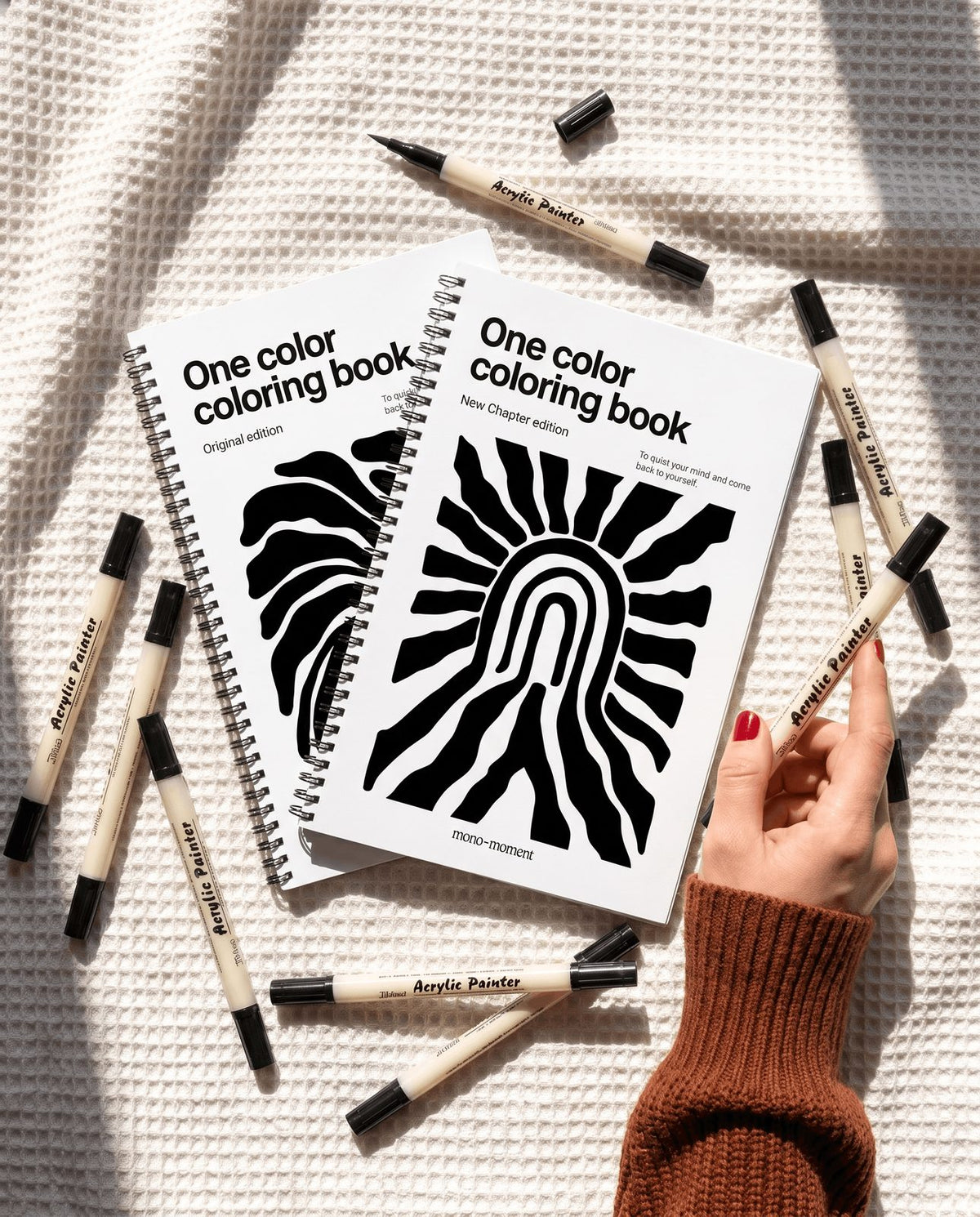
You'll discover a variety of powerful methods, from sensory exercises to mindful movement. We will also show you how a deliberately simple, decision-free activity, like using a Mono Moment monochrome coloring book, can become one of the most reliable and calming tools in your mental wellness toolkit. It’s time to stop feeling swept away by anxiety and start building a foundation of calm, one technique at a time.
1. 5-4-3-2-1 Sensory Grounding Technique
The 5-4-3-2-1 method is one of the most widely recognized and effective grounding techniques for anxiety because it forces your brain to switch gears. Instead of being trapped in a cycle of "what-if" thoughts about the future or regrets about the past, it systematically pulls your focus back to the present moment using your five senses. This structured process acts as a powerful pattern interrupt for your anxious mind.
When anxiety spikes, your amygdala (the brain's threat detector) is in overdrive. This technique works by engaging your prefrontal cortex, the part of your brain responsible for logical thought and sensory processing. By deliberately focusing on concrete sensory details, you signal to your nervous system that you are safe in your current environment, effectively turning down the volume on your internal alarm.
How to Practice the 5-4-3-2-1 Method
Follow this sequence slowly and deliberately. The goal is not to rush through it but to fully experience each sensory input.
- SEE: Acknowledge five things you can see around you. Notice details you might otherwise overlook, like the way light reflects off a metal pen, the subtle texture on the wall, or a crack in the pavement.
- TOUCH: Bring your awareness to four things you can feel. This could be the soft fabric of your sweater against your skin, the cool, smooth surface of your desk, or the weight of your feet on the floor.
- HEAR: Listen for three things you can hear. Tune into the gentle hum of a computer, the distant sound of traffic, or the chirping of a bird outside.
- SMELL: Identify two things you can smell. Perhaps it's the faint scent of coffee from your mug or the clean smell of a book's pages.
- TASTE: Focus on one thing you can taste. This could be the lingering flavor of your morning tea, or you can simply notice the neutral taste inside your mouth.
When to Use This Technique
The 5-4-3-2-1 method is incredibly versatile. It's a go-to tool for sudden moments of overwhelm, such as feeling a panic attack coming on in a crowded store or managing a spike of anxiety before a big presentation.
Pro-Tip: Don't wait for a crisis to try this. Practice it when you're calm, like during your morning coffee. This builds the mental muscle memory, making it a reliable and automatic response when you need it most. For more ways to integrate sensory focus into your daily life, you can learn about calming anxiety naturally.
For a seamless transition from grounding into a state of calm focus, try pairing this technique with a tactile activity. After completing the 5-4-3-2-1 sequence, open a Mono Moment monochrome coloring book. The simple act of coloring within the lines extends the sensory grounding, focusing your sense of touch and sight on a decision-free, creative task.
2. Progressive Muscle Relaxation (PMR)
Progressive Muscle Relaxation (PMR) is a powerful physical grounding technique designed to release the tension that anxiety stores in your body. Developed by Dr. Edmund Jacobson, this method involves systematically tensing specific muscle groups and then releasing them, forcing you to become acutely aware of the difference between physical stress and deep relaxation. It directly combats the physiological symptoms of anxiety, like muscle tightness and restlessness.
When you're anxious, your body enters a state of fight-or-flight, causing your muscles to clench unconsciously. PMR breaks this cycle by creating an intentional, exaggerated state of tension that you then consciously let go of. This process sends a direct message to your nervous system that the perceived threat has passed, allowing your body and mind to return to a state of calm. It's an active, physical way to command your body to relax.
How to Practice Progressive Muscle Relaxation
Find a quiet, comfortable place where you can sit or lie down without interruption. Close your eyes and take a few deep breaths before you begin.
- Tense & Release: Start with your feet and toes. Inhale and squeeze the muscles in your feet tightly for 5-10 seconds, feeling the tension.
- Exhale & Relax: Exhale completely and release all the tension at once. Notice the feeling of limpness and warmth that replaces the tightness. Stay in this relaxed state for 15-20 seconds.
- Work Your Way Up: Continue this "tense and release" pattern, moving progressively up your body: calves, thighs, glutes, abdomen, chest, back, hands, arms, shoulders, neck, and face.
- Final Scan: Once you have completed all muscle groups, do a final mental scan of your body, enjoying the profound sense of physical relaxation you’ve created.
When to Use This Technique
PMR is especially effective for managing physical anxiety symptoms and is an excellent addition to a wind-down routine. Use it before bed to combat anxious thoughts and improve sleep quality, or practice it after a stressful workday to release accumulated tension.
Pro-Tip: Focus intensely on the sensation of release. The magic of PMR isn't in the tensing; it's in the deep, deliberate letting go. The greater the contrast you can feel, the more effective the technique will be.
To extend this state of physical calm into mental tranquility, follow your PMR session with a quiet, tactile activity. The rhythmic motion of coloring in a Mono Moment monochrome coloring book is the perfect next step. It keeps your mind anchored in a simple, sensory task, preventing anxious thoughts from creeping back in while your body enjoys its newfound relaxation.
3. Grounding Through Creative and Tactile Engagement (Structured Coloring & Texture Mindfulness)
This technique combines focused creative tasks with texture-based sensory input to anchor your mind in the present. Instead of getting lost in a spiral of anxious thoughts, it gives your brain a simple, absorbing activity to focus on. Structured coloring, especially with monochrome patterns, removes the pressure of choice and perfectionism, while tactile engagement, like feeling a smooth stone or textured paper, provides a direct physical anchor.
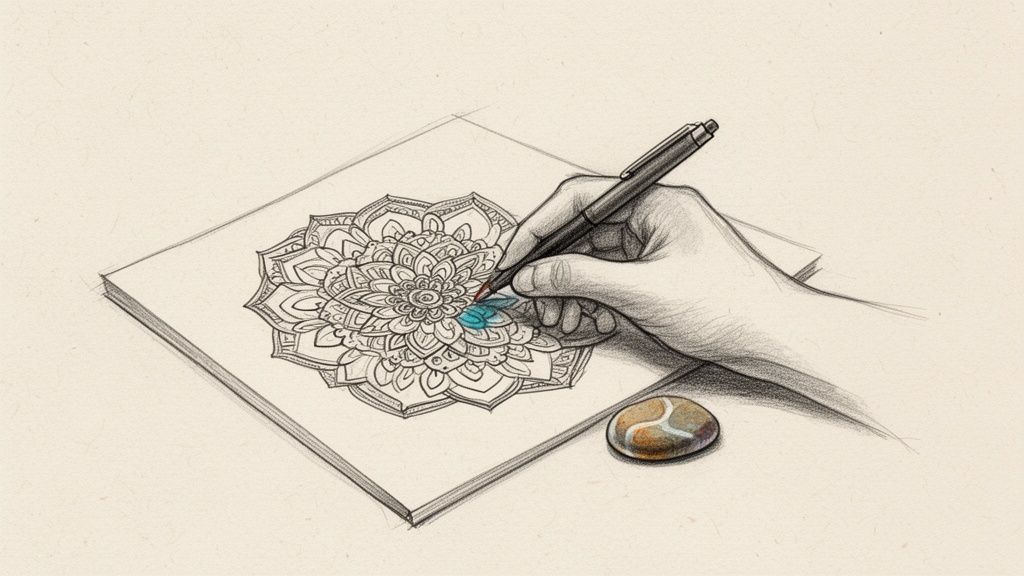
When you're anxious, your brain seeks repetitive, predictable patterns to feel safe. Coloring within defined lines provides this structure, activating brain regions associated with focus and fine motor skills. This process reduces activity in the amygdala and calms your nervous system. By using a monochrome palette, you eliminate decision fatigue, making the activity purely about the meditative motion and sensory feedback from the pen on paper, which makes it one of the most accessible grounding techniques for anxiety.
How to Practice Creative and Tactile Grounding
This method is about creating a small pocket of focused calm. Approach it as a mindful ritual rather than an artistic project.
- Set Up Your Space: Choose a quiet area. Select a simple design, such as a page from a Mono Moment monochrome coloring book, which is designed to be decision-free.
- Engage Tactile Senses: Before you start, hold a small, textured object like a worry stone or feel the quality of the thick paper (160gsm+). Notice its temperature, weight, and texture.
- Begin Coloring: Select one or two pens (like our store's fine-liners or brush pens). Focus on the physical sensation of the pen moving across the page and the sound it makes.
- Stay Mindful: If your mind wanders to anxious thoughts, gently redirect your attention back to the lines, the color filling the space, and the feeling of the object in your other hand.
When to Use This Technique
This technique is perfect for winding down after a stressful day, transitioning from a work mindset to personal time, or for moments when you feel a low-to-moderate hum of anxiety. It's an excellent way to create a defined period of mental quiet without the pressure of formal meditation.
Pro-Tip: Set a timer for just 15 minutes. Creating this defined window makes the practice feel manageable and easy to start. Practice this 3-4 times a week to build a cumulative calming effect.
For a deeper dive into how creative activities soothe the mind, explore these art therapy activities for adults. To fully embrace this grounding technique, use a Mono Moment coloring book, where the high-quality paper enhances the tactile experience and the monochrome designs provide the perfect structured, decision-free canvas to calm your mind.
4. Box Breathing (4-4-4-4 Technique)
Popularized by U.S. Navy SEALs, Box Breathing is a powerful grounding technique that uses a simple, rhythmic pattern to regulate your nervous system. By imposing a predictable four-part structure on your breath, you give your anxious mind a single, calming task to focus on. This deliberate control over your breathing directly counteracts the shallow, rapid breathing that often accompanies anxiety and panic.
This technique works by activating your parasympathetic nervous system, also known as the "rest and digest" system. The slow, controlled breaths, especially the holds, signal to your brain that there is no immediate threat. This engagement helps lower your heart rate and blood pressure, pulling you out of a fight-or-flight state and anchoring you firmly in the present moment. The cognitive load of counting also acts as a powerful distraction from spiraling thoughts.
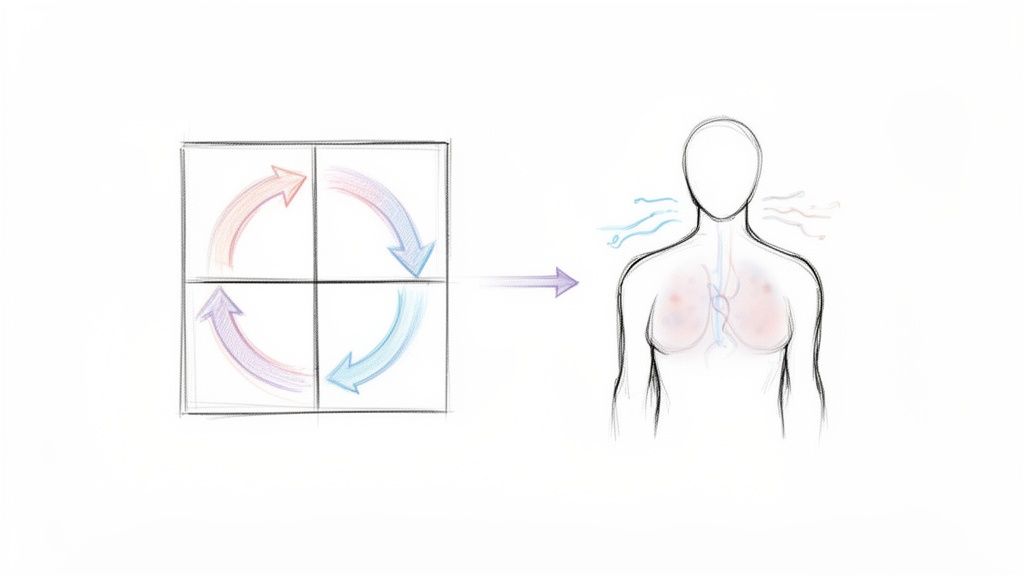
How to Practice the Box Breathing Method
Visualize drawing a box with your breath, with each side representing a four-second count. Find a comfortable seated position before you begin.
- INHALE: Gently breathe in through your nose for a slow count of four.
- HOLD: Hold the breath in your lungs for a count of four.
- EXHALE: Slowly breathe out through your mouth for a count of four.
- HOLD: Keep your lungs empty for a final count of four before beginning again.
When to Use This Technique
Box Breathing is exceptionally effective for managing anticipatory anxiety. First responders and military personnel use it before high-stress situations, and it’s perfect for calming nerves before a big presentation or difficult conversation. It’s also one of the most effective grounding techniques for anxiety when you feel the initial signs of a panic attack.
Pro-Tip: Start by practicing for just one or two minutes when you are calm. This builds the skill so it becomes an automatic and reliable response during moments of high stress. Explore more ways to calm your mind with other quick relaxation techniques for anxiety.
To deepen the state of calm, use Box Breathing as a primer for another focused activity. Practice a few rounds of this technique to settle your nervous system, then transition into a creative session with a Mono Moment monochrome coloring book. The structured breathing prepares your mind for the simple, repetitive motion of coloring, creating a powerful, decision-free pathway to profound tranquility.
5. Body Scan Meditation
The Body Scan Meditation is a foundational mindfulness practice that anchors you firmly in your physical self. Rather than getting swept away by anxious thoughts, this technique guides you to systematically pay attention to different parts of your body, noticing any sensations like warmth, tingling, or pressure without judgment. This deliberate shift from mental chaos to physical embodiment is a powerful way to calm a hyper-aroused nervous system.
When you're anxious, your mind often detaches from the reality of your body, treating it merely as a vessel for racing thoughts. A body scan reverses this by engaging your interoceptive awareness, your ability to sense the internal state of your body. This process activates the insular cortex, which helps regulate emotional responses, reassuring your brain that you are present and safe, not in imminent danger. It’s a gentle yet profound way to re-establish the mind-body connection.
How to Practice a Body Scan Meditation
Find a comfortable position, either lying down or sitting in a chair, and close your eyes if you feel comfortable doing so.
- Settle In: Take a few slow, deep breaths, allowing your body to relax into the surface supporting you.
- Start at the Toes: Bring your full attention to the toes on your left foot. Notice any sensations without needing to change them. Are they warm, cool, tense, or relaxed?
- Move Systematically: Slowly guide your awareness up your body, part by part: from your left foot to your calf, thigh, and hip. Then, repeat the process on your right side.
- Scan the Torso: Continue moving your focus through your pelvis, abdomen, chest, and back. Acknowledge any feelings of tightness or ease with gentle curiosity.
- Finish with the Upper Body: Bring your awareness to your hands, arms, shoulders, neck, and finally, your face and the top of your head. Once complete, take a final moment to feel your body as a whole.
When to Use This Technique
The body scan is an excellent practice for winding down before sleep, as it helps release the physical tension that anxiety often creates. It's also highly effective when you feel disconnected or "in your head," serving as a formal practice to build resilience against daily stressors. Many therapists recommend it as homework between sessions for managing generalized anxiety.
Pro-Tip: If you're new to this, using a guided audio recording can help you stay focused. The goal isn't to feel a certain way but simply to notice what is already there. Regular practice, even for just 10-15 minutes, strengthens this grounding skill over time.
To deepen your evening wind-down routine, pair a body scan with a sensory-focused activity. After completing your meditation, transition to a Mono Moment monochrome coloring book. The tactile sensation of the pencil on paper and the visual focus required to fill in the simple patterns keep you anchored in the present, extending the calm, embodied state you cultivated during your scan.
6. Mindful Walking or Movement Grounding
Mindful walking transforms a simple, everyday activity into a powerful grounding exercise for anxiety. Instead of focusing on a destination, this technique redirects your attention to the physical act of moving your body through space. It combines the well-documented mental health benefits of light exercise with the core principles of mindfulness, creating a dual-action method for calming a racing mind.
When you're anxious, your body is often tense and flooded with stress hormones like cortisol. Gentle, rhythmic movement like walking helps to metabolize this excess energy, while the mindful focus on physical sensations anchors you in the present. This process signals to your nervous system that there is no immediate threat, allowing it to shift from a "fight-or-flight" state to a more relaxed "rest-and-digest" mode.
How to Practice Mindful Walking
Find a space where you can walk back and forth or in a small loop, whether it's a hallway, a quiet park, or your own living room. The key is deliberate, focused attention.
- Start Slow: Begin walking at a slower-than-usual pace. Pay close attention to the sensation of your feet making contact with the ground: the heel, the arch, the ball, the toes.
- Notice Your Body: Expand your awareness to other physical sensations. Feel the gentle swing of your arms, the air moving against your skin, and the subtle engagement of your muscles with each step.
- Engage Your Senses: Just as with the 5-4-3-2-1 method, tune into your environment. Notice the colors of the leaves, the sounds of your footsteps, or the feeling of the sun on your face.
- Acknowledge and Return: If your mind wanders to anxious thoughts, gently acknowledge them without judgment and guide your focus back to the physical feeling of walking.
When to Use This Technique
Mindful walking is an excellent tool for breaking up periods of intense mental work or stress. Use it during a work break to clear your head, before a difficult conversation to center yourself, or anytime you feel restless and trapped in your thoughts.
Pro-Tip: Pair your movement with your breath. Try inhaling for four steps and exhaling for four steps. This rhythmic breathing enhances the calming effect and gives your mind a steady anchor to focus on.
For a complete grounding ritual that balances movement and stillness, start with a 10-minute mindful walk. Once you feel more present in your body, transition into a seated session with a Mono Moment monochrome coloring book. This combination allows you to release physical tension first, making it easier to settle into the quiet, focused creativity of coloring.
7. Cold Water Immersion (Ice Water Grounding)
Cold water immersion is an intense and fast-acting grounding technique for anxiety that uses a sudden temperature change to jolt your nervous system back into the present. The shock of the cold provides a powerful sensory input that is impossible for your anxious brain to ignore, effectively short-circuiting a spiral of panic or overwhelming emotional distress.
This method works by activating the mammalian dive reflex, a physiological response that all mammals share. When your face is exposed to cold water, your body instinctively slows your heart rate and redirects blood flow to your core organs. This process stimulates the vagus nerve, which activates your parasympathetic nervous system, also known as the "rest and digest" system, to bring a swift sense of calm.

How to Practice Cold Water Immersion
Choose the method that feels most manageable for you. The key is the sudden, safe exposure to cold.
- Hold Ice Cubes: Tightly grip an ice cube in each hand. Focus entirely on the intense cold sensation spreading through your palms and fingers.
- Splash Your Face: Fill a bowl with cold water (add ice for a stronger effect). Lean over and splash the water onto your face, focusing on the area around your nose and cheeks.
- Use a Cold Pack: Place a cold pack or a bag of frozen vegetables on the back of your neck or on your chest for 30-60 seconds.
When to Use This Technique
Cold water immersion is best reserved for moments of acute distress, such as the onset of a panic attack, intense emotional overwhelm, or when you feel completely disconnected from your body. It is a powerful reset button for your nervous system.
Pro-Tip: Start with a less intense version, like running cold water over your wrists, to see how your body responds. Always ensure you are in a safe, stable position (like sitting down) before trying this, and consult a doctor if you have any cardiac or health concerns.
This technique is designed to interrupt a crisis, not sustain a state of calm. To transition from the initial shock into a more gentle and focused mindset, follow up with a soothing activity. After using ice water grounding, sit down with a Mono Moment monochrome coloring book. The repetitive motion and simple focus required for coloring will help you capitalize on the nervous system reset, guiding you into a longer-lasting state of peace.
8. Anchoring Through Affirmations and Grounding Statements
While sensory techniques pull you into your physical environment, this cognitive grounding technique uses language to anchor your mind to reality. It involves reciting specific, fact-based statements that interrupt the spiraling narratives of anxiety. These aren't aspirational affirmations like "I am calm," but rather verifiable truths about your immediate reality.
Anxiety often thrives on catastrophic future-oriented thinking. By deliberately stating simple, undeniable facts, you engage the logical parts of your brain and create a cognitive anchor. This process breaks the momentum of anxious thoughts by forcing your mind to acknowledge the safety and certainty of the present moment, reassuring your nervous system that the perceived threat is internal, not external.
How to Practice Using Grounding Statements
The key is to use statements that are objective and rooted in the here-and-now. Keep them simple and repeat them slowly, either aloud or in your head.
- State Your Identity and Location: Begin with the basics to establish your presence. For example: "My name is [Your Name]. I am [Your Age]. I am sitting in my living room in [Your City]."
- Acknowledge the Time: Anchor yourself to the current moment in time. Say, "Today is [Day of the Week]. It is [Current Time]."
- Describe Your Immediate Reality: Use simple, factual sentences about your surroundings. For instance, "I am sitting on a blue chair. My feet are flat on the wooden floor. I can see a lamp on the table."
- Acknowledge Your Feelings Safely: Validate your emotional state without judgment. A powerful statement is: "I am feeling anxious, and that is a feeling. It is not a fact of danger."
When to Use This Technique
This method is particularly effective when you feel mentally detached or dissociated, or when your anxiety is driven by intrusive, looping thoughts. It's a powerful tool to use when you need to quickly distinguish between an anxious thought and an actual threat.
Pro-Tip: Prepare your grounding statements in advance. Write 3-5 of them on a small card or in your phone's notes. Having them ready makes them much easier to access when your mind feels cluttered and overwhelmed.
To deepen the sense of present-moment focus, follow your grounding statements with a calming, tactile activity. After verbally anchoring yourself in reality, transition that focus to a Mono Moment monochrome coloring book. The simple, repetitive motion of coloring reinforces the mental calm you’ve just created, giving your mind a quiet, decision-free task to settle into.
9. Aromatherapy and Scent-Based Grounding
Aromatherapy is a powerful grounding technique for anxiety that uses scent to directly influence your brain's emotional center. Your sense of smell is uniquely linked to the limbic system, which governs emotions, memories, and instinctual behaviors. This direct neural pathway means a specific scent can almost instantly interrupt an anxious thought spiral and trigger a state of calm.
When you feel anxious, your body is in a state of high alert. Inhaling a calming aroma sends signals to your brain that can lower heart rate, reduce blood pressure, and ease muscle tension. This technique bypasses conscious thought, offering an immediate and visceral anchor to the present moment by engaging the primitive, powerful connection between scent, memory, and emotion.
How to Practice Scent-Based Grounding
The key is to be intentional and mindful. Rather than just having a scent in the background, actively engage with it as a grounding tool.
- Choose Your Scent: Select a scent that you personally find calming or uplifting. Popular choices include lavender for relaxation, peppermint for focus, or lemon for a mood boost.
- Prepare Your Source: Keep a small, accessible source on hand. This could be a rollerball of essential oil, a scented sachet, or even a cotton ball with a few drops of oil in a small bag.
- Inhale Mindfully: When you feel anxiety rising, bring the scent source close to your nose. Close your eyes if it feels comfortable.
- Breathe Deeply: Take a slow, deep breath in through your nose for a count of four, focusing entirely on the aroma. Hold for a moment, then exhale slowly through your mouth for a count of six.
- Repeat: Continue this process for 3-5 breaths, allowing the scent to pull your full attention into the sensory experience.
When to Use This Technique
Scent-based grounding is ideal for moments when you need a discreet and rapid reset. It's perfect for managing anxiety in public spaces, calming nerves before a meeting, or creating a tranquil environment before sleep. You can also use it to build a consistent calming ritual at the start or end of your day.
Pro-Tip: Create a powerful "scent anchor" by pairing a specific aroma with a calming activity when you're already relaxed. For instance, diffuse lavender oil every time you color in your Mono Moment book. Over time, your brain will associate that scent with the feeling of peace, making the aroma a powerful shortcut to calmness when you need it most.
To deepen this anchored response, try integrating scent with a tactile activity. Light a calming, single-note candle or use an essential oil diffuser while you work on a page from your Mono Moment monochrome coloring book. The combination of the soothing aroma and the focused, decision-free act of coloring creates a multi-sensory sanctuary, grounding you in sight, touch, and smell simultaneously.
10. Weighted or Pressure-Based Grounding
Harnessing the power of physical pressure is a profound grounding technique for anxiety that taps into our body's deep-rooted sense of safety. This method involves using physical weight, like a weighted blanket or gentle compression, to stimulate deep pressure touch receptors throughout your body. This sensory input provides calming, organizing feedback directly to your nervous system.
When anxiety sends your body into a "fight or flight" state, your nervous system is on high alert. Deep pressure touch works by activating the parasympathetic nervous system, which is responsible for the "rest and digest" response. It essentially sends a powerful signal to your brain and body that you are safe, secure, and held, helping to decrease cortisol levels and increase the production of mood-boosting neurotransmitters like serotonin and dopamine.
How to Practice Weighted or Pressure-Based Grounding
You can apply this technique using specialized tools or simply your own body weight. The key is to find a pressure that feels comforting, not restrictive.
- Use a Weighted Tool: Drape a weighted blanket over your lap or shoulders for 15-20 minutes. Weighted lap pads or vests offer a more portable option for focused pressure.
- Apply Self-Pressure: Firmly but gently press your feet into the floor, noticing the solid ground beneath you. You can also press your palms together tightly in front of your chest or give yourself a firm, comforting hug, wrapping your arms around your torso.
- Try Compression: Some find that wearing snug-fitting clothing, like compression socks or athletic wear, provides a subtle, continuous sense of grounding throughout the day.
When to Use This Technique
This method is especially effective for managing generalized feelings of unease, restlessness, or when you feel physically agitated and "crawly" from anxiety. It is also an excellent tool to use before bed to calm a racing mind and promote deeper, more restorative sleep.
Pro-Tip: Start with a light weight or gentle pressure and gradually increase it to find what feels most soothing for you. The goal is a comforting "hug," not a feeling of being pinned down. Practice on calm days to build a positive association with the sensation.
To elevate this grounding experience, combine it with a focused, calming activity. Place a light weighted lap pad across your legs while you settle in with a Mono Moment monochrome coloring book. The deep pressure calms your body’s anxiety response, while the simple, repetitive motion of coloring provides a decision-free anchor for your mind, creating a powerful synergy of physical and mental calm.
Comparison of 10 Anxiety Grounding Techniques
| Technique | Complexity 🔄 | Resources ⚡ | Expected outcomes 📊 | Ideal use cases | Key advantages ⭐💡 |
|---|---|---|---|---|---|
| 5-4-3-2-1 Sensory Grounding Technique | Low — simple, stepwise | Minimal — no equipment; 2–5 min | ⭐⭐⭐⭐ Quick attention shift; reduces rumination | Acute anxiety spikes, public settings, transitions | Accessible, multi-sensory, easy to teach |
| Progressive Muscle Relaxation (PMR) | Medium — guided sequence; practice required | Low equipment; 10–20 min (or 5 min short) | ⭐⭐⭐⭐⭐ Reduces muscle tension; improves sleep and relaxation | Evening routines, therapy, extended wind-downs | Directly addresses physical tension; measurable feedback |
| Structured Coloring & Texture Mindfulness | Low–Medium — simple skills, some setup | Moderate — Mono Moment book, pens; 15–30 min | ⭐⭐⭐⭐ Sustained calm; reduces decision-driven perfectionism | Breaks, corporate wellness, post-stress ritual | Tactile engagement; creative focus; evidence-backed calming |
| Box Breathing (4-4-4-4 Technique) | Low — simple counting, needs rehearsal | Minimal — no tools; 2–5+ min | ⭐⭐⭐⭐ Rapid physiological calming; regulates ANS | High-stress prep, acute panic, public/professional settings | Fast, portable, trains breath control and vagal tone |
| Body Scan Meditation | Medium — sustained attention or guided audio | Low — quiet space; 10–20 min (short versions exist) | ⭐⭐⭐⭐⭐ Builds interoception; long-term anxiety reduction | Therapy, bedtime routine, formal mindfulness practice | Evidence-based; improves body awareness and acceptance |
| Mindful Walking or Movement Grounding | Low — simple focus on movement | Low — space/time; 5–15+ min | ⭐⭐⭐⭐ Reduces restlessness; endorphin-linked mood lift | Work breaks, walking meetings, restless-anxious states | Combines exercise benefits with mindfulness; widely accessible |
| Cold Water Immersion (Ice Water Grounding) | Low–Medium — easy but intense; safety needed | Minimal — ice/water access; seconds–minutes | ⭐⭐⭐⭐ Very rapid sensory reset for acute panic | Acute panic/crisis intervention when safe and appropriate | Immediate, powerful vagal activation; works when others fail |
| Anchoring Through Affirmations & Grounding Statements | Low — verbal, customizable | Minimal — none; <1 min | ⭐⭐⭐ Cognitive reorientation; counters catastrophic thoughts | Reality testing, OCD/CAT thinking, discrete public use | Personalizable, quick, combines cognitive and somatic grounding |
| Aromatherapy & Scent-Based Grounding | Low — easy selection; habituation possible | Moderate — oils/diffuser/scent objects; portable options | ⭐⭐⭐ Variable calming effect; strong associative power | Sleep prep, preventive calming, paired practices | Direct limbic stimulation; pleasant, learned calming cues |
| Weighted or Pressure-Based Grounding | Low–Medium — simple application; equipment options | Moderate — weighted blankets, compression gear (cost varies) | ⭐⭐⭐⭐ Calming via deep pressure; improves containment and sleep | Restless body presentations, sleep support, sensory needs | Sustained physical calming; good for those preferring tactile methods |
Your Next Grounded Moment Starts Now
You’ve just journeyed through a comprehensive toolkit of grounding techniques for anxiety, each one a potential key to unlocking a calmer, more present state of mind. We've explored everything from the immediate sensory shock of the 5-4-3-2-1 method to the rhythmic calm of Box Breathing and the deep, somatic release of Progressive Muscle Relaxation. The goal was never to overwhelm you with options but to empower you with a diverse set of practical, actionable strategies.
Think of this list not as a checklist to complete, but as a menu of possibilities. Your mind and body are unique, and what works to anchor a friend during a panic attack might not be what you need during a slow-building wave of workplace stress. The true power lies in identifying your personal "go-to" techniques that feel intuitive and effective for you.
From Knowledge to Instinct: Building Your Grounding Habit
The single most important takeaway from this guide is this: grounding is a skill, not a magic trick. Like learning to play an instrument, you can't expect to perform flawlessly during a high-pressure moment without consistent practice. The time to build your grounding muscle is when you are calm, not when you’re already caught in an emotional storm.
Start by choosing just two or three techniques from this article that resonated with you.
- Did the idea of Mindful Walking appeal to your need for movement?
- Did the logic of the Body Scan Meditation connect with your analytical side?
- Did the simplicity of Grounding Through Creative Engagement with a Mono Moment book feel like a welcome relief?
Commit to practicing your chosen techniques for 5-10 minutes each day, even on your best days. This proactive training transforms these exercises from intellectual concepts into embodied, automatic responses. When anxiety does strike, your mind will already know the path back to the present moment without having to consciously struggle to remember the steps.
The Power of a Dedicated, Decision-Free Practice
For many of us, especially overthinkers and those with busy minds, the biggest barrier to mindfulness is the mental effort it requires. Deciding which technique to use, how to do it, and when can feel like another task on an already overloaded to-do list. This is where creating a dedicated, simplified grounding ritual becomes a game-changer.
This is precisely why we highlighted the unique power of monochrome coloring. It’s not just another creative outlet; it is a structured, decision-free grounding exercise. When you open a Mono Moment coloring book, the biggest decisions have already been made for you. There is no paralysis over color palettes or complex shading techniques.
Your only task is to engage your senses: the tactile feeling of the pen on thick, premium paper, the visual focus of filling in intricate black-and-white patterns, the quiet sound of your own rhythmic motion. It’s a powerful, tangible anchor that combines the principles of sensory grounding with mindful focus, creating a reliable sanctuary you can return to anytime. This practice sustains the calm you cultivate, making it easier to access that centered feeling long after you’ve put the pen down.
Your journey toward managing anxiety and reclaiming your peace doesn't require a radical overhaul of your life. It begins with small, consistent actions. It starts with the commitment to show up for yourself, even for just a few minutes a day. You now have the knowledge and the tools. Your next grounded moment is not a distant goal; it’s a choice that’s available to you right now. Take a deep breath, pick a technique, and begin.
Ready to build a simple, beautiful, and effective grounding ritual? Explore the Mono Moment collection and discover how our monochrome coloring books provide a perfect, decision-free anchor for your anxious mind. Find your moment of calm at Mono Moment.

The One Color Coloring Book
A single-pen, decision-free coloring book on 160 gsm cream paper — engineered for the wind-down ritual described above.
 Pair it with the 3 Dual Tip Brush Pens — $5 instead of $9.95 in the Book + Pens bundle.