About the author
Published December 23, 2025 · Last reviewed April 26, 2026 · 16 min read
In this article · 6 sections
Quieting your mind isn't about forcing silence or waging war on your thoughts. That’s a battle you’ll never win. The real secret is much simpler and gentler: it's about giving your mind a new, calmer place to rest.
Instead of fighting the mental noise, you gently redirect your attention to a peaceful anchor. This one simple shift is the key to finding stillness in the middle of a storm.
Why Your Mind Races and How to Calm It Now
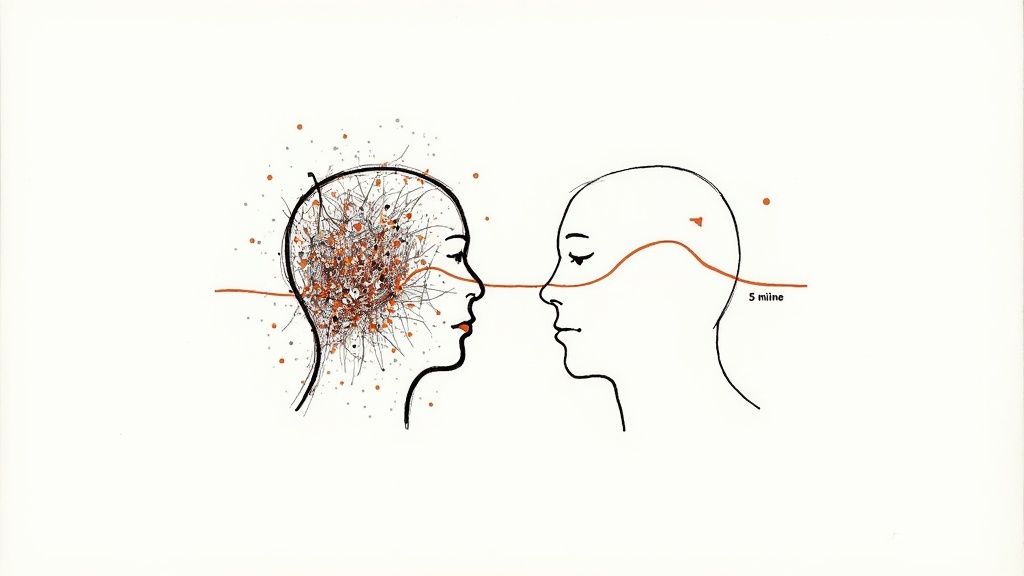
If you're constantly asking yourself how to shut off your brain, you’re not alone. Our minds are built for alertness, but the non-stop pings from our phones, relentless work demands, and personal anxieties have hijacked that system, leaving it stuck in overdrive.
This isn’t just a feeling—it’s a widespread reality. Global data reveals that 39% of adults grapple with daily worry, and another 37% report feeling significant stress. These aren't just numbers; they represent a collective cry for simple, effective ways to find calm. It's no wonder that interest in mindfulness and mental wellness has skyrocketed.
The good news? You don't need a silent retreat or hours of meditation to find immediate relief. You can start right now.
Your First Step Toward a Quieter Mind
The core principle is simple: gently guide your brain away from the anxious, looping thoughts and give it a single, neutral thing to focus on. This one action is enough to interrupt the cycle of overthinking and give your frazzled nervous system a much-needed break.
The goal is not to stop thinking, but to stop letting your thoughts run you. By giving your mind a simple, structured task, you reclaim control and create a space for calm to enter.
Introducing Decision-Free Creativity
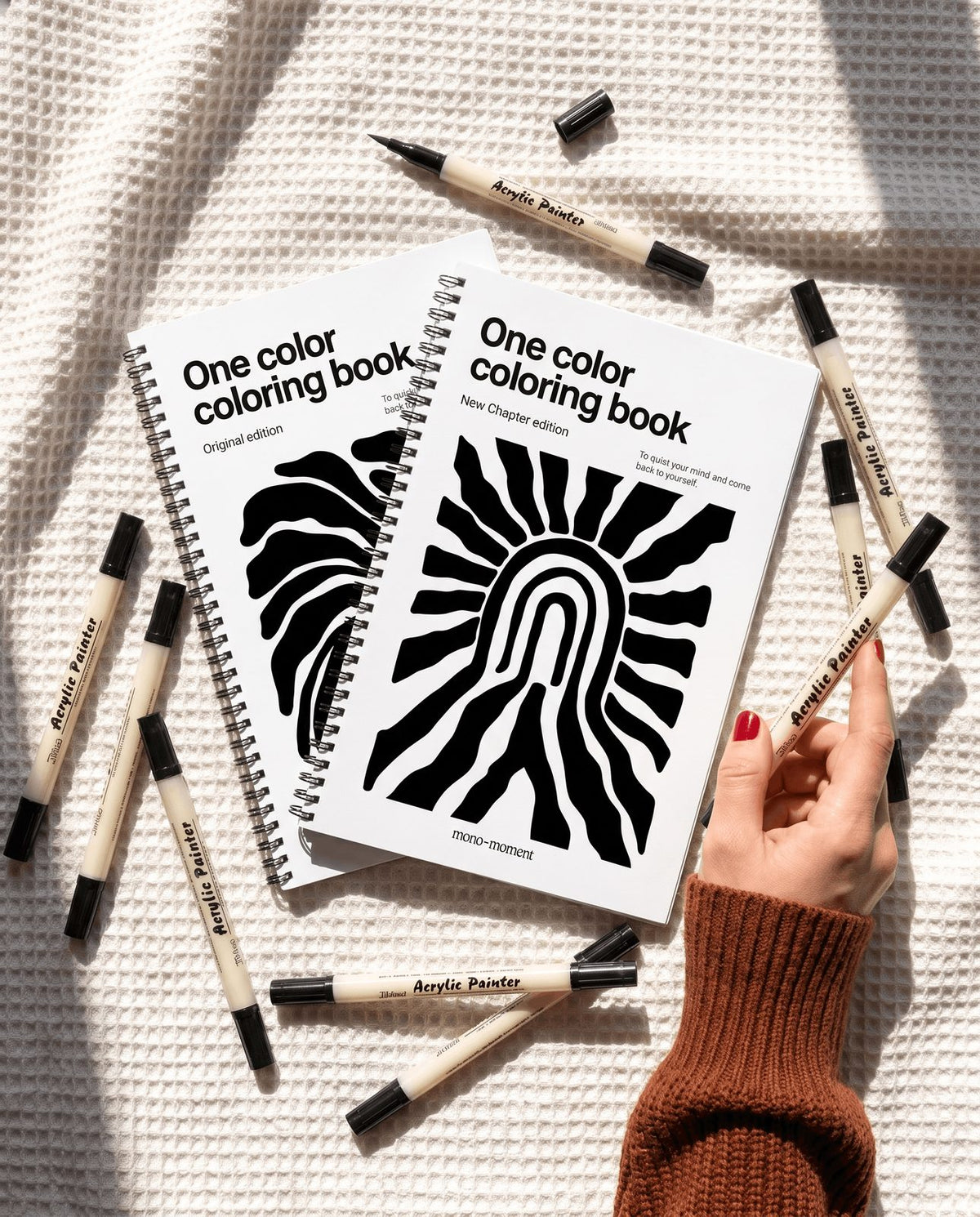
This is where a tool like the Mono Moment monochrome coloring book really shines. It's specifically designed to short-circuit decision fatigue. There’s no agonizing over which color to pick or what shade goes where. You just choose one pen and lose yourself in the intricate patterns.
This simple act of coloring does two powerful things at once:
- It anchors your focus to the physical sensation of the pen gliding across the paper.
- It provides a tangible sense of progress and completion, which is deeply satisfying for a mind that's used to spinning its wheels.
This kind of focused activity is also a fantastic way to help manage cortisol, the notorious stress hormone. For a deeper dive, check out our guide on how to reduce cortisol levels naturally. It’s a gentle, accessible starting point on your journey to a more peaceful mind.
If you need a quick reset right now, here are a few options you can try.
Your Quick Guide to a Quieter Mind
This table breaks down three immediate actions you can take to calm a racing mind, depending on how much time you have and what you need most.
| Technique (Time) | How It Works | Best For |
|---|---|---|
| Box Breathing (5 Min) | Inhale for 4s, hold for 4s, exhale for 4s, hold for 4s. This regulates your autonomic nervous system. | Instantly reducing feelings of panic or being overwhelmed. |
| Mono Moment Coloring (15 Min) | Engages your focus on a simple, repetitive motor task, quieting the "what-if" parts of your brain. | When you're stuck in a loop of worry and need a mental reset. |
| Progressive Muscle Relaxation (30 Min) | Tensing and then releasing different muscle groups helps release physical tension tied to mental stress. | Winding down before bed or after a particularly stressful day. |
Pick one that resonates with you and give it a try. The key is to start small and find what helps your mind feel a little more at ease.
Find Your Quiet Through Decision-Free Creativity
When your mind is racing, the last thing you need is another complicated task to master. You're just trying to figure out how to quiet the noise, not add another performance-based skill to your to-do list. This is where a lot of people stumble with traditional meditation—it can feel like a test. Am I doing it right? Am I breathing correctly? Am I thinking about not thinking?
That internal monologue can accidentally crank up the very stress you’re trying to escape.
But there’s a much gentler path, one that doesn't require you to wrestle your thoughts into submission. It’s a concept I call decision-free creativity, and it's a total game-changer for anyone whose mind feels too busy for traditional stillness. It's all about getting your hands and your focus engaged in something simple and structured, without any pressure to make complex choices or be "artistic."
This is the entire philosophy behind the Mono Moment monochrome coloring book. It was designed from the ground up to sidestep the mental roadblocks that keep you stuck in overdrive.
The Surprising Power of a Single Color
Think about the last time you tried to do something creative. Even a simple adult coloring book can set off a quiet storm of tiny decisions. Does this blue work with that green? What if I pick the wrong shade? Should I use a marker or a pencil? Each question, no matter how small, eats up a little bit of your precious mental energy.
The Mono Moment book short-circuits this entire process. You only use one color. That’s it.
By completely removing the paradox of choice, you’re freeing up all that mental bandwidth. Your brain is no longer stuck in a loop of analyzing, judging, and second-guessing. Instead, it can finally shift from a state of anxious overthinking into one of peaceful focus.
This simple constraint is what makes it so effective. It’s an invitation to just do something, without the need to perform or perfect it. You grab a single pen, and the only goal is to fill the space. This is how you start to quiet your mind without even realizing you're trying.
How Coloring Actually Calms Your Anxious Brain
Getting lost in a Mono Moment page is more than just a distraction; it’s an active process that soothes your nervous system. The repetitive, rhythmic motion of coloring is inherently meditative. It acts as an anchor, bringing you out of your head and into the physical sensation of the pen gliding across the paper.
As you get drawn into the intricate patterns, you create a gentle, welcome distraction from those looping, anxious thoughts. Instead of chewing on something that happened yesterday or worrying about tomorrow, your full attention is held by the simple, immediate task right in front of you. This is how you interrupt the cycle of overthinking and give your mind the break it desperately needs.
Here’s a quick look at what’s happening in your brain:
- It Calms Your Fear Center: Structured, repetitive activities like coloring have been shown to reduce activity in the amygdala, the brain's alarm system. This helps dial down your body's fight-or-flight stress response.
- You Can Find Your Flow: The focused attention it requires helps you slip into a "flow state." That’s the feeling of being so completely absorbed in an activity that time seems to disappear, along with your self-consciousness.
- You Get a Tangible Win: Finishing a page, no matter how simple, provides a concrete sense of accomplishment. This small victory delivers a little hit of satisfaction that can help silence your inner critic and build confidence in your ability to find your own calm.
Using a Mono Moment coloring book isn't really about making a pretty picture. It's about using a beautifully simple tool to achieve a profoundly quiet state of mind. It’s your permission slip to let go of the pressure and just be present, one stroke at a time.
Build Your Own Mind-Quieting Rituals
Knowing that a simple tool like the Mono Moment monochrome coloring book can help quiet your mind is the first step. The real magic happens when you turn that knowledge into a consistent practice. But don't worry, this isn't about finding a spare hour you don't have. It's about weaving small, intentional moments of calm into the fabric of your day.
Forget the pressure of a "perfect" routine. Think of these as flexible templates you can adapt to your life, whether you have five minutes between chaotic meetings or a peaceful half-hour before bed. Each ritual uses the Mono Moment coloring book as a simple, tactile anchor to ground you when your thoughts start to spiral out of control.
The 5-Minute Mental Reset
Think of this as your emergency brake for a racing mind. It’s perfect for a quick break at your desk or that moment you feel a wave of stress building. The goal isn't to finish a masterpiece; it's to interrupt the mental noise with a single point of focus.
First, before you even open the book, just breathe. Take three slow, deep breaths. Inhale through your nose for four counts, hold for four, and then exhale slowly through your mouth for six. This simple act is a powerful signal to your nervous system that it's okay to stand down.
Now, open your Mono Moment coloring book and pick one tiny, intricate section of a pattern. Just one. For the next few minutes, your only job is to fill in that small area. Pay attention to the feeling of the pen gliding across the premium 160gsm paper.
When your five minutes are up, close the book. Take one more deep breath and just notice the subtle shift. You’ve successfully broken the cycle of overthinking.
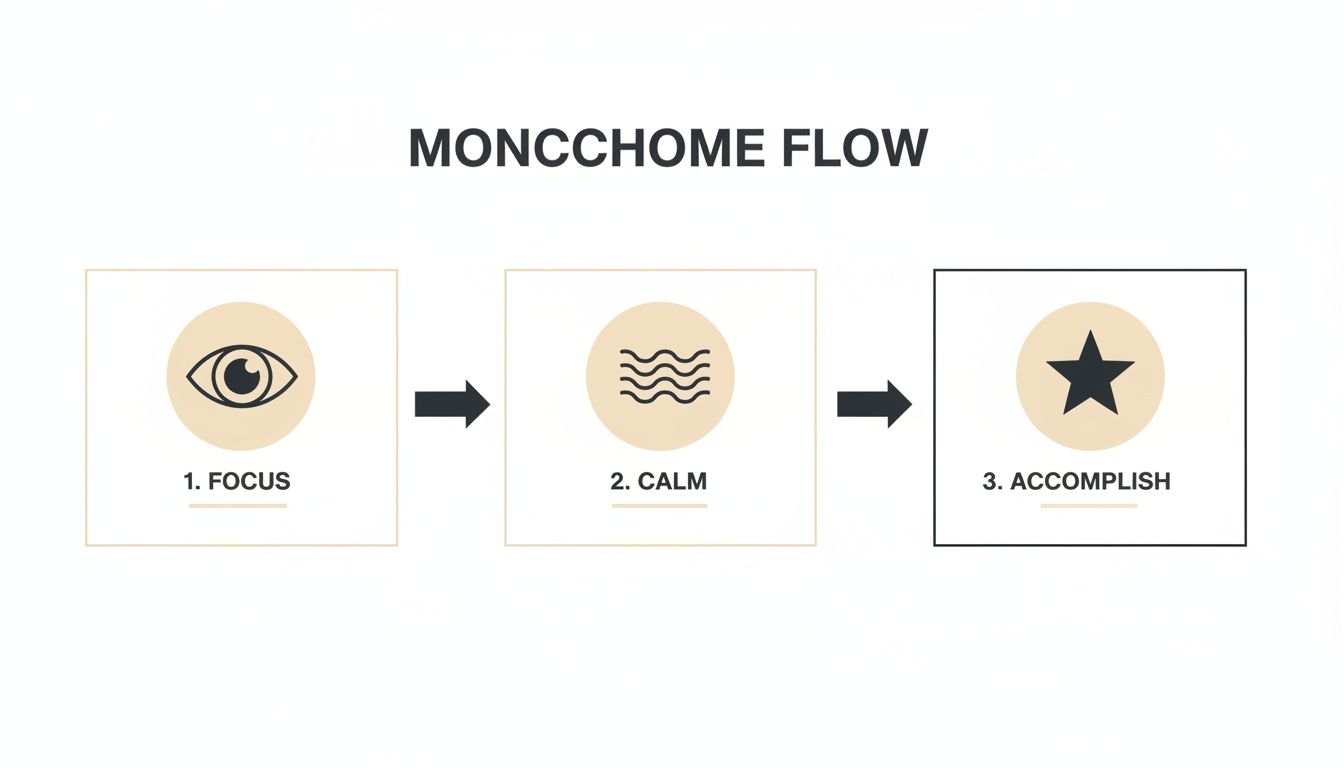
This simple flow—from focus to calm to a tiny sense of accomplishment—is incredibly effective. It proves you don't need a lot of time to make a real difference.
The 15-Minute De-Stress Session
Use this ritual to build a bridge from a hectic workday to a peaceful evening. It’s designed to help you physically and mentally let go of the day’s tensions before they follow you home.
Start by finding a comfortable seat and doing a quick body scan. Where are you holding tension? Your jaw? Shoulders? Take a moment to consciously tense those muscles for five seconds, then release them completely. This classic progressive muscle relaxation technique primes your mind to unwind, too.
Next, open your coloring book and set a gentle timer for 10-15 minutes. This is the sweet spot for many people. In fact, one survey found that for 41.7% of mindfulness practitioners, sessions of 10-20 minutes are the most common. With your body already more relaxed, you can sink into the patterns and let the decision-free creativity of the Mono Moment book take over.
The 30-Minute Deep Calm Immersion
This is your dedicated appointment with yourself. Schedule it when you know you won’t be interrupted, because this longer session is about creating a full sensory experience that truly quiets the mind.
Start by setting a simple intention. It can be as straightforward as, "For the next 30 minutes, I will let my worries go," or "I will focus only on this moment." This small act primes your brain for what’s to come.
Then, for the next 20-25 minutes, lose yourself in your Mono Moment coloring page. Maybe you put on some calming ambient music, or maybe you just soak in the silence. This is your time to become fully absorbed. For the final 5 minutes, put your pen down, close your eyes, and just sit with the feeling of stillness you’ve cultivated.
By building these small acts into your week, you're doing more than just coloring—you're actively training your brain to find quiet on command. If you're looking for more ways to integrate these practices, you can learn more about how to create a self-care routine that truly sticks.
Simple Exercises to Prepare Your Mind for Calm
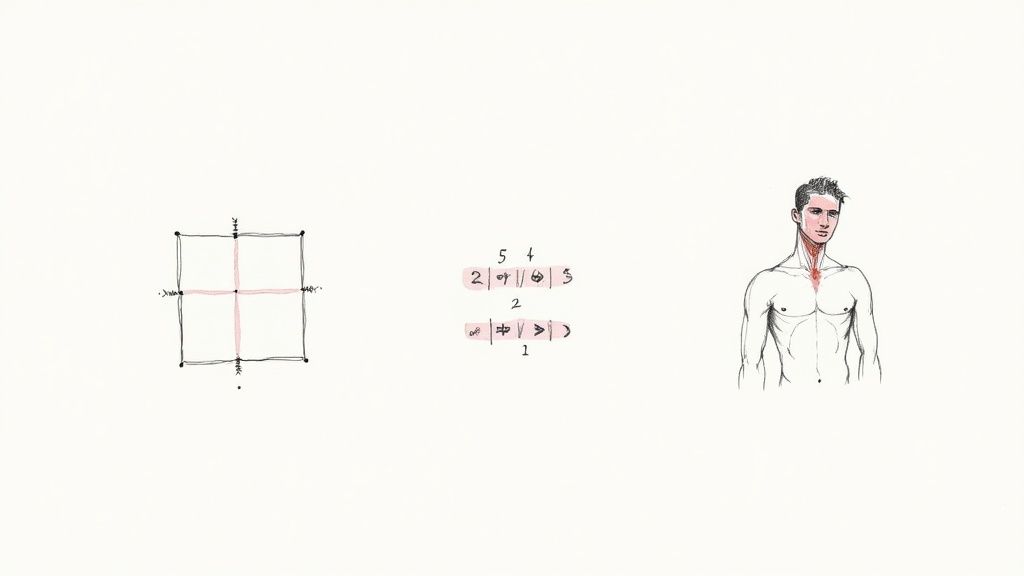
Sometimes, the quickest path to a quiet mind runs straight through the body.
When you're stuck in an overthinking spiral, your body is almost always holding the receipts. You can feel it in a tight jaw, in shoulders that have crept up to your ears, or in the shallow, hurried rhythm of your breath. If you try to jump straight into a mindful activity while your body is still on high alert, you're likely to just feel frustrated. It’s like trying to paint on a canvas that’s still shaking.
The secret is to use a few simple, physical exercises to gently downshift your nervous system first. These techniques are like a bridge, walking you from a state of anxious, buzzing energy to a place of readiness and calm. This creates the perfect headspace to really sink into a creative tool like the Mono Moment monochrome coloring book.
Think of it as a warm-up. You're releasing pent-up stress, grounding yourself in the here and now, and making it so much easier to find that quiet focus a great coloring session can bring.
Box Breathing to Regulate Your System
When stress kicks in, our breathing gets short and choppy, sending alarm signals to the brain. Box breathing is a surprisingly powerful tool that almost anyone, from nurses on a hectic shift to special forces operators, uses to instantly regain control and tell the nervous system, "we're safe."
It's simple. Just visualize a square and trace each side with your breath:
- Breathe in slowly through your nose for a count of four.
- Hold that breath for a count of four.
- Breathe out slowly through your mouth for another count of four.
- Hold the empty breath for a final count of four.
Just four or five rounds of this can make a world of difference. The steady, predictable rhythm is incredibly soothing and helps reset your body's internal alarm system. It's one of the most effective mindfulness exercises for beginners and the perfect ritual to do right before you open your coloring book.
The 5-4-3-2-1 Grounding Technique
Anxious thoughts love to drag us into worrying about what already happened or what might happen next. The 5-4-3-2-1 technique is a brilliant way to yank your attention right back to the present moment by engaging all your senses. You can’t really worry about tomorrow when you’re completely tuned in to what’s happening right now.
Wherever you are, just pause and find:
- 5 things you can see: Really look. Name five objects in the room. Notice their color, the light hitting them, their shape.
- 4 things you can feel: Bring your awareness to physical sensations. The solidness of the floor beneath your feet, the texture of your shirt, the cool air on your skin.
- 3 things you can hear: Listen closely. Tune into the distant hum of the refrigerator, the birds outside, or the sound of your own quiet breathing.
- 2 things you can smell: Can you pick up the faint scent of coffee from this morning? Maybe the soap on your hands or the clean smell of laundry?
- 1 thing you can taste: What’s the lingering taste in your mouth? Maybe it’s mint from your toothpaste or just the neutral taste of... well, you.
This exercise is an instant pattern-interrupt for racing thoughts, anchoring you firmly back into your body and your environment.
By focusing your awareness on your senses, you are essentially telling your brain, "I am here, and I am safe." This physical grounding creates a mental foundation for deeper calm.
Brief Progressive Muscle Relaxation
We don’t even realize how much tension we’re holding. We unconsciously clench our muscles all day long, especially when we're stressed. This quick exercise helps you find that hidden tension and consciously let it go. It’s perfect for the hands, shoulders, and jaw—the very muscles you'll be using to color.
Get comfortable wherever you're sitting.
First, inhale and squeeze your hands into tight fists for about five seconds. Then, exhale and completely release the tension. Feel the difference between "on" and "off."
Next, inhale and shrug your shoulders way up to your ears, holding them there for five seconds. As you exhale, let them drop completely. Feel that wave of release.
Finally, gently clench your jaw for five seconds, then let it go soft on the exhale.
This simple sequence helps melt away that physical layer of stress, getting you ready for a relaxed and focused session with your Mono Moment book.
What to Do When Your Mind Will Not Be Quiet
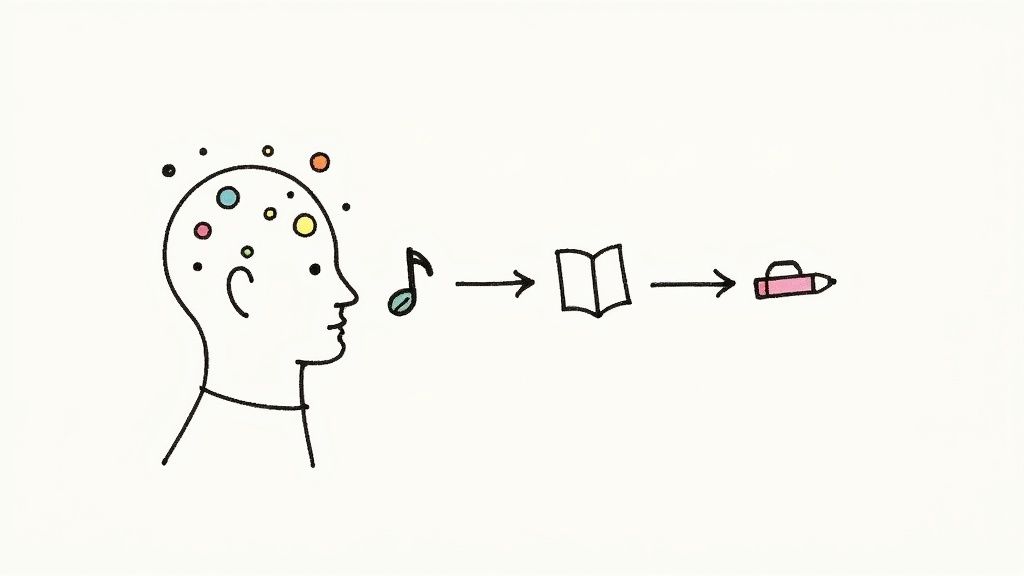
So, you’ve tried the breathing exercises. You’ve done the grounding techniques. And your brain is still going a mile a minute. First, know this: you haven't failed. A busy mind doesn't just come with an off-switch. It’s completely normal for it to put up a fight.
You’re not alone in this feeling. This shared struggle is exactly why the global meditation market is predicted to balloon to USD 17.78 billion by 2032. Interestingly, one of the biggest hurdles people report is dealing with "distractions" (26.2% of users). It’s clear we all need practices that can work with a restless mind, not just demand that it shut up. You can dig into the numbers and see the growth of the meditation market and its user challenges for yourself.
Let’s get real about troubleshooting some of the most common frustrations and find solutions that are both practical and kind to yourself.
When Restlessness and Boredom Creep In
Okay, picture this. You sit down with your Mono Moment coloring book, all set for a peaceful session. But two minutes in, you're antsy. Your leg is bouncing. Your mind is wandering everywhere, and you start thinking, 'Ugh, this isn't working.' This is probably the first and biggest roadblock for most people.
Instead of just giving up, try shifting your environment.
- Add some sound. Put on some gentle, lyric-free ambient music or even a nature soundscape. This gives the auditory part of your brain a simple job to do, which can help quiet the noisy, distracting parts.
- Go for short bursts. If 15 minutes feels like an eternity, don't force it. Just aim for five. Building a consistent habit is so much more valuable than hitting a specific duration, especially in the beginning.
When Your Thoughts Are Too Loud to Focus
Ever notice how the moment you try to get quiet, your thoughts seem to crank up the volume? The to-do list starts screaming, anxious worries pop up, and suddenly it feels impossible to focus on the simple pattern on the page.
This is the perfect time to practice what I call the "Acknowledge and Redirect" method. Don't try to wrestle the thought into submission—that just gives it more power. Instead, simply notice it without judgment, like watching a cloud drift by.
Gently say to yourself, "Ah, there's that thought about my deadline," and then deliberately, physically, bring your focus back to the sensation of the pen moving across the paper. The texture, the sound, the color.
Every single time you do this, you’re doing a rep for your focus "muscle." Learning how to quiet your mind is a skill you build over time, not an instant fix. The goal was never a perfectly silent mind anyway. It’s about learning how to gently guide your own attention back to a place of calm, one moment at a time.
Got Questions? Let's Talk About Quieting Your Mind
As you start using something like the Mono Moment coloring book, it's totally normal for a few questions to pop up. When your brain is used to running at full speed, trying to slow it down can feel… weird. Let's get into some of the most common things people wonder about so you can feel good about getting started.
How Long Does This Actually Take to Work?
Look, there’s no magic switch for a quiet mind. It's a skill, like learning an instrument. But the good news? Most people feel a real shift in their stress levels after just one focused 10-minute session.
The real secret isn't about marathon sessions. It’s about consistency.
A few minutes of mindful coloring each day is far more powerful than one long, stressful hour on a Sunday.
Think of it as training a muscle. Those small, regular moments with your Mono Moment coloring book build the strength you need to manage the mental chatter day in and day out.
Is This Really as Good as Meditation?
For a lot of us, especially if sitting still and "observing your thoughts" feels like a special kind of torture, the answer is yes. It can even be more effective.
Traditional meditation asks you to just sit with your racing mind, which can feel impossible when you're already overwhelmed. Mindful coloring with a Mono Moment product gives your brain a job to do—a simple, engaging task that anchors your attention.
It's a form of active meditation. Instead of wrestling with your internal thoughts, you’re channeling your focus outward onto the patterns and the feel of the pen on paper. This naturally quiets the internal noise without that feeling of "trying" so hard to be calm. You get to the same mindful place, just via a much more accessible route.
What if My Thoughts Just Get Louder When I Start?
First off, if this happens, congratulations! You're normal. It's an incredibly common experience. When you finally slow down, all the thoughts you’ve been outrunning all day suddenly catch up.
The goal is never to fight them. That just gives them more power.
Instead, just notice the thought. Acknowledge it without judgment, picture it floating by like a cloud, and then gently bring your attention back to the sensation of coloring. The sound of the pen, the texture of the page, the simple movement of your hand.
Every time you do this, you're building a little muscle of focus. It's a gentle redirection, not a battle. With a little practice, you'll find the volume starts to go down all on its own.
Ready to give your mind the peaceful focus it deserves? The Mono Moment One Color Coloring Book is designed to make quieting your mind simple and satisfying. Grab your single favorite pen and discover how decision-free creativity can become your most reliable self-care ritual.

The One Color Coloring Book
A single-pen, decision-free coloring book on 160 gsm cream paper — engineered for the wind-down ritual described above.
 Pair it with the 3 Dual Tip Brush Pens — $5 instead of $9.95 in the Book + Pens bundle.