About the author
Published December 17, 2025 · Last reviewed April 26, 2026 · 21 min read
In this article · 10 sections
- 1. Breath Awareness (Pranayama)
- 2. Breath Awareness (Pranayama)
- 3. Loving-Kindness Meditation (Metta)
- 4. Mindful Walking
- 5. Body Scan with Mindful Eating
- 6. Progressive Muscle Relaxation (PMR)
- 7. 5-4-3-2-1 Grounding Technique (Sensory Awareness)
- 8. Guided Visualization and Imagery
- 8 Mindfulness Exercises Comparison
- Your First Step to a Calmer Mind Starts Now
In a world that constantly demands our attention, finding a moment of peace can feel like an impossible task. The relentless stream of notifications, a never-ending to-do list, and the pressure to always be ‘on’ can leave you feeling frazzled, scattered, and utterly overwhelmed. If you've heard about mindfulness but dismissed it as too complex, time-consuming, or just not for you, this guide is your entry point. Forget lengthy retreats or complicated jargon; reclaiming your calm is far more accessible than you think.
This is your practical toolkit, a curated collection of powerful yet surprisingly simple mindfulness exercises for beginners. These are not abstract concepts but actionable techniques designed to fit seamlessly into your busy life, whether you have five minutes or thirty. We are breaking down everything you need to know, from foundational breathwork and body scan meditations to the focused calm of a creative task. You will learn how to ground yourself in the present moment, transform your relationship with stress, and build a sustainable practice that works for you.
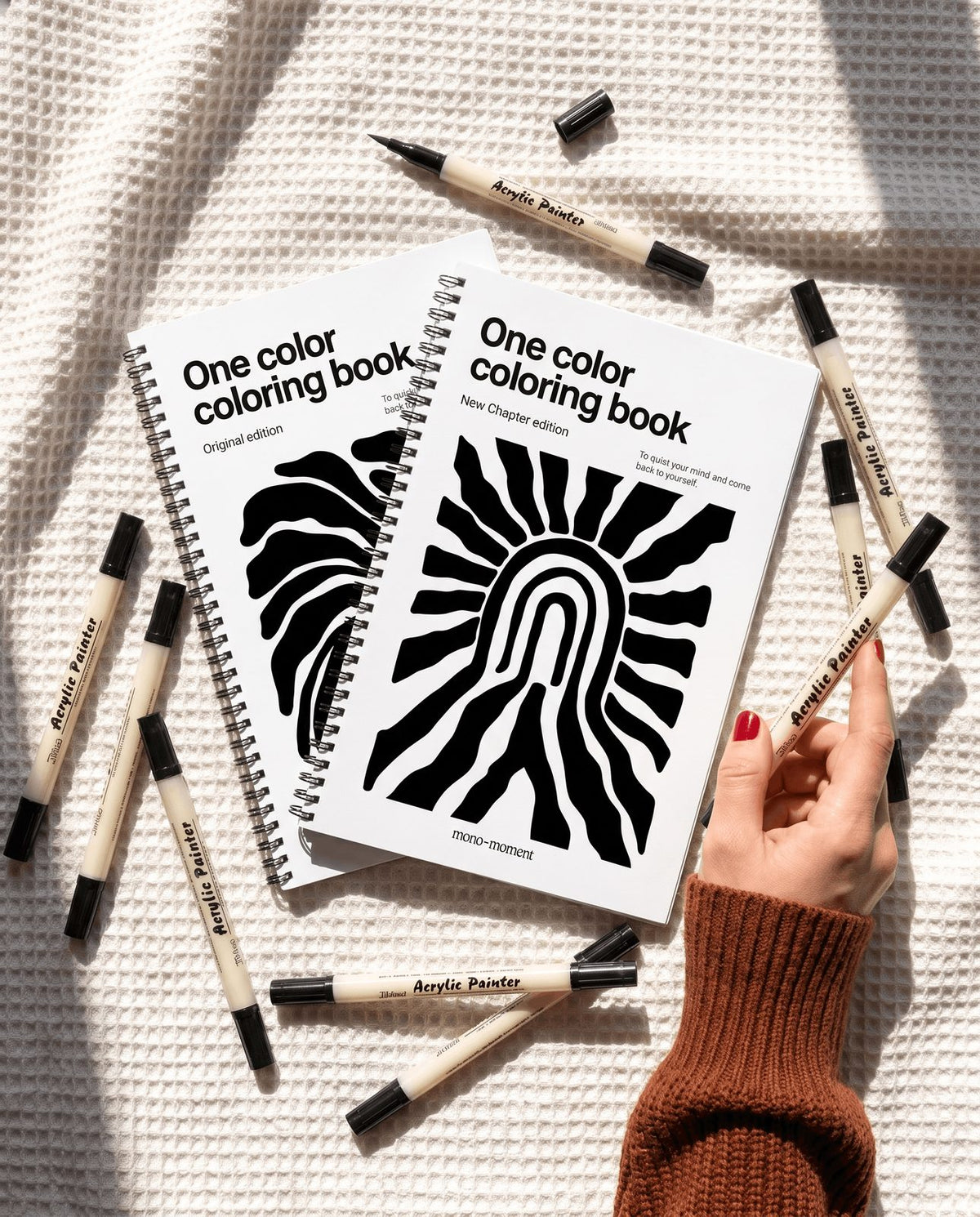
Each exercise offers a unique pathway to quiet the mental noise and reconnect with yourself. Prepare to discover how activities as straightforward as walking or coloring can become profound tools for peace. For instance, engaging in a tactile activity like our Mono Moment One Color Coloring Book provides a structured way to anchor your focus, turning a simple creative outlet into a meditative ritual. This and other mindfulness tools from our store are designed to help you build resilience, enhance focus, and unlock a more centered, peaceful version of yourself, starting today.
1. Breath Awareness (Pranayama)
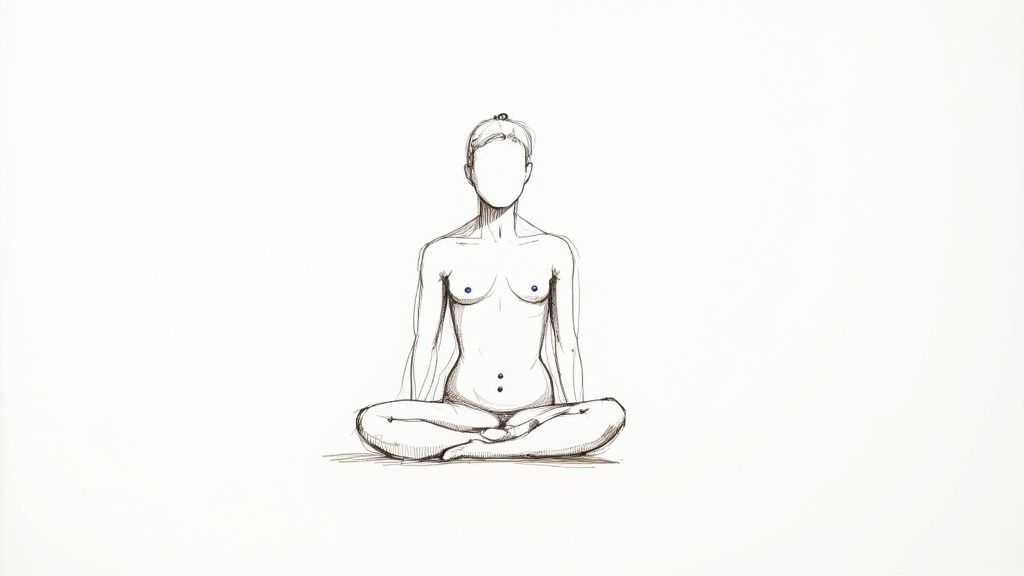
Breath awareness is the cornerstone of mindfulness, a simple yet profound technique that anchors you firmly in the present moment. The practice involves focusing your full attention on the natural rhythm of your breathing without any effort to change or control it. This is arguably the most fundamental of all mindfulness exercises for beginners because your breath is always with you, making it a portable and instantly accessible tool for grounding yourself, whether you're in a stressful meeting or stuck in traffic.
The power of this technique is its simplicity. By observing the sensation of air entering your nostrils, filling your lungs, and then leaving your body, you interrupt the endless loop of thoughts. This is why it’s used by emergency room staff to calm panicked patients and by elite athletes to find focus before a competition. It’s a direct line to your nervous system, signaling it to relax and exit "fight or flight" mode.
How to Practice Breath Awareness
Getting started is easy. You don’t need any special equipment, just a quiet space and a few minutes.
- Find a Comfortable Position: Sit upright in a chair with your feet flat on the floor or cross-legged on a cushion. Keep your back straight but not rigid.
- Set a Timer: Start with just three to five minutes. This small commitment makes the habit easier to build.
- Focus on the Breath: Close your eyes or soften your gaze. Bring your attention to the physical sensation of breathing. Notice where you feel it most: the tip of your nose, the rise and fall of your chest, or the expansion of your belly.
- Acknowledge Wandering Thoughts: Your mind will wander. That’s completely normal. When you notice your thoughts have drifted, gently and without judgment, guide your focus back to your breath.
Pro-Tip: Counting your breaths can help maintain focus. Inhale on one, exhale on two, and so on, up to ten. Then, start again at one. This simple counting task gives your analytical mind a job to do, making it less likely to get distracted.
For those whose minds race, pairing breathwork with a tactile activity can be incredibly effective. Before your session, try spending 15 minutes with our Mono Moment One Color Coloring Book. The focused, repetitive motion of coloring helps quiet the mental chatter, making it much easier to transition into a state of mindful breath awareness. If you find that overthinking is a constant challenge, you can discover more techniques to calm your mind in this article about how to stop the cycle of overthinking.
2. Breath Awareness (Pranayama)
Breath awareness is the cornerstone of mindfulness, a simple yet profound technique that anchors you firmly in the present moment. The practice involves focusing your full attention on the natural rhythm of your breathing without any effort to change or control it. This is arguably the most fundamental of all mindfulness exercises for beginners because your breath is always with you, making it a portable and instantly accessible tool for grounding yourself, whether you're in a stressful meeting or stuck in traffic.
The power of this technique is its simplicity. By observing the sensation of air entering your nostrils, filling your lungs, and then leaving your body, you interrupt the endless loop of thoughts. This is why it’s used by emergency room staff to calm panicked patients and by elite athletes to find focus before a competition. It’s a direct line to your nervous system, signaling it to relax and exit "fight or flight" mode.
How to Practice Breath Awareness
Getting started is easy. You don’t need any special equipment, just a quiet space and a few minutes.
- Find a Comfortable Position: Sit upright in a chair with your feet flat on the floor or cross-legged on a cushion. Keep your back straight but not rigid.
- Set a Timer: Start with just three to five minutes. This small commitment makes the habit easier to build.
- Focus on the Breath: Close your eyes or soften your gaze. Bring your attention to the physical sensation of breathing. Notice where you feel it most: the tip of your nose, the rise and fall of your chest, or the expansion of your belly.
- Acknowledge Wandering Thoughts: Your mind will wander. That’s completely normal. When you notice your thoughts have drifted, gently and without judgment, guide your focus back to your breath.
Pro-Tip: Counting your breaths can help maintain focus. Inhale on one, exhale on two, and so on, up to ten. Then, start again at one. This simple counting task gives your analytical mind a job to do, making it less likely to get distracted.
For those whose minds race, pairing breathwork with a tactile activity can be incredibly effective. Before your session, try spending 15 minutes with the Mono Moment One Color Coloring Book. The focused, repetitive motion of coloring helps quiet the mental chatter, making it much easier to transition into a state of mindful breath awareness. If you find that overthinking is a constant challenge, you can discover more techniques to calm your mind in this article about how to stop the cycle of overthinking.
3. Loving-Kindness Meditation (Metta)
Loving-kindness meditation, or Metta, is a practice designed to cultivate an attitude of warmth, goodwill, and unconditional friendliness toward yourself and others. This exercise involves silently repeating specific phrases that express benevolent wishes, directing them inward first and then gradually outward to encompass all living beings. It stands out among mindfulness exercises for beginners because it actively generates positive emotions, rather than simply observing the present moment. This makes it a powerful antidote to self-criticism, resentment, and social anxiety.
The transformative power of this practice lies in its ability to rewire your habitual thought patterns. Instead of defaulting to judgment or indifference, you intentionally practice compassion. This technique is used effectively in therapeutic settings to combat depression and in schools to foster empathy and reduce bullying. It’s a direct method for nurturing your capacity for love and connection, starting with the most important relationship you have: the one with yourself.
How to Practice Loving-Kindness Meditation
You don’t need to feel a certain way to start; the practice is about setting the intention. All you need is a quiet place to sit for a few minutes.
- Find a Comfortable Position: Sit in a chair or on a cushion with your back supported and straight. Allow your body to be relaxed yet alert.
- Set a Timer: Begin with a 10 to 15-minute session. Committing to a short, consistent practice is more beneficial than sporadic long sessions.
- Begin with Yourself: Close your eyes and bring a gentle awareness to your heart area. Silently repeat phrases filled with warm wishes for yourself. For example: "May I be happy. May I be healthy. May I be safe. May I live with ease."
- Extend the Phrases Outward: After a few minutes, bring to mind a loved one and extend the same wishes to them. Then, move on to a neutral person, a difficult person, and finally, all living beings everywhere.
Pro-Tip: If you find it difficult to generate warm feelings, especially toward yourself or a difficult person, don't force it. The intention behind the words is what matters. Simply repeating the phrases is the practice itself; the feelings will follow in time.
To prime your mind for this heart-centered practice, consider a preparatory activity that encourages self-compassion. Spending 15 minutes with our flagship Mono Moment One Color Coloring Book can be an excellent prelude. The simple, focused act of coloring calms the inner critic and creates a gentle, non-judgmental space, making it easier to transition into the vulnerable and open-hearted state required for Metta.
4. Mindful Walking
Mindful walking transforms a routine activity into a powerful meditation, grounding you in the present with every step. Popularized by mindfulness leaders like Thich Nhat Hanh, this practice involves bringing your full, non-judgmental attention to the physical sensations of walking. It is one of the most accessible mindfulness exercises for beginners because it doesn't require you to sit still, making it ideal for those who find traditional meditation challenging or feel restless.

The strength of mindful walking lies in its integration of body and mind. By focusing on the feeling of your feet on the ground, the rhythm of your movement, and the sights and sounds around you, you create a break from the cycle of anxious thoughts. This is why it’s a core component in nature therapy and corporate wellness programs, helping people connect with their bodies and environments simultaneously. It turns a simple walk into a rich sensory experience.
How to Practice Mindful Walking
You can practice this anywhere you can walk, from a hallway to a park. All you need is a short path and your attention.
- Find a Suitable Path: Choose a safe, quiet space where you can walk back and forth without many distractions. A 10 to 15-foot path is plenty.
- Start Slowly: Begin walking at a much slower pace than usual, perhaps a quarter of your normal speed. This deliberateness helps you notice sensations you would typically overlook.
- Focus on Sensations: Bring your awareness to your feet. Notice the feeling of lifting one foot, moving it through the air, and placing it back on the ground. Feel the contact, the pressure, and the shift in weight.
- Acknowledge Distractions: Your mind will naturally wander. When it does, gently acknowledge the thought and guide your attention back to the physical act of walking.
Pro-Tip: Synchronize your breath with your steps to deepen your focus. For example, inhale as you lift your right foot and exhale as you place it down. This coordination gives your mind a simple anchor, preventing it from getting lost in thought.
For individuals who struggle to disengage from a busy day, a short "mind-clearing" activity beforehand can make a huge difference. Spending 10 minutes with a Mono Moment One Color Coloring Book before your walk can calm the nervous system and prime your brain for a more focused mindful experience. The simple, repetitive motions of coloring help quiet internal chatter, setting the stage for a more profound walking meditation. For more inspiration, explore these quick mindfulness activities for adults.
5. Body Scan with Mindful Eating
Mindful eating transforms a routine activity into a powerful sensory experience, anchoring you in the present by focusing on the food you consume. It combines a body scan, where you tune into physical hunger and fullness cues, with a full engagement of your senses. This is one of the most practical mindfulness exercises for beginners because it doesn’t require extra time; it simply changes your approach to something you already do every day, fostering a healthier relationship with food and your body.
The technique’s effectiveness comes from its ability to short-circuit mindless consumption and emotional eating. By paying close attention, you notice flavors, textures, and aromas you might otherwise miss. This practice is used in eating disorder treatment facilities to rebuild positive food connections and in corporate wellness programs to help busy professionals manage stress-related eating habits. It encourages you to honor your body’s signals rather than external triggers.
How to Practice Mindful Eating
You can start with just one meal or even a single snack. The goal is to build awareness, not perfection.
- Create a Calm Environment: Before you eat, minimize distractions. Put away your phone, turn off the TV, and sit at a table. This creates a dedicated space for your meal.
- Engage Your Senses: Look at your food. Notice the colors, shapes, and steam rising from the plate. Inhale the aroma deeply before taking your first bite.
- Eat Slowly and Intentionally: Chew each bite thoroughly, aiming for 20-30 chews. Try putting your fork down between bites. This gives your brain time to register fullness.
- Listen to Your Body: Throughout the meal, perform a mini body scan. Are you still hungry? Are you feeling satisfied? Acknowledge these sensations without judgment and stop when you feel comfortably full, not stuffed.
Pro-Tip: Start your mindful eating journey with a single piece of fruit, like a raisin or a slice of orange. Dedicate five full minutes to exploring it with all your senses before, during, and after you eat it. This intensifies the experience and makes the principles easier to grasp.
To enhance your transition into a mindful state, consider a calming pre-meal ritual. Spending 10-15 minutes with a Mono Moment One Color Coloring Book can quiet a busy mind and reduce the impulse to rush through your meal. The simple, focused activity prepares you to bring the same level of deliberate attention to the dining table. For more insights on building intentional habits, explore our guide on creating a daily mindfulness routine.
6. Progressive Muscle Relaxation (PMR)
Progressive Muscle Relaxation is a powerful, body-centric technique that teaches you to recognize and release hidden physical tension. The practice involves methodically tensing specific muscle groups for a few seconds and then consciously relaxing them. This exercise is especially effective for beginners because it creates a tangible, undeniable contrast between tension and relaxation, making the abstract concept of "letting go" a physical reality. It's one of the most direct mindfulness exercises for beginners to bridge the gap between mind and body.
The brilliance of PMR lies in its ability to reset your body's stress response. Developed in the 1920s by physician Edmund Jacobson, this technique is now a staple in chronic pain management, sleep clinics, and sports psychology to help athletes release muscle tightness. By systematically engaging and then releasing muscles, you are not just relaxing physically; you are sending a direct signal to your nervous system that the perceived threat has passed and it's safe to calm down.
How to Practice Progressive Muscle Relaxation
This exercise is best done in a quiet, comfortable space where you won't be interrupted. You can practice while lying down in bed or sitting in a supportive chair.
- Find Your Starting Point: Lie down or sit comfortably. Take a few deep breaths to begin settling your mind and body.
- Tense and Release: Begin with your feet and toes. Tense these muscles by curling your toes tightly for about 5 seconds. Focus intently on the feeling of tightness. Then, abruptly release the tension and notice the feeling of relaxation for 10-15 seconds.
- Work Your Way Up: Systematically move up your body, tensing and releasing each major muscle group: calves, thighs, glutes, abdomen, chest, back, hands, arms, shoulders, neck, and finally your face. Maintain gentle tension, never straining to the point of pain.
- Settle into Stillness: After you have worked through all the muscle groups, spend a few minutes enjoying the profound sense of physical relaxation you’ve cultivated.
Pro-Tip: Consistency is key. Create a predictable sequence, either starting from your toes and moving up or from your head and moving down. This turns the practice into a familiar ritual, making it easier for your body and mind to anticipate the relaxation response.
For those who find it difficult to lie still, pairing PMR with a preparatory calming activity can be transformative. Before you begin, spend 20 minutes with a Mono Moment One Color Coloring Book. The focused, rhythmic motion of coloring helps to discharge nervous energy and quiet a busy mind, creating the perfect mental state to fully engage with the physical sensations of PMR. If you struggle with persistent tension, learn more about how to manage a restless mind in our guide on how to stop the cycle of overthinking.
7. 5-4-3-2-1 Grounding Technique (Sensory Awareness)
The 5-4-3-2-1 Grounding Technique is a powerful sensory exercise designed to pull you out of overwhelming thoughts, anxiety, or panic and anchor you firmly in the present moment. This method systematically engages your five senses to interrupt the cycle of distress and reconnect you with your immediate environment. It's one of the most effective mindfulness exercises for beginners because it requires no prior experience and can be performed anywhere, at any time, to quickly de-escalate intense emotions.

This technique is a cornerstone of trauma-informed therapy and is widely taught by emergency room staff to manage panic attacks. Its effectiveness lies in its structure; by giving your brain a specific, concrete task-to-do list (find 5 things you see, 4 you can touch, etc.), you shift your focus away from internal turmoil and onto external, neutral stimuli. This process redirects your mental resources, providing immediate relief from a spiraling mind.
How to Practice the 5-4-3-2-1 Technique
This exercise is simple to learn and incredibly discreet, making it perfect for use in public spaces, at work, or at home.
- Find 5 Things You Can See: Look around and slowly name five distinct objects. Notice details: the wood grain on your desk, the exact shade of blue of a pen, the texture of the ceiling, a reflection in the window, a dust particle floating in a sunbeam.
- Acknowledge 4 Things You Can Touch: Bring your awareness to physical sensations. Feel the texture of your shirt against your skin, the cool smoothness of your phone screen, the solid pressure of your feet on the floor, or the soft fabric of your chair.
- Listen for 3 Things You Can Hear: Tune into the sounds around you. It could be the hum of a computer, the distant sound of traffic, the ticking of a clock, or your own gentle breathing.
- Identify 2 Things You Can Smell: This can be challenging, so take your time. You might notice the faint scent of coffee, the soap on your hands, or the smell of paper from a nearby book.
- Name 1 Thing You Can Taste: Focus on the inside of your mouth. Can you taste the remnants of your last meal or drink? You could also take a sip of water or simply notice the natural taste in your mouth.
Pro-Tip: Before a stressful event, prime your senses with a calming activity. Spending 15 minutes with the Mono Moment One Color Coloring Book engages your sense of sight and touch in a predictable, soothing rhythm. This pre-emptive grounding makes it easier to access a calm state of mind if you need to use the 5-4-3-2-1 technique later.
This structured sensory scan is a powerful tool to have in your mental health toolkit. For those who frequently deal with anxious thoughts, it offers a direct and actionable way to regain control. If you're interested in building a comprehensive strategy, you can find more techniques and information on how to calm an anxious mind here.
8. Guided Visualization and Imagery
Guided visualization is a powerful mindfulness technique that uses your imagination as a direct pathway to a state of calm. The practice involves creating detailed mental images of peaceful, positive, or successful scenarios, often guided by an audio recording or your own internal script. This is one of the most immersive mindfulness exercises for beginners because it actively engages your mind in a constructive, calming story, making it less likely to be pulled away by anxious or distracting thoughts.
The power of this method lies in the brain's inability to distinguish vividly imagined experiences from real ones. When you visualize a tranquil beach, your nervous system responds as if you are actually there, slowing your heart rate and releasing calming hormones. It's a technique used by Olympic athletes to mentally rehearse a flawless performance and by top surgeons to prepare for complex procedures, demonstrating its effectiveness in reducing anxiety and building confidence.
How to Practice Guided Visualization
You don't need any special skills, just a willingness to let your imagination lead the way in a quiet, comfortable space.
- Find Your Sanctuary: Sit or lie down in a place where you won't be disturbed. Dim the lights and ensure you are comfortable.
- Choose Your Guide: Start with a guided audio recording. There are thousands available online for free, focusing on everything from deep relaxation to building self-esteem.
- Engage All Senses: As the guide describes a scene, try to fully immerse yourself. What do you see? What sounds do you hear? Can you feel the sun on your skin or smell the salt in the air? The more senses you involve, the more real and effective the visualization becomes.
- Stay with the Feeling: Focus on the positive emotions the scene evokes, such as peace, joy, or confidence. Allow these feelings to spread throughout your body.
Pro-Tip: If you struggle to visualize, don't worry. The intention is more important than creating a perfect mental movie. Simply thinking about the concepts of "calm" or "safety" can be just as beneficial.
To make your visualization practice even more effective, prepare your mind beforehand. Spending 15 minutes with a creative, low-stakes activity like the Mono Moment One Color Coloring Book can significantly quiet the analytical part of your brain. The focused, repetitive motion of coloring helps silence mental chatter, creating a clear and receptive canvas for your imagination to paint upon, allowing for a deeper and more restorative visualization experience.
8 Mindfulness Exercises Comparison
| Practice | Implementation Complexity (🔄) | Resource Requirements (⚡) | Expected Outcomes (⭐ / 📊) | Ideal Use Cases (📊) | Key Advantages (⭐) / Quick Tip (💡) |
|---|---|---|---|---|---|
| Body Scan Meditation | 🔄🔄 Moderate — sequential attention, 10–45 min | ⚡ Low — quiet space; optional guided audio | ⭐⭐⭐ Effective for stress relief; 📊 increases body awareness, aids sleep | Evening relaxation, MBSR, pain management | ⭐ Targets physical tension; beginner-friendly. 💡 Start 10 min, use guided recordings |
| Breath Awareness (Pranayama) | 🔄 Low — simple focus on natural breath | ⚡ Very low — anywhere, no equipment | ⭐⭐ Immediate calming; 📊 reduces racing thoughts and anxiety with practice | On-the-go stress relief, breaks, commuting | ⭐ Highly portable and accessible. 💡 Start 3–5 min, count breaths to focus |
| Loving‑Kindness Meditation (Metta) | 🔄🔄 Moderate — repeated phrases + visualization | ⚡ Low — quiet space, optional script/audio | ⭐⭐⭐ Builds compassion; 📊 improves relationships, reduces self-criticism and some depression | Therapy, social connection work, emotional resilience training | ⭐ Strengthens self‑compassion and social bonds. 💡 Begin with self, extend gradually |
| Mindful Walking | 🔄🔄 Low–Moderate — coordinate movement with awareness | ⚡ Low — safe walking space (indoors/outdoors) | ⭐⭐ Reduces restlessness; 📊 combines physical exercise benefits with mindfulness | For those who dislike sitting meditation, commuting, short breaks | ⭐ Integrates movement and mindfulness. 💡 Walk slowly, focus on foot sensations |
| Body Scan with Mindful Eating | 🔄🔄🔄 Moderate — combines body awareness with sensory eating | ⚡ Low resources but time‑intensive (15–30+ min/meal) | ⭐⭐ Improves hunger/fullness cues; 📊 reduces overeating, supports digestion | Weight management, eating‑disorder support, diabetes care | ⭐ Enhances awareness of eating habits. 💡 Start with one mindful meal, remove distractions |
| Progressive Muscle Relaxation (PMR) | 🔄🔄 Moderate — timed tension/release sequence | ⚡ Low — quiet space, lying or seated position | ⭐⭐⭐ Strong for physical tension and sleep; 📊 reduces somatic anxiety symptoms | Insomnia, chronic pain, rehabilitation, pre‑sleep routine | ⭐ Produces clear relaxation contrast. 💡 Tense ~5s then release; avoid if injured |
| 5‑4‑3‑2‑1 Grounding Technique | 🔄 Low — structured sensory checklist (5–10 min) | ⚡ Very low — completely portable, no equipment | ⭐⭐ Quick acute anxiety relief; 📊 rapid grounding during panic or dissociation | Panic attacks, acute anxiety, trauma‑informed therapy, classrooms | ⭐ Fast and easy to teach. 💡 Practice when calm to build familiarity |
| Guided Visualization & Imagery | 🔄🔄 Low–Moderate — follow scripts or audio | ⚡ Low–Medium — best with quality audio/apps or scripts | ⭐⭐⭐ Effective for stress reduction, sleep, performance; 📊 supports goal rehearsal | Sports psychology, pre‑surgery anxiety, sleep aids, motivation work | ⭐ Engaging for visual learners and goal work. 💡 Use short guided tracks and personalize imagery |
Your First Step to a Calmer Mind Starts Now
You've just explored a comprehensive toolkit of eight powerful, yet accessible, mindfulness exercises for beginners. From the deep physical awareness of the Body Scan Meditation to the immediate sensory engagement of the 5-4-3-2-1 Grounding Technique, you now possess a diverse set of strategies to navigate the complexities of your inner world. The journey into mindfulness is not a race to master every single practice, but a personal exploration to discover which tool best fits your needs in any given moment.
The true power of these exercises lies in their adaptability. You learned that Progressive Muscle Relaxation can be a sanctuary before sleep, while Mindful Walking can transform a routine commute into a meditative experience. Each technique serves as a different doorway into the present moment, offering a unique path away from the relentless churn of overthinking and anxiety. The key takeaway is not perfection, but persistence. Your mind will wander; that is its nature. The practice is in gently, and without judgment, guiding it back.
The Myth of the Empty Mind
Let's dispel a common misconception right now: mindfulness is not about forcing your mind to be empty. This is a frequent point of frustration for beginners who feel they are "failing" when thoughts inevitably arise. Instead, think of mindfulness as becoming the calm, curious observer of your mental landscape. It's about noticing the thoughts, feelings, and sensations as they pass by, like clouds in the sky, without getting swept away by them.
This shift in perspective is transformative. It creates a crucial space between a stimulus and your reaction. It's in this space that you regain your power, your choice, and your peace. This is the ultimate value of cultivating a consistent mindfulness practice; it empowers you to respond to life with intention rather than reacting on autopilot.
Integrating Mindfulness into Your Daily Rhythm
The challenge for many is translating knowledge into action. How do you make these mindfulness exercises for beginners a genuine part of your life when schedules are packed and demands are high?
- Start Small: Commit to just five minutes a day. Consistency trumps duration every time. Use the Breath Awareness exercise while waiting for your coffee to brew or practice the 5-4-3-2-1 technique when you first sit down at your desk.
- Anchor to an Existing Habit: Link your new mindfulness practice to something you already do. For example, practice Loving-Kindness Meditation for three minutes right after brushing your teeth.
- Embrace Tangible Tools: Sometimes, the most effective way to start is with a physical anchor that simplifies the process. This is where a structured, tactile activity can be invaluable, removing the mental burden of "what do I do now?"
For those seeking a simple, decision-free entry point, an activity like monochrome coloring provides a powerful, tangible focus. Our Mono Moment One Color Coloring Book is specifically engineered for this purpose. It eliminates the distraction of choosing colors, allowing your mind to settle into a meditative state guided by the simple, repetitive motion of filling in intricate patterns. It's a 20-minute structured escape, a reliable ritual designed to quiet the noise and reconnect you with your creative, calm center.
Your journey toward a more present, peaceful, and centered self begins not with a grand gesture, but with a single, intentional step. Choose one exercise from this list. Just one. Try it today. Notice how you feel. That single moment of awareness is the seed from which profound change can grow.
Ready to embrace a simple, tangible path to mindfulness? Discover how the Mono Moment One Color Coloring Book can provide a structured and calming creative outlet, turning your wind-down time into a powerful mindfulness ritual. Visit Mono Moment to begin your journey.

The One Color Coloring Book
A single-pen, decision-free coloring book on 160 gsm cream paper — engineered for the wind-down ritual described above.
 Pair it with the 3 Dual Tip Brush Pens — $5 instead of $9.95 in the Book + Pens bundle.