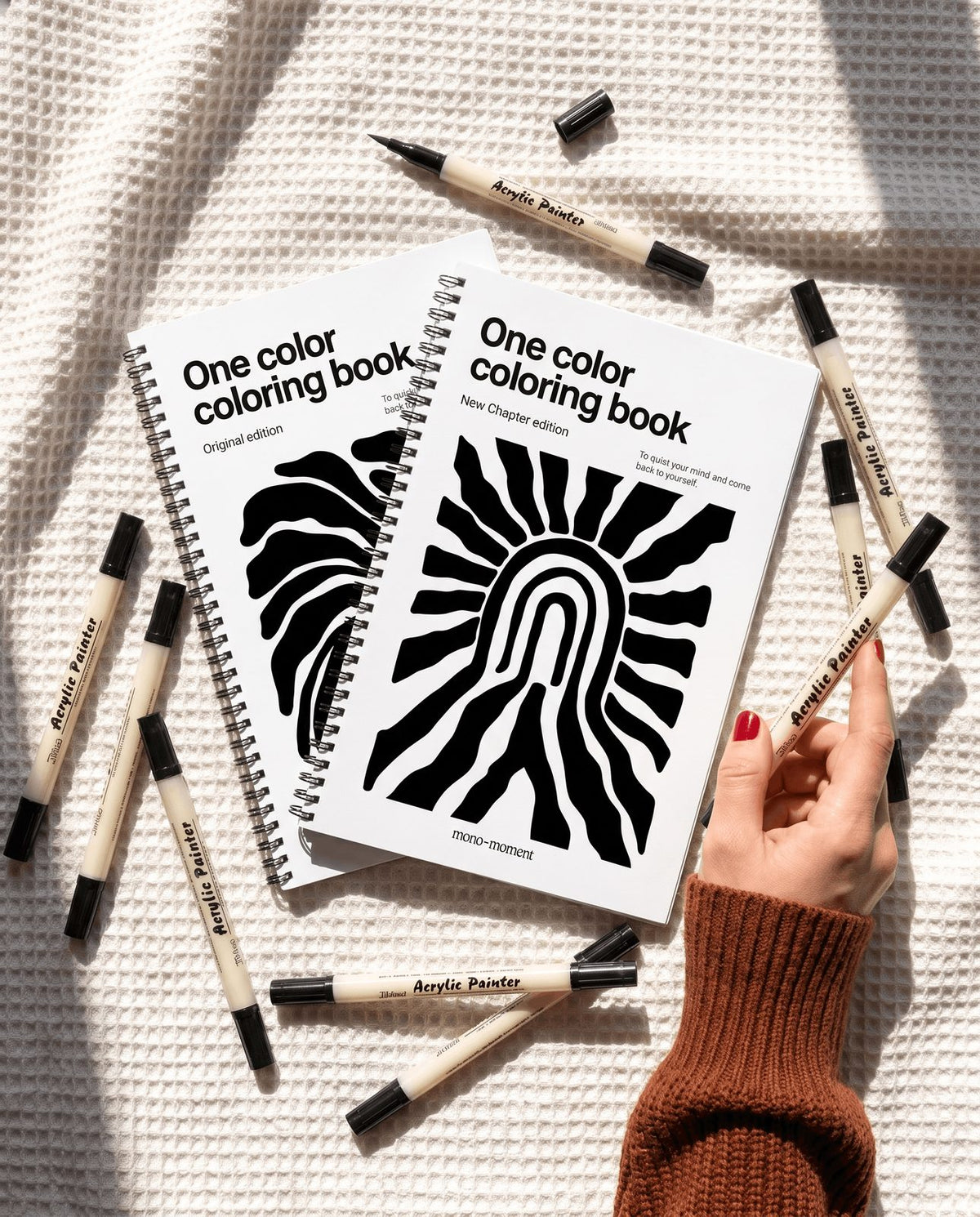
Coloring Supplies Guide: Pens, Paper, and Kits That Make a Difference

The wrong pen can ruin an otherwise great coloring session. Bleed through the page, you tense up. Streaky ink on rough paper, you fight the book instead of being absorbed by it. The tools matter more than most adult coloring guides admit.
This pillar collects every piece we have written about coloring supplies — what kind of pen for what kind of book, why 160 gsm paper changes the entire experience, what to put in a complete kit, and the specific marker types you should and should not use. If you are setting up a wind-down practice that you want to actually keep doing, the right tools are the difference between a habit and a one-week experiment.
Choosing the right pen
There is no single "best" pen — only the right pen for the paper and for what you are trying to do with the line. The articles below cover each major category in depth.
A category-by-category breakdown — fineliners, brush pens, gel pens, colored pencils — with specific brand picks.
Read the article →Brush pens are the most versatile tool for adult coloring — but the technique trips up beginners. This is the practical primer.
Read the article →When to buy individual pens vs. a complete set, and what should be in a starter set.
Read the article →Marker types compared
The biggest pen mistake adults make is using alcohol-based markers (Copic, Sharpie) on standard coloring book paper. They will bleed through. The article below explains why, and what to use instead.
Complete kits and beginner sets
If you are just starting, buying a curated kit is faster than figuring out the supplies one by one. The articles below cover what makes a kit worth its price.
What should be in a complete kit — and what is filler that brand pages often add.
Read the article →Pairing book and pens for a 15-minute wind-down ritual you can start tonight.
Read the article →Specialty techniques
Beyond standard line-fill, some readers ask about adjacent techniques — grayscale shading, monochrome painting, single-tone brush work. These are the deeper guides.
Frequently asked questions
What is the best all-purpose pen for adult coloring?
Why does paper weight matter?
Can I use Sharpies in my coloring book?
Do I need expensive pens to enjoy adult coloring?
What about colored pencils?
More guides like this one
More from the coloring supplies guide