Overstimulation and Overwhelm: A Calm-Down Guide
Overstimulation is what happens when the amount of input coming at you, noise, light, screens, decisions, and demands, outpaces what your nervous system can comfortably process, and it usually eases when you lower the input and give your body a single, simple thing to focus on. The fastest way to calm it in the moment is to reduce sensory load (dim the lights, step away from the noise, close extra tabs), slow your breathing, and let your attention rest on one low-effort task. This is less about willpower and more about giving an overloaded system fewer things to hold at once.
This page is the hub for everything I write about overstimulation and overwhelm. Below I cover what overstimulation actually is, how it differs from overwhelm, the signs of sensory and cognitive overload, why some of us hit that wall faster than others, what to do in the moment, and the low-stimulation, single-focus activities that genuinely help. At the end you will find links to every in-depth guide in this cluster, plus a short FAQ.
Too much input, or too much on your plate?
Full breakdown: Overstimulated vs overwhelmed — the real difference (signs, examples, and what helps for each).
People use these words interchangeably, but they point to two different kinds of overload. Overstimulation is mostly sensory and bottom-up: too much light, sound, movement, texture, or screen input hitting your senses at once. Your body reacts before your thoughts catch up, and you feel jangly, irritable, or desperate to escape the room. Overwhelm is more top-down and cognitive: too many tasks, decisions, or responsibilities stacked in your head, so you freeze or spin without knowing where to start.
They often travel together, which is why they blur. A loud open-plan office (sensory) plus a full inbox and three deadlines (cognitive) can tip you into both at the same time. Naming which one is louder in a given moment helps, because the fix is different. Sensory overload calls for less input. Cognitive overwhelm calls for fewer decisions and a smaller next step.
Signs of sensory and cognitive overload
Overload rarely announces itself politely. It tends to show up in the body first. Common sensory signs include a sudden urge to cover your ears or eyes, feeling touched-out or unable to bear tags and tight clothing, flinching at ordinary sounds, and a strong pull to leave wherever you are. You might feel your heart speed up, your jaw tighten, or your breathing go shallow.
Cognitive signs look different. You reread the same sentence three times, forget why you walked into a room, snap at people you love, or stare at a simple choice unable to pick. Some people go quiet and shut down; others get restless and snappy. Neither reaction means something is wrong with you. It means the system is full and asking you to lower the load before it can work well again.
Why some people get overstimulated more easily
If you feel like you hit your limit faster than the people around you, you are not imagining it, and it is not a character flaw. Sensory thresholds vary a lot from person to person. Highly sensitive people tend to process input more deeply, which is a real strength for empathy and detail work but also means they fill up sooner. Neurodivergent folks, including many with ADHD or autism, often have differently calibrated sensory filtering. Stress, poor sleep, hunger, hormones, and simply having had a long, loud day all lower your threshold too.
The practical takeaway is that your capacity is not fixed. On a rested, well-fed, quiet day you can absorb far more than on a frayed one. Knowing your own patterns, the times and settings that reliably tip you over, lets you plan around them instead of being caught off guard.
What to do in the moment
When you are already over the line, the goal is not to fix your whole life. It is to lower the input and give your nervous system one clear signal that you are safe. Start by subtracting: leave the loud room, dim the screen, take off the scratchy layer, turn the music down. Then slow your exhale, breathing out for longer than you breathe in tells your body the emergency is passing.
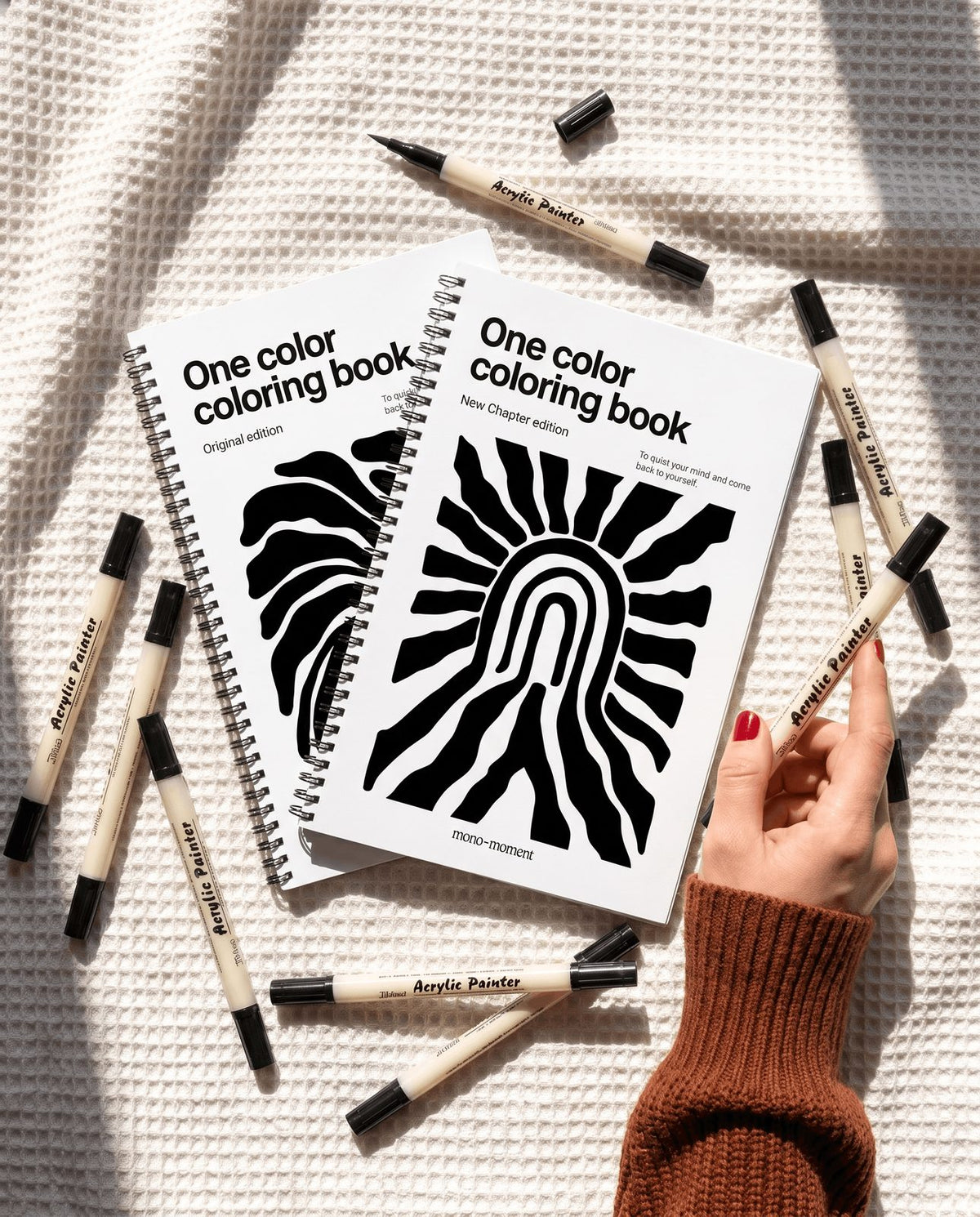
From there, a single-focus task works better than trying to relax with nothing to do, because an empty, restless mind often just replays the overload. Something repetitive and low-stakes, tidying one drawer, washing a few dishes, or coloring a single shape, gives your attention a gentle place to land. This is exactly why a quiet, decision-free hobby like a monochrome coloring book can help: there is one page, one color, and nothing to decide, so your system gets to downshift instead of taking on new input.
Low-stimulation activities and single-focus tasks that help
The activities that calm an overloaded system share a few traits: they are quiet, repetitive, forgiving of mistakes, and free of pressure to produce a result. Think slow walks without a podcast, warm showers, gentle stretching, folding laundry, kneading dough, or simple crafts. What matters is that they narrow your focus to one thing at a time and let the rest of the noise fade.
Coloring earns a place here because it removes the two things that usually keep an overwhelmed mind busy: choice and judgment. With a one-color coloring book you skip the endless decisions of which shade goes where, and you simply fill in bold shapes with a single pen. It is a small, contained task with a clear edge, which is precisely what a flooded nervous system finds soothing. If your overload is more cognitive than sensory, single-focus work is also one of the cleaner routes into a calmer, more absorbed state of mind.
Decision fatigue and focus
A big share of daily overwhelm is not dramatic; it is the slow drain of making hundreds of small choices. By late afternoon, the part of you that decides well is tired, so even trivial questions feel heavy and you start avoiding them entirely. This is why simplifying your environment, laying clothes out the night before, keeping meals repetitive, cutting optional choices, protects more mental energy than most people expect. The fewer decisions you owe the world, the more focus you keep for what actually matters, and the harder you are to overwhelm.
Go deeper: guides in this hub
- overstimulated vs overwhelmed
- what does overstimulated mean
- why do I get overstimulated so easily
- what to do when overstimulated
- cognitive overload symptoms
- low-stimulation activities for adults
- calming activities for highly sensitive people
- what decision fatigue is
- how to overcome analysis paralysis
- how to enter a flow state
- workplace stress management techniques
- lunch break stress relief activities
Questions
What is the fastest way to calm overstimulation? Reduce the input first. Step away from the noise, dim the lights or screen, and remove anything scratchy or tight. Then slow your breathing, making your exhale longer than your inhale, and let your attention settle on one simple, repetitive task until the wave passes.
Is being overstimulated the same as being overwhelmed? Not quite. Overstimulation is mainly sensory, too much light, sound, or physical input. Overwhelm is mainly cognitive, too many tasks and decisions. They often happen together, but the sensory kind needs less input while the cognitive kind needs fewer decisions and a smaller next step.
Why do I get overstimulated more easily than other people? Sensory thresholds differ from person to person. Highly sensitive and neurodivergent people often process input more deeply, so they reach their limit sooner. Sleep, stress, hunger, and a long, loud day also lower everyone's threshold, so your capacity naturally rises and falls day to day.
Can a quiet hobby really help with overwhelm? Yes, when it is genuinely low-stimulation and single-focus. A calm, repetitive task with no pressure and no decisions gives an overloaded mind one gentle place to rest. That is why simple, decision-free coloring works for many people: one page, one color, nothing to choose.