Self-Care and Everyday Mindfulness for a Busy Mind
Realistic self-care is not a spa day or a two-hour morning routine. It is a set of small, repeatable choices that help a busy mind slow down: a few quiet minutes, one screen-free activity, a single deep breath before you reply to that email. Everyday mindfulness works the same way. It means paying gentle attention to what you are doing right now, whether that is drinking your coffee, walking to the car, or coloring one shape at a time.
This hub page pulls together everything I write about calm, workable self-care and daily mindfulness for people who feel stretched thin. Below you will find the core ideas, plus links to deeper guides on routines, quick exercises, relaxing hobbies, and thoughtful gifts. Start anywhere. You do not need more time or more discipline to begin, just a slightly kinder way of using the minutes you already have.
What self-care actually is (beyond the cliches)
Self-care has been sold to us as a product: candles, bath bombs, expensive retreats. Real self-care is quieter and often free. At its heart, it is the practice of meeting your own basic needs so you can function and feel like yourself. That includes physical things like sleep, water, movement, and food, but also emotional needs like rest, boundaries, connection, and a little unstructured time that belongs only to you.
The most useful reframe I know is this: self-care is not always the thing that feels good in the moment. Sometimes it is going to bed instead of scrolling, or saying no to a favor you do not have the energy for. It is less about treating yourself and more about caring for the version of you who has to show up tomorrow. When you think about it that way, it stops being a luxury and starts being maintenance.
Building a simple self-care routine that survives real life
Most routines fail because they are too ambitious. A ten-step evening ritual sounds lovely until you have a late meeting, a sick kid, or simply no energy left. The routines that last are almost embarrassingly small. Pick one anchor habit, attach it to something you already do, and let it be enough on hard days.
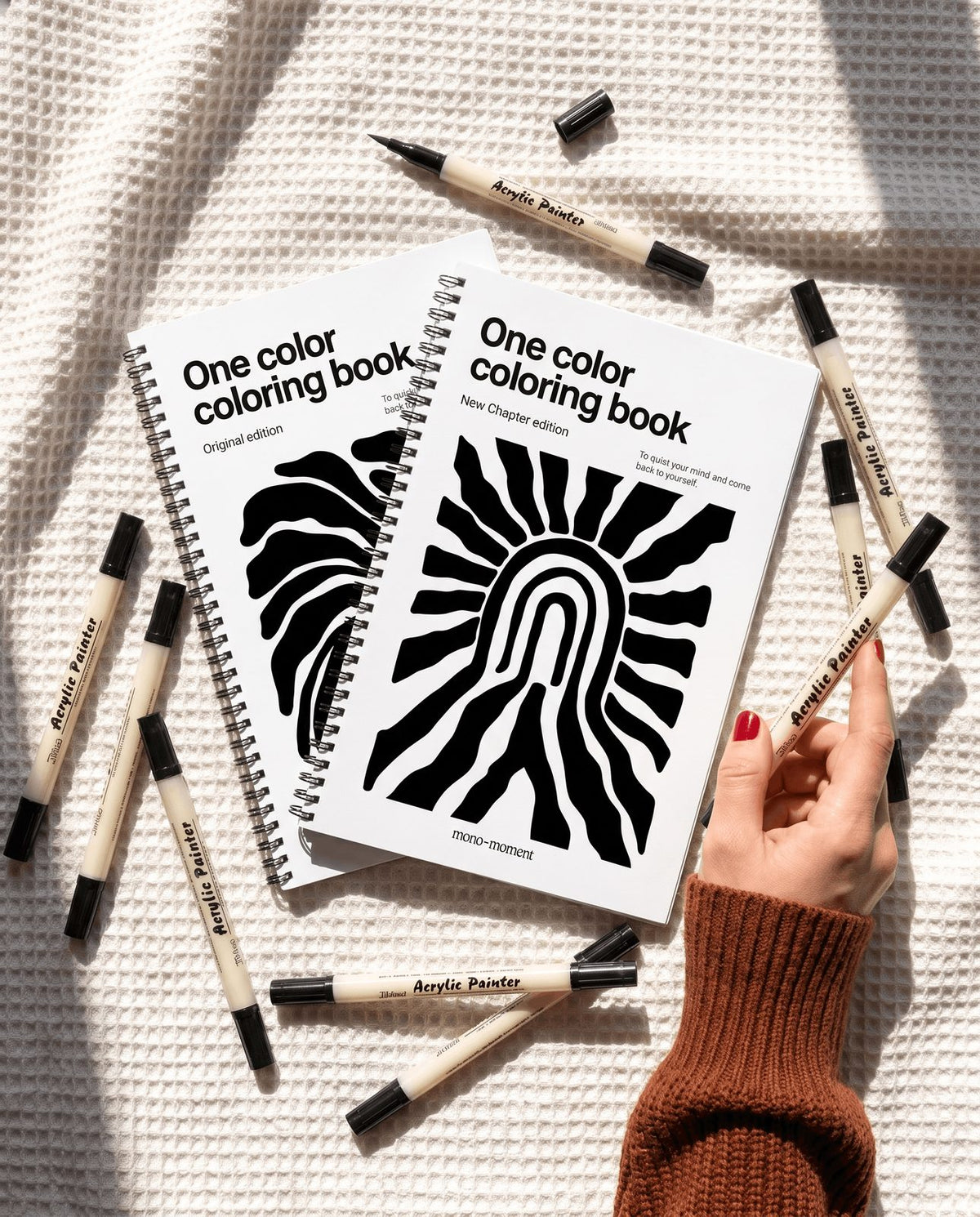
My own version is one page of coloring with a single pen after dinner. It takes about ten minutes, it needs no decisions, and it signals to my brain that the working part of the day is over. Your anchor might be a short walk, three pages of reading, or a few slow stretches. The point is consistency over intensity. A tiny routine you actually keep beats a perfect one you abandon by Wednesday.
How to make time when you have none
If you are waiting for a free afternoon to appear, it never will. The trick is to stop looking for large blocks of time and start noticing the small pockets that already exist: the ten minutes before everyone wakes up, a lunch break, the wait during a kettle boiling. Self-care fits into these gaps far more easily than it fits into a cleared calendar.
It also helps to lower the bar on purpose. Five honest minutes of doing one calming thing counts. You can also swap rather than add, trading five minutes of scrolling for five minutes of something that actually restores you. One low-effort ritual I lean on is a single-pen, screen-free habit like the monochrome coloring book, because it fits neatly into a coffee break and asks nothing of me except to fill in one shape.
Everyday mindfulness and quick exercises
Mindfulness does not require a cushion, an app subscription, or twenty silent minutes. It is simply the practice of bringing your attention back to the present, again and again, without judging yourself for wandering off. You can do it while washing dishes, waiting in line, or breathing before a stressful call.
A few exercises I return to: take three slow breaths and make the exhale longer than the inhale. Name five things you can see, four you can hear, and three you can feel, to gently pull yourself out of a spiral. Or pick one small task and do only that task, noticing the textures and sounds. These take under two minutes and can quietly reset a frazzled mind in the middle of an ordinary day.
Relaxing, screen-free hobbies for a busy mind
One reason we feel so wired is that most of our downtime still happens on a screen. A relaxing hobby that lives off your phone gives your nervous system a genuinely different signal. It does not have to be productive or impressive. It just has to absorb your attention gently enough that the mental chatter fades into the background.
Good options are ones with a low barrier to entry and no pressure to be good at them: gardening a few pots, simple baking, jigsaw puzzles, hand lettering, or coloring. That last one is why I keep coming back to a one-color coloring book. There are no decisions about which shade goes where, so the analytical part of my brain finally gets to rest while my hands stay busy. It is one of the easiest screen-free rituals to start on a tired evening.
Self-care gifts for someone who never slows down
We all know someone who takes care of everyone but themselves. The kindest gift for that person is not another thing to manage, but a gentle invitation to pause. Look for gifts that are low effort to use, calming rather than stimulating, and easy to pick up for ten minutes without guilt.
Think cozy comforts like a good tea and a soft blanket, sensory items like a candle or hand cream, or a simple creative activity that does not require any skill. The best of these say, in effect, you are allowed to rest. The guides below break down specific gift ideas for relaxation, stress relief, and the women in your life who never seem to slow down.
Go deeper: guides in this hub
- self-care activities
- how to create a self-care routine
- how to make time for self-care
- how to practice mindfulness daily
- mindfulness exercises for beginners
- mindfulness exercises for stress relief
- quick mindfulness activities for adults
- stress relief activities for adults
- relaxing hobbies for adults
- creative hobbies that need no talent
- the best stress relief gifts
- the best gifts for relaxation
- the best self-care gifts for women
- gifts for overthinkers
- gifts for someone with anxiety
- calming Christmas gifts
Questions
What is realistic self-care when I have almost no free time?
It is the smallest calming action you can repeat consistently, not a big cleared afternoon. Five honest minutes of one screen-free thing, done most days, will do more for a busy mind than an elaborate routine you keep abandoning. Attach it to a habit you already have, like your morning coffee or the walk to your car.
What is the difference between self-care and mindfulness?
Self-care is the broader practice of meeting your own needs, including rest, boundaries, sleep, and gentle downtime. Mindfulness is one specific tool within that, the act of bringing your attention back to the present moment. You can practice mindfulness as part of your self-care, but self-care also includes plenty of practical, non-meditative things.
How do I start a mindfulness practice without an app?
Begin with your breath, since it is always with you. Take three slow breaths with a longer exhale, and notice the physical sensation of breathing. You can also anchor to a daily task you already do and simply pay full attention to it. Apps are optional, and many people find a quiet hands-on activity easier than sitting still.
Can coloring really count as self-care?
Yes, for a lot of people it works beautifully. A simple, repetitive, screen-free activity gives your hands something to do while your mind settles, which is why a one-color coloring book can double as an easy mindfulness ritual. It removes the pressure to be creative or good at art, so it feels restful rather than like one more task.