About the author
Published December 31, 2025 · Last reviewed April 26, 2026 · 18 min read
In this article · 12 sections
- 1. Mindful Coloring and Creative Flow
- 2. Deep Breathing and Box Breathing Techniques
- 3. Regular Physical Exercise and Movement
- 4. Meditation and Mindfulness Practice
- 5. Progressive Muscle Relaxation (PMR)
- 6. Journaling and Expressive Writing
- 7. Sleep Optimization and Sleep Hygiene
- 8. Social Connection and Community Engagement
- 9. Limiting Caffeine and Stimulant Intake
- 10. Nature Exposure and Outdoor Time
- Comparison of 10 Natural Anxiety-Reduction Methods
- Your Personalized Toolkit for Lasting Calm
Anxiety can feel like a constant hum in the background, a relentless cycle of 'what-ifs' that hijacks your focus and drains your energy. While generic advice to 'just relax' often falls flat, a wealth of evidence points to concrete, natural strategies that can directly soothe your nervous system. This isn't about wishful thinking; it's about leveraging science-backed tools to interrupt the anxiety response and build lasting resilience. Forget vague suggestions and abstract concepts. We've compiled a practical list of actionable ways to reduce anxiety naturally, each designed to provide tangible relief.
This guide moves beyond the obvious, giving you specific steps, realistic time estimates, and fresh perspectives on proven techniques. You will discover how simple, structured activities, like engaging with a Mono Moment monochrome coloring book, can create a powerful state of creative flow that quiets a racing mind. We will explore how specific breathing patterns can reset your physiological state in minutes and how intentional movement can dissolve physical tension. Whether you have five minutes or thirty, these methods are designed for busy lives and overthinking minds. Consider this your roadmap to reclaiming your calm, offering you a clear, straightforward path back to a more centered state of being.
1. Mindful Coloring and Creative Flow
When your mind is racing, the last thing you need is more decisions. Mindful coloring offers a structured, non-judgmental creative escape that calms the brain's "alarm center," the amygdala. Unlike free-form art that can feel intimidating, guided coloring removes the pressure of creation, allowing you to enter a state of meditative flow.
This practice is one of the most effective ways to reduce anxiety naturally because it engages your focus in a simple, repetitive task. Research published in Art Therapy confirms that just 20-30 minutes of coloring can significantly lower cortisol levels. It's a powerful grounding technique used everywhere from corporate wellness programs to mental health clinics.
How to Get Started
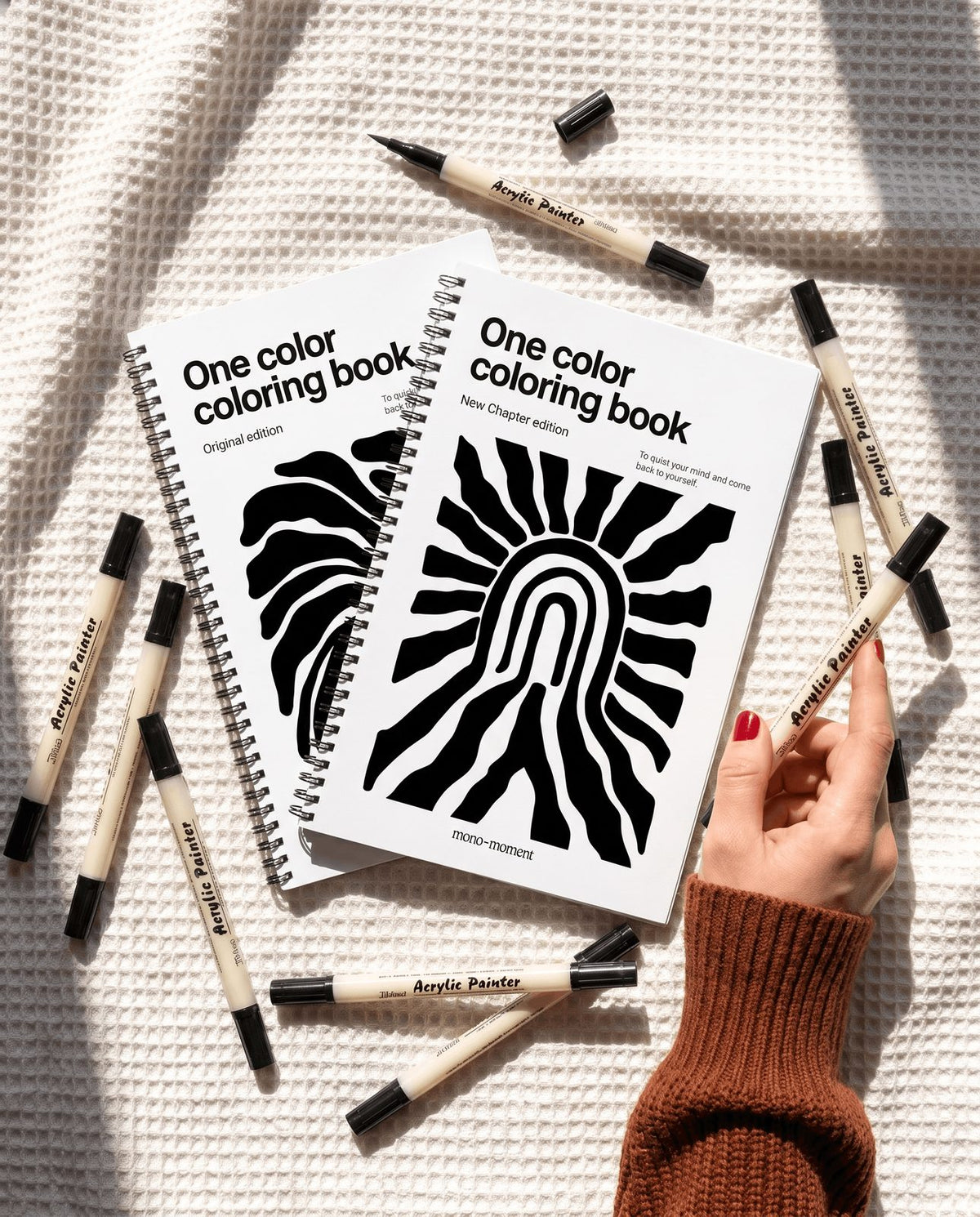
- Remove Decision Fatigue: To maximize the meditative benefits, simplify your choices. Products like the Mono Moment One Color Coloring Book remove color selection entirely. This lets you focus purely on the tactile sensation of pencil on paper, deepening your state of calm.
- Create a Ritual: Set a timer for 15-30 minutes in a quiet, comfortable space. Using quality materials, like the thick 160gsm paper in Mono Moment's products that prevents bleed-through, enhances the sensory experience.
- Amplify the Effect: Pair your coloring session with deep, rhythmic breathing or a calming playlist to create a powerful sanctuary from stress.
Expert Insight: For those prone to overthinking, structured creativity is key. By providing a pre-drawn design, mindful coloring gives your brain a gentle task to anchor to, preventing anxious thought spirals from taking hold. The Mono Moment monochrome coloring book is specifically designed for this purpose.
Discover how this unique approach to creativity can quiet your mind and learn more about the science behind monochrome coloring.
2. Deep Breathing and Box Breathing Techniques
When anxiety strikes, your breath is the most immediate tool you have to regain control. Controlled breathing patterns directly activate the parasympathetic nervous system, your body's "rest and digest" state, which actively counteracts the fight-or-flight response. This simple action lowers your heart rate, reduces blood pressure, and sends a powerful signal to your brain that you are safe.
This is one of the most accessible ways to reduce anxiety naturally because it requires no equipment and can be done anywhere, anytime. Techniques like box breathing are so effective at interrupting the anxiety cycle that they are used by Navy SEALs to maintain calm under extreme pressure and are a foundational tool in cognitive-behavioral therapy. It’s a scientifically validated method for instant self-regulation.
How to Get Started
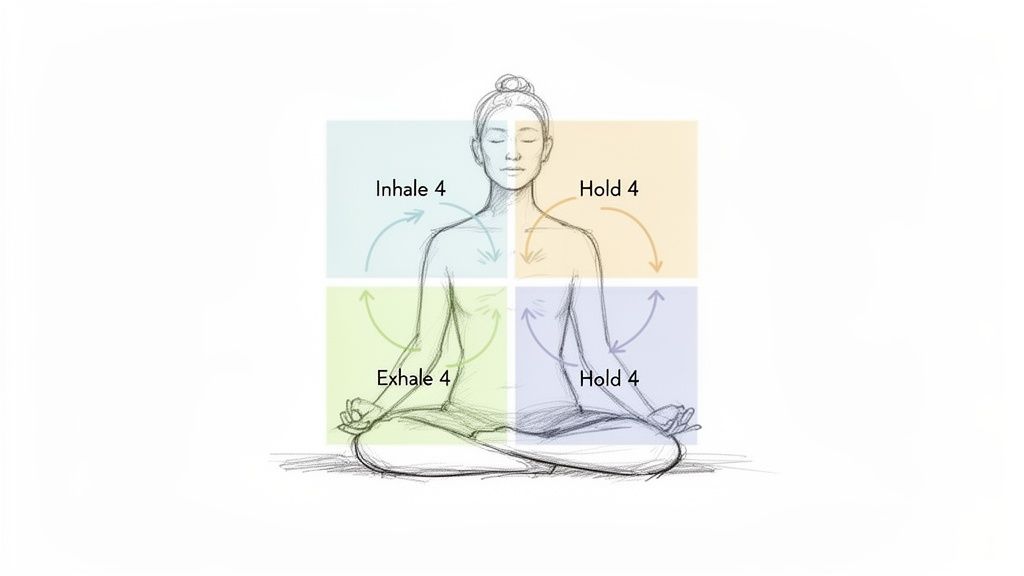
- Practice Box Breathing: Find a comfortable seat. Inhale slowly through your nose for a count of four, hold your breath for a count of four, exhale completely through your mouth for a count of four, and hold the exhale for a count of four. Repeat this cycle for 3-5 minutes.
- Create a Ritual: Practice 2-3 times daily when you are calm to build the skill. This creates a conditioned response, making the technique more automatic and effective during moments of high stress.
- Amplify the Effect: Combine your breathwork with a grounding activity. The rhythmic motion of coloring in a Mono Moment One Color Coloring Book can anchor your breathing. Try syncing your inhales and exhales with each pencil stroke to create a deeply meditative and calming experience.
Expert Insight: Unlike passive meditation, which can be difficult when your mind is racing, structured breathing gives your brain a concrete task. The four-part "box" rhythm provides a clear anchor, making it easier to interrupt anxious thoughts and regain a sense of control.
3. Regular Physical Exercise and Movement
When anxiety floods your system with cortisol and adrenaline, physical movement acts as a powerful biological reset button. Regular exercise is a highly effective way to reduce anxiety naturally because it metabolizes stress hormones, releases mood-boosting endorphins, and improves sleep quality. It’s not just about burning off energy; it's about fundamentally changing your brain chemistry.
This practice is one of the most evidence-backed interventions for mental well-being. Consistent movement increases brain-derived neurotrophic factor (BDNF), a protein that supports neuron health and resilience to stress. It provides a tangible sense of control and accomplishment, directly countering the feelings of helplessness that often accompany anxiety.
How to Get Started
- Schedule It In: Treat movement like a non-negotiable appointment. Start with 20-30 minutes of moderate activity, such as a brisk walk, cycling, or swimming, at the same time each day to build a powerful habit.
- Combine It with Nature: Amplify the benefits by taking your exercise outdoors. Sunlight exposure helps regulate your circadian rhythm, further improving sleep and mood.
- Create a Wind-Down Ritual: The transition from an active state to a calm one is crucial. Follow your workout with a cool-down and a quiet activity like the Mono Moment One Color Coloring Book. This pairing extends the parasympathetic (rest-and-digest) benefits of exercise, helping your mind and body fully unwind.
Expert Insight: The goal isn't peak performance, but consistent motion. By focusing on the rhythm of your steps or the stretch in your muscles, you give your brain a physical anchor, pulling it away from anxious thoughts and into the present moment.
Learn more about how combining physical and mindful practices can create a comprehensive wellness routine at mono-moment.com.
4. Meditation and Mindfulness Practice
Formal meditation teaches you to anchor your awareness in the present moment, observing your thoughts without judgment. This practice directly rewires the brain’s default mode network, which is often responsible for anxious rumination. It is one of the most clinically validated ways to reduce anxiety naturally, calming the nervous system and fostering a sense of inner stability.
Decades of neuroimaging research support interventions like Mindfulness-Based Stress Reduction (MBSR), showing that even 10 minutes of daily practice can create measurable changes in brain regions that regulate emotion. It’s a foundational technique used in hospitals, corporate wellness programs, and mental health therapies to build resilience against stress.
How to Get Started
- Start with Guidance: Instead of trying silent meditation, which can feel daunting, begin with 5-10 minute guided sessions using apps like Headspace or Calm. This provides structure and makes the practice more accessible.
- Build a Ritual: Consistency is more important than duration. Practice at the same time each day, like first thing in the morning, to build a sustainable habit.
- Combine with Mindful Movement: For those who struggle to sit still, a "moving meditation" can be highly effective. Pair a short, 5-minute guided meditation with a session in the Mono Moment One Color Coloring Book. This hybrid approach anchors your mind in both breath and the simple, repetitive motion of coloring.
Expert Insight: The goal of meditation is not to stop your thoughts, but to change your relationship with them. When your mind wanders, gently guide it back to your anchor, like your breath or the sensation of a pencil on paper. Each time you do this, you are strengthening your mental "muscle" for focus and calm.
Learn how to integrate these simple techniques into your routine and discover more about how to practice mindfulness daily.
5. Progressive Muscle Relaxation (PMR)
Anxiety often lives in the body as unconscious tension, like clenched jaws or raised shoulders. Progressive Muscle Relaxation (PMR) directly targets this physical manifestation by systematically tensing and then releasing different muscle groups. This process enhances your mind-body connection, teaching you to recognize the subtle difference between tension and deep relaxation, which calms the nervous system.
This technique is one of the most direct ways to reduce anxiety naturally because it addresses the physiological symptoms head-on. By creating intentional tension and then letting it go, you send a powerful signal to your brain to downregulate its stress response. PMR is widely used in clinical settings, from cognitive-behavioral therapy to sleep clinics, to treat everything from tension headaches to insomnia.
How to Get Started
- Start Small and Build: You don't need a full-body scan to feel the benefits. Begin with a 5-10 minute session focusing just on your hands, jaw, and shoulders, the common hotspots for stress. Tense each muscle group for 5 seconds, then fully release for 10 seconds.
- Create a Ritual: Find a quiet, comfortable position, either sitting or lying down. Move through your body in a consistent sequence each time (e.g., from your feet up to your head) to build a powerful and automatic relaxation habit.
- Amplify the Effect: Pair PMR with other calming activities. Performing a brief neck and shoulder release before a session with your Mono Moment One Color Coloring Book prepares your body for stillness, allowing you to sink into a state of creative flow more quickly and deeply.
Expert Insight: For those whose anxiety manifests physically, PMR is an essential tool. It provides a tangible, active method for releasing stored tension, making it easier to engage in quieter mindfulness practices like meditation or coloring without physical distraction.
6. Journaling and Expressive Writing
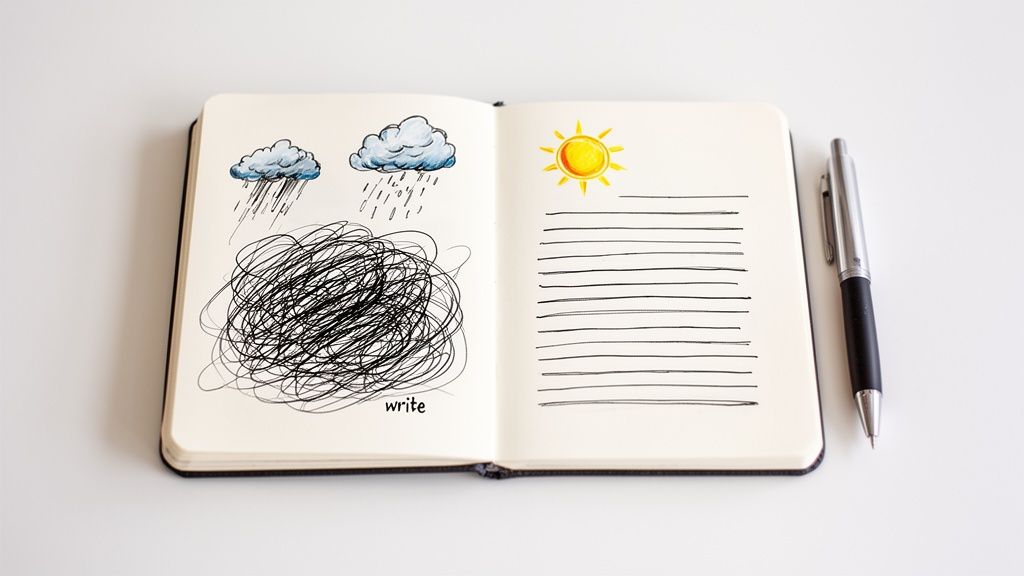
Anxious thoughts often gain power by swirling undefined in our minds. Expressive writing externalizes this internal chaos, putting your worries onto paper where they can be examined objectively. This creates crucial psychological distance, shifting your brain from an emotional, reactive state to a more analytical one.
Pioneering research by Dr. James Pennebaker shows that just 15-20 minutes of writing about stressful events can significantly reduce anxiety and intrusive thinking. This practice is one of the most effective ways to reduce anxiety naturally because it organizes chaotic thoughts, allowing your prefrontal cortex to process them logically instead of letting the amygdala dominate.
How to Get Started
- Write Without Judgment: Set a timer for 15-20 minutes and write continuously about what is causing you stress. Don't worry about grammar or coherence; the goal is to transfer thoughts from your mind to the page.
- Use Simple Prompts: If you feel stuck, start with prompts like, "What am I most worried about right now?" or "What thoughts have been repeating in my head today?" to get the process flowing.
- Create an Integrated Ritual: Pair journaling with a calming activity for a powerful two-step process. First, use writing to externalize your anxious thoughts. Then, transition to a Mono Moment One Color Coloring Book to soothe your nervous system with structured, meditative creativity.
Expert Insight: The act of naming your fears is the first step toward disarming them. Journaling gives anxious thoughts a concrete form, making them feel more manageable and less overwhelming. It turns a vague sense of dread into a specific problem you can address.
Discover how to build a powerful journaling ritual to calm your mind and find tools that support your journey toward a more peaceful state of being.
7. Sleep Optimization and Sleep Hygiene
Poor sleep is a direct catalyst for anxiety. Sleep deprivation amplifies the brain's reactivity to stress while impairing the prefrontal cortex's ability to regulate emotions, essentially lowering your anxiety tolerance. Optimizing your sleep is one of the most fundamental ways to reduce anxiety naturally, as it restores the brain's ability to process and manage emotional stress.
The relationship is bidirectional: anxiety disrupts sleep, and poor sleep worsens anxiety, creating a vicious cycle. Implementing consistent sleep hygiene, the practice of creating an optimal environment and routine for sleep, has a profound impact. Studies on Cognitive-Behavioral Therapy for Insomnia (CBT-I) show that improving sleep quality can lead to a 60–80% improvement in both sleep and anxiety symptoms, highlighting how foundational rest is for mental well-being.
How to Get Started
- Create a Wind-Down Ritual: Dedicate 30-60 minutes before bed to screen-free, calming activities. Engaging in a simple, structured task like coloring with the Mono Moment One Color Coloring Book for 15-20 minutes can signal to your brain that it's time to slow down and prepare for rest.
- Maintain Consistency: Go to bed and wake up within the same 30-minute window every day, even on weekends. This stabilizes your circadian rhythm, making it easier to fall asleep and wake up feeling refreshed.
- Optimize Your Environment: Keep your bedroom cool (around 65–68°F), completely dark, and quiet. This environment promotes the production of melatonin, the hormone that regulates sleep.
Expert Insight: When you can't sleep, staying in bed and worrying about it only strengthens the association between your bed and anxiety. If you're awake for more than 20 minutes, get up and do a quiet, non-stimulating activity like reading or coloring until you feel sleepy again. Mono Moment's products are ideal for this.
This pre-sleep routine is crucial for quieting a racing mind. Discover how to effectively stop overthinking at night and reclaim your rest.
8. Social Connection and Community Engagement
When you feel anxious, your instinct might be to withdraw, but social isolation often amplifies stress. Meaningful connection is a biological necessity that activates the parasympathetic nervous system, releasing oxytocin and reducing the brain’s perception of threat. Engaging with a community reminds your nervous system that you are safe and supported.
This is one of the most fundamental ways to reduce anxiety naturally because humans are wired for co-regulation. Studies show that consistent, quality social interaction can lower cortisol and mitigate the risk of anxiety disorders. The benefits come from both deep one-on-one relationships and participation in structured group activities like volunteer work or shared hobbies.
How to Get Started
- Integrate Creativity and Connection: Structured social events remove the pressure of unstructured conversation. Organizing a Mono Moment monochrome coloring group creates a shared, calming activity where connection can happen organically, without the stress of constant dialogue.
- Start Small and Structured: If social events feel overwhelming, begin with a low-stakes activity. Join a book club or a local art class where the focus is on a shared interest, not just small talk. This provides a natural scaffold for conversation.
- Combine Purpose with People: Volunteering for a cause you care about connects you with like-minded individuals and instills a sense of purpose, which is a powerful antidote to anxious rumination.
Expert Insight: Loneliness is a significant driver of anxiety. The key isn't just being around people, but co-experiencing something meaningful. A shared, focused activity provides a sense of belonging and mutual support that directly counteracts the isolating nature of anxiety.
9. Limiting Caffeine and Stimulant Intake
The morning coffee that gets you moving might also be putting your nervous system on high alert. Stimulants like caffeine directly activate the sympathetic nervous system, mimicking the physiological signature of anxiety: an elevated heart rate, jitteriness, and a surge in stress hormones like cortisol and adrenaline. For many, this chemical boost is a primary driver of baseline anxiety.
This is one of the most direct ways to reduce anxiety naturally because it removes a key physiological trigger. Clinical guidelines for anxiety often recommend caffeine reduction as a first-line intervention, with many people reporting a significant drop in anxious feelings after cutting back. Reducing your intake allows your nervous system to downregulate, creating the calm internal environment needed for relief.
How to Get Started
- Audit and Taper: Track your caffeine intake for one week from all sources-coffee, tea, soda, chocolate-to see your baseline. Taper off slowly by switching to half-caf, then herbal tea, to avoid withdrawal headaches and fatigue.
- Reframe Your Ritual: If coffee is a cherished morning ritual, replace it rather than just removing it. Try pairing a warm cup of herbal tea with a quiet, meditative activity, like the Mono Moment One Color Coloring Book, to create a new, calming start to your day.
- Set a Cutoff Time: If you aren't ready to eliminate caffeine completely, stop all intake by 2 p.m. This prevents it from disrupting your sleep, which is crucial for managing anxiety.
Expert Insight: The goal isn't just to remove the stimulant but to replace the habit with a nervous-system-soothing alternative. A mindful activity creates a new positive association, making the transition away from high caffeine intake both easier and more effective for long-term anxiety management.
Learn more about building calming routines that support your mental well-being and discover how structured mindfulness can reshape your habits.
10. Nature Exposure and Outdoor Time
Immersing yourself in a natural environment is a powerful, science-backed method for calming an overactive nervous system. Time in nature directly reduces activity in the brain's alarm center, the amygdala, and lowers levels of the stress hormone cortisol. This isn't just a feeling; it's a physiological shift that increases your body’s relaxation response.
This practice is one of the most effective ways to reduce anxiety naturally because it provides multisensory regulation. The sights, sounds, and smells of a park or forest engage your attention effortlessly, providing a gentle distraction from anxious thoughts. The Japanese practice of shinrin-yoku (forest bathing) has been shown to produce measurable improvements in both mood and immune function.
How to Get Started
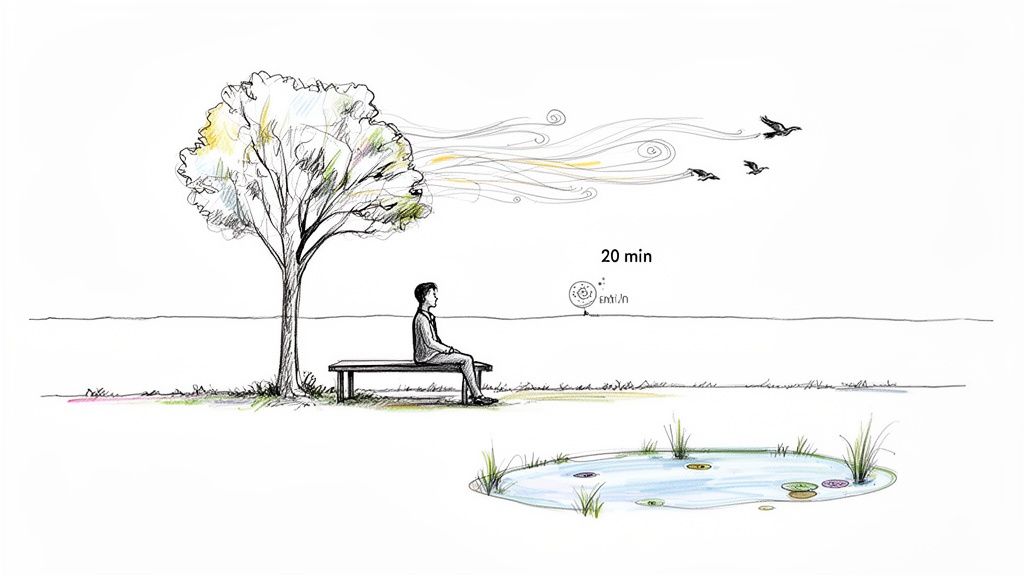
- Commit to 20-30 Minutes: Research shows that significant cortisol reduction occurs within this timeframe. Consistency is more important than intensity, so aim for a short walk in a local park a few times a week.
- Practice Bare Attention: Focus on sensory details without judgment. Notice the feeling of the breeze, the scent of the soil, and the sound of rustling leaves. Leave your phone on silent to minimize distractions.
- Extend the Calm: After returning from your time outside, transition the feeling of tranquility into a structured activity. Continue the mindful state with a quiet session using the Mono Moment One Color Coloring Book to solidify the mental peace you've cultivated.
Expert Insight: The human brain evolved in natural settings. Re-exposing it to green spaces, water, and open skies helps reset its baseline, counteracting the overstimulation of modern urban environments that can trigger chronic anxiety.
Comparison of 10 Natural Anxiety-Reduction Methods
| Intervention | Complexity 🔄 | Resources & Time ⚡ | Expected Impact 📊 | Ideal Use Cases 💡 | Key Advantages ⭐ |
|---|---|---|---|---|---|
| Mindful Coloring and Creative Flow | Low 🔄 — guided, low decision load | Low ⚡ — 15–30 min; coloring book & pens; offline | ⭐⭐⭐ 📊 — short-term cortisol reduction; meditative state | Overthinkers, quick wind-downs, screen-free breaks | Evidence-backed anxiety reduction; no skill required |
| Deep Breathing & Box Breathing | Very Low 🔄 — simple, repeatable protocol | Minimal ⚡ — 1–5 min portable practice | ⭐⭐⭐⭐ 📊 — immediate parasympathetic activation, lowers HR | Acute anxiety, performance prep, anywhere | Free, immediate, clinically validated |
| Regular Physical Exercise & Movement | Medium 🔄 — habit formation and planning | Moderate ⚡ — 20–60 min, 3–5×/week; minimal equipment optional | ⭐⭐⭐⭐⭐ 📊 — strong cumulative anxiety reduction; improves sleep & mood | Long-term anxiety management, comorbid depression | Broad health benefits; builds resilience |
| Meditation & Mindfulness Practice | Medium–High 🔄 — learning curve to sustain practice | Low–Moderate ⚡ — 10+ min/day recommended; apps optional | ⭐⭐⭐⭐⭐ 📊 — reduces rumination; neuroplastic changes over weeks | Chronic rumination, adjunct to therapy | Robust clinical evidence; cumulative effects |
| Progressive Muscle Relaxation (PMR) | Low 🔄 — structured, easy to follow | Low ⚡ — 10–20 min per full session | ⭐⭐⭐⭐ 📊 — immediate somatic tension relief; aids sleep | Tension-related anxiety, pre-sleep routine | Fast physical relief; repeatable protocol |
| Journaling & Expressive Writing | Low 🔄 — emotional effort required | Low ⚡ — 15–20 min sessions; pen & paper | ⭐⭐⭐ 📊 — improves processing over weeks; reduces intrusive thoughts | Cognitive processing, therapy prep, pattern tracking | Low cost; creates external record for insight |
| Sleep Optimization & Hygiene | Medium 🔄 — sustained habit and environment changes | Moderate ⚡ — benefits in 1–2 weeks; room adjustments | ⭐⭐⭐⭐⭐ 📊 — foundational impact; reduces amygdala reactivity | Anyone with poor sleep or amplified anxiety | Wide-ranging health gains; synergizes with all practices |
| Social Connection & Community Engagement | Medium 🔄 — requires initiation and maintenance | Variable ⚡ — weekly to frequent engagement; group options | ⭐⭐⭐⭐ 📊 — reduces loneliness-driven anxiety; boosts resilience | Loneliness, social support needs, group therapies | Reciprocal mental-health benefits; motivation boost |
| Limiting Caffeine & Stimulants | Low 🔄 — behavioral change, possible tapering | Low ⚡ — effects in 3–7 days; no equipment | ⭐⭐⭐⭐ 📊 — lowers physiological anxiety; improves sleep | High-caffeine consumers, panic-prone individuals | Immediate measurable benefits; cost-saving |
| Nature Exposure & Outdoor Time | Low 🔄 — access-dependent but simple practice | Low ⚡ — 20–30 min minimum for effect | ⭐⭐⭐⭐ 📊 — rapid cortisol reduction; multisensory regulation | Quick nervous-system downregulation, combine with walking | Free/low-cost; improves mood and physical health |
Your Personalized Toolkit for Lasting Calm
Navigating the landscape of anxiety can often feel like searching for a single, perfect solution. However, as we've explored, the most effective approach isn't about finding a magic bullet. Instead, it’s about consciously and consistently building a personalized toolkit of practices that empower you to regulate your nervous system and reclaim your sense of balance. The journey to reduce anxiety naturally is a profoundly individual one, built on small, sustainable actions that compound over time.
Each of the ten strategies detailed in this guide, from mindful breathing to nature exposure, offers a unique entry point to a calmer state of being. Think of them not as a rigid checklist, but as a diverse menu of options. Your task is to become a curious explorer of your own well-being, experimenting to discover which combinations best fit your lifestyle, personality, and specific needs.
From Knowledge to Action: Your Next Steps
The true power of this information lies not in knowing it, but in applying it. The most common pitfall is feeling overwhelmed by choice and doing nothing at all. To avoid this, focus on integration over accumulation.
- Start Small: Choose just one or two techniques that feel the most accessible and appealing to you right now. Don't try to implement all ten at once.
- Schedule It: If you choose mindful coloring, block out 15 minutes in your calendar before bed. If it's a morning walk, put it on your to-do list just like any other important appointment.
- Track Your Progress: Notice how you feel before and after a practice. A simple note in a journal can reveal powerful patterns over time, reinforcing which tools are most effective for you.
Perhaps the structured simplicity of a Mono Moment coloring session provides the perfect, low-decision way to quiet your mind after a chaotic day. Or maybe the immediate physical release of progressive muscle relaxation becomes your go-to method for easing tension in the moment. The key is to transform these techniques from abstract ideas into reliable habits.
By weaving these practices into the fabric of your daily life, you are doing more than just managing symptoms. You are fundamentally changing your relationship with anxiety. You are building resilience, fostering self-awareness, and proving to yourself, one intentional action at a time, that you have the power to cultivate your own peace. This is the ultimate goal: not to eliminate anxiety entirely, but to build a life where you have the confidence and the tools to navigate it with grace and strength.
Ready to embrace a simple, screen-free ritual for calm? Discover the power of single-tasking with a Mono Moment monochrome coloring book, designed to quiet overthinking and anchor you in the present. Find your moment of peace at Mono Moment and start your journey toward a more mindful you.

The One Color Coloring Book
A single-pen, decision-free coloring book on 160 gsm cream paper — engineered for the wind-down ritual described above.
 Pair it with the 3 Dual Tip Brush Pens — $5 instead of $9.95 in the Book + Pens bundle.