Tests every pen, paper and design she recommends — most evenings around 10:30pm.
Published October 7, 2026 · 4 min read
In this article · 12 sections
In short. Check eight things: paper weight, binding, page sides, line weight, detail, subject, size and price per design. If you are a beginner, choose simpler than you think you need.
I'm Caroline, and I make coloring books, so I've handled a great many of them, good and bad. The difference between a book you finish and a book that stays in a drawer is rarely the artwork. It's a handful of practical details that product pages mention in passing, or not at all.
Here they are, in the order I'd check them.
1. Paper weight
Paper is measured in grams per square meter, written gsm. It tells you how much ink a page can take before it shows on the other side.
- Under about 100gsm: typical paperback paper. Fine for pencils. Markers will show through.
- 120 to 140gsm: water-based markers work with a light hand.
- Around 160gsm and above: comfortable for markers and brush pens.
If a listing says "thick" or "premium" without a number, assume it's ordinary paper. I've gone deeper on this in my guide to coloring books with thick paper.
2. Binding

A spiral lets the book lie flat and fold back to a single page. A glued spine has to be held open, and the inner edge of each design curves into the fold.
If you color at a desk, either works. If you color on a sofa or in bed, the spiral is worth paying for. More detail in my guide to spiral bound coloring books for adults.
3. Single or double-sided pages
Single-sided pages are safer for wet pens, and you can take a finished page out without losing another drawing. Double-sided pages give you more designs in the same book and depend on the paper being heavy enough.
Ask yourself two questions: do I use markers, and do I want to display what I finish? Two yeses point to single-sided.
4. Line weight

Look at a sample page. Thick, black outlines are easy to see and easy to stay inside. Thin grey lines look elegant in a photo and are tiring in evening light.
Drawn to circular, symmetrical designs? Read my guide to mandala coloring books.
5. Level of detail
This is where most people choose wrong. Intricate pages are impressive, so we buy them, and then a single page takes four evenings.
A rough guide:
| Detail level | Areas per page | Time per page | Suits |
|---|---|---|---|
| Bold and easy | A few dozen | 20 to 40 minutes | Beginners, tired evenings, markers |
| Medium | A hundred or so | 1 to 2 hours | Regular colorists |
| Intricate | Several hundred | Several sessions | Patient hobbyists, fine pens and pencils |
If you're unsure, go one level simpler than your instinct. A finished page does more for you than an ambitious one left half done.
6. Subject
You'll spend hours looking at these pictures. Choose something you'd be glad to see: plants, animals, rooms, food, patterns, seasons. A subject you love beats a book with better reviews.
7. Page size
A large page is easier on the eyes and gives your hand room. A smaller one fits in a bag and on a tray table. Decide where you'll color most often.
8. Price per design
Divide the price by the number of designs. It's the fairest way to compare a ten-dollar paperback with a twenty-five-dollar spiral book. Then weigh paper and binding on top, because a cheap design you can't color comfortably is no bargain.

The question nobody lists: how much do you want to decide?
Every conventional coloring book asks you to choose a color for every area. For some people that's the joy of it. For others it's the reason they stop.
The Cleveland Clinic describes decision fatigue as the way a long run of choices wears down the ones that follow. If you come to coloring to rest after a day of deciding, a page with three hundred color choices can feel like more work.
You have three ways to reduce it:
- Limit your palette. Pick five colors before you start and put the rest away.
- Choose a color-by-number book. The choices are made for you.
- Choose a one color book. The areas to fill are marked, and you fill them all with a single pen.
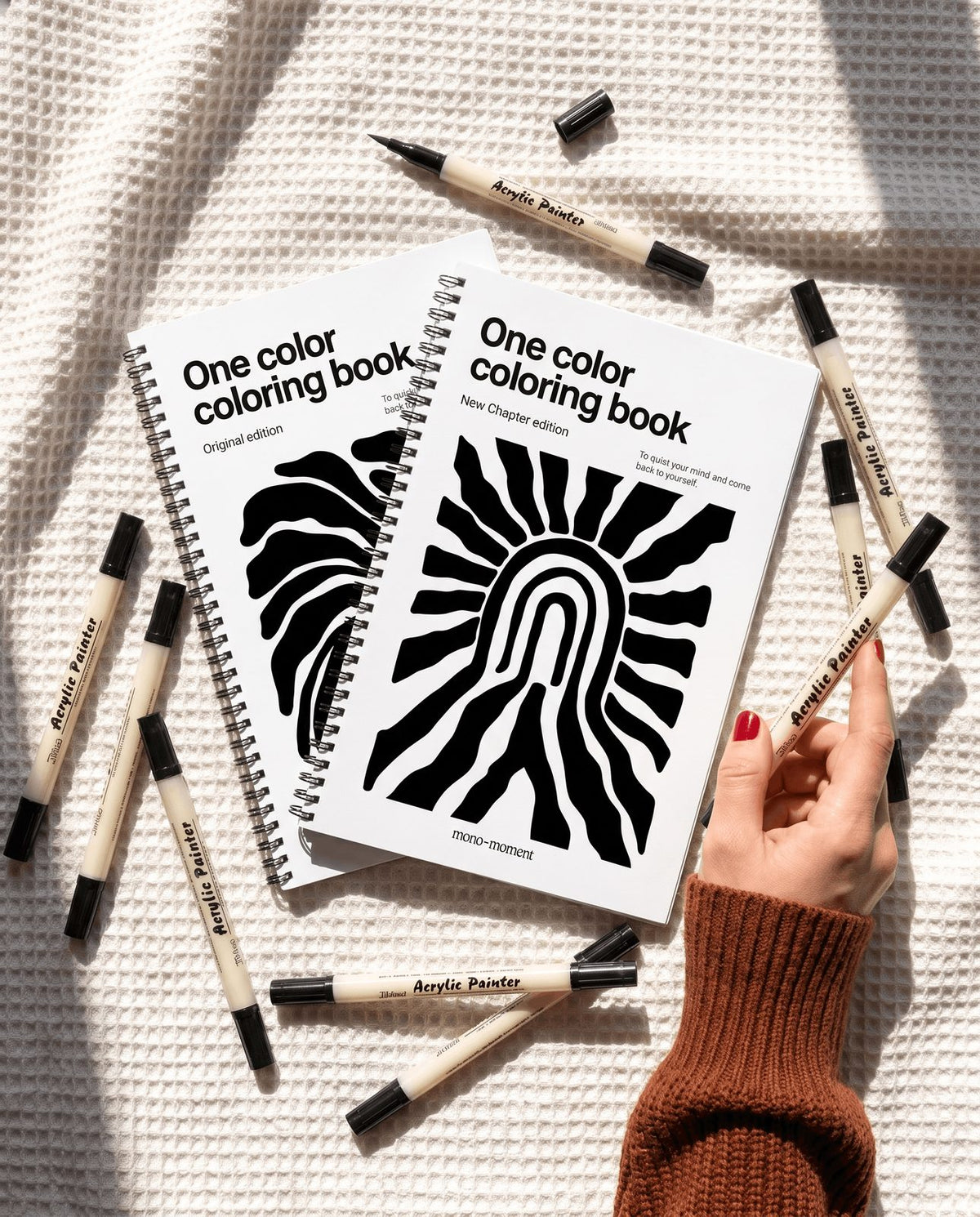
The last one is what we make. The One Color Coloring Book is spiral bound on 160gsm paper. Its limits are worth stating: pages are printed on both sides, and if you love choosing colors, you'll miss them.
A two-minute test for any book you already own
Before you start a page you care about:
- Turn to a page at the back.
- Fill a small square with your pen, once.
- Fill a second square twice.
- Wait a minute, then turn the page over.
A faint shadow is fine. A clear mark means you need a different pen or a sheet of paper behind every page. For help choosing, see my guide to the best markers for adult coloring books.
Quick recommendations by situation
- First coloring book ever: bold and easy, spiral bound, with the paper weight stated.
- You use markers: 160gsm or single-sided pages.
- You use colored pencils: almost anything, so choose on subject and detail.
- You color in bed or on the sofa: spiral, medium size.
- It's a gift: a book that feels like an object, plus a pen so they can start the same day.
- You've bought books before and never finished one: simpler pages, fewer colors, or one color.
In short
Check the paper in numbers, choose a binding for where you color, be honest about how much detail and how many decisions you really want, and pick a subject you like. Do that, and nearly any book you choose will be one you finish.

The One Color Coloring Book
65+ bold designs, one single color, zero decisions — on 160 gsm paper with a lay-flat spiral, engineered for the wind-down ritual described above.
 Pair it with the 3 Dual Tip Brush Pens — $5 instead of $9.95 in the Book + Pens bundle.
Sources & further reading
Frequently asked questions
What should I look for in a high-quality adult coloring book?
What paper weight is best for adult coloring books?
Which adult coloring book is best for beginners?
Are expensive coloring books worth it?
Should I choose single-sided or double-sided pages?
Know someone who needs a quieter evening? Pin it · Share on Facebook ·
↑