About the author
Published January 15, 2026 · Last reviewed April 26, 2026 · 19 min read
In this article · 12 sections
- 1. Mindfulness Meditation and Focused Breathing
- 2. Creative Mindfulness: Structured Coloring and Art Therapy
- 3. Movement and Physical Exercise
- 4. Time Management and Boundary Setting
- 5. Social Connection and Peer Support
- 6. Cognitive Behavioral Techniques and Thought Reframing
- 7. Workplace Environment Optimization
- 8. Sleep Hygiene and Recovery
- 9. Nutrition and Hydration
- 10. Journaling and Expressive Writing
- 10-Technique Comparison: Workplace Stress Management
- Your Next Step: From Knowing to Doing
Workplace stress feels inevitable, a constant hum beneath the surface of deadlines and demands. For busy professionals and overthinkers caught in cycles of anxiety and perfectionism, the pressure can feel overwhelming. But what if you had a toolkit of research-backed, practical strategies to reclaim your focus and restore a sense of calm? This guide is your definitive resource for powerful workplace stress management techniques you can implement in just 5 to 30 minute increments.
Forget generic advice. We're providing a curated list of actionable methods designed to interrupt stress at its source, building not just temporary relief but lasting resilience. You will discover how to reframe negative thought patterns, optimize your environment, and harness the power of simple, decision-free creative rituals.
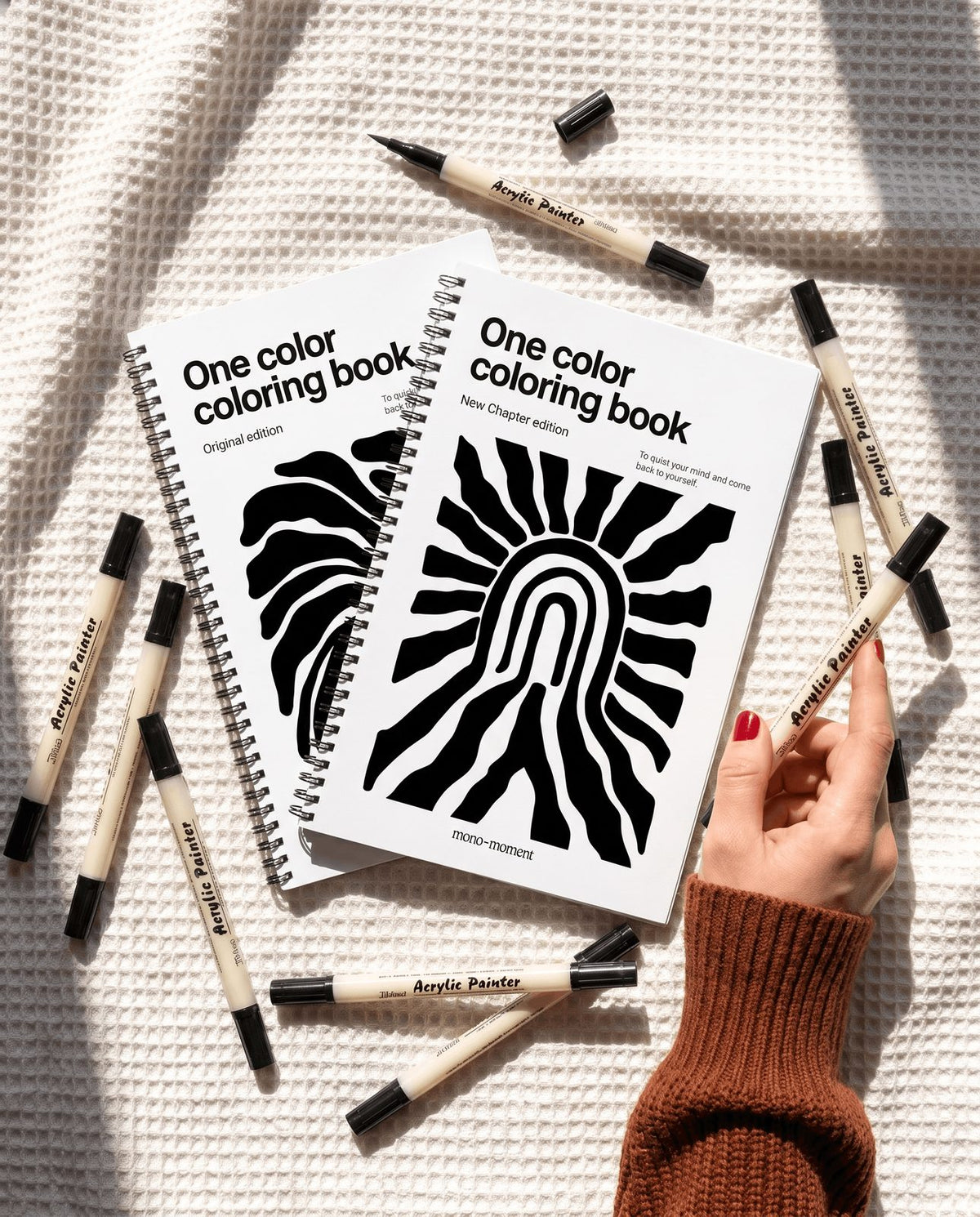
A central theme is the value of tangible, analog practices that give your mind a necessary break from digital overload. We will explore how scientifically-grounded tools, like the monochrome coloring books from Mono Moment, offer a structured way to quiet a racing mind. This isn't about adding another task to your day. It’s about transforming your workday from a source of chronic stress into an opportunity for mindful, sustainable productivity.
1. Mindfulness Meditation and Focused Breathing
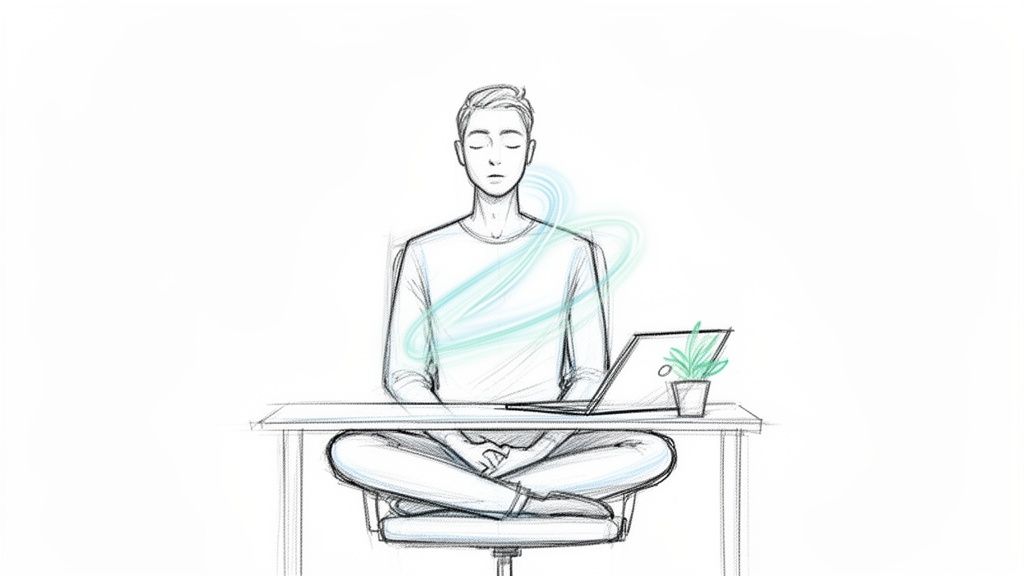
Mindfulness meditation is the practice of intentionally anchoring your attention to the a href="https://mono-moment.com/blogs/news/how-to-calm-an-overactive-mind" title="how to calm an overactive mind">present moment, often using your breath as a focal point. This powerful technique interrupts the brain’s default mode of overthinking and worrying about the future. By simply observing your thoughts without judgment, you activate your parasympathetic nervous system, which tells your body it’s safe to relax and lowers levels of the stress hormone cortisol. For busy professionals and overthinkers, this creates a crucial mental pause, breaking the exhausting cycle of rumination.
This isn't just a trend; it's a proven strategy used by top organizations like Google, Nike, and Salesforce to boost employee well-being and focus. The Mayo Clinic even recommends mindfulness as a first-line intervention for stress, highlighting its effectiveness as a core component of any workplace stress management techniques toolkit.
How to Practice Mindfulness at Work
You don’t need an hour of silence to reap the benefits. Start small to build a sustainable habit.
- Start with 5 Minutes: Find a quiet space like an empty meeting room or even your desk. Close your eyes and focus entirely on the sensation of your breath entering and leaving your body. When your mind wanders, gently guide it back.
- Use Guided Apps: Apps like Headspace and Calm offer short, guided sessions designed specifically for work-related stress, such as “pre-meeting focus” or “post-work decompression.”
- Pair It with a Routine: Link your meditation practice to an existing habit, like your morning coffee or right after you return from your lunch break. This "habit stacking" makes it easier to remember.
To deepen the state of calm achieved through meditation, transition into a tactile, screen-free activity. Following your session with 15 minutes of coloring in a Mono Moment monochrome coloring book can extend that peaceful focus, providing a structured yet creative outlet to fully ground yourself before diving back into your tasks.
2. Creative Mindfulness: Structured Coloring and Art Therapy
Creative mindfulness uses structured artistic activities to quiet the mind and reduce stress. Unlike freeform art, which can feel intimidating, structured coloring guides your focus into a repetitive, rhythmic motion. This approach, especially with Mono Moment’s decision-free monochrome coloring book, eliminates choice paralysis, allowing you to engage in a meditative state that calms the amygdala, your brain’s stress center. This combination of focused attention and pattern completion is a powerful workplace stress management technique for overthinkers.
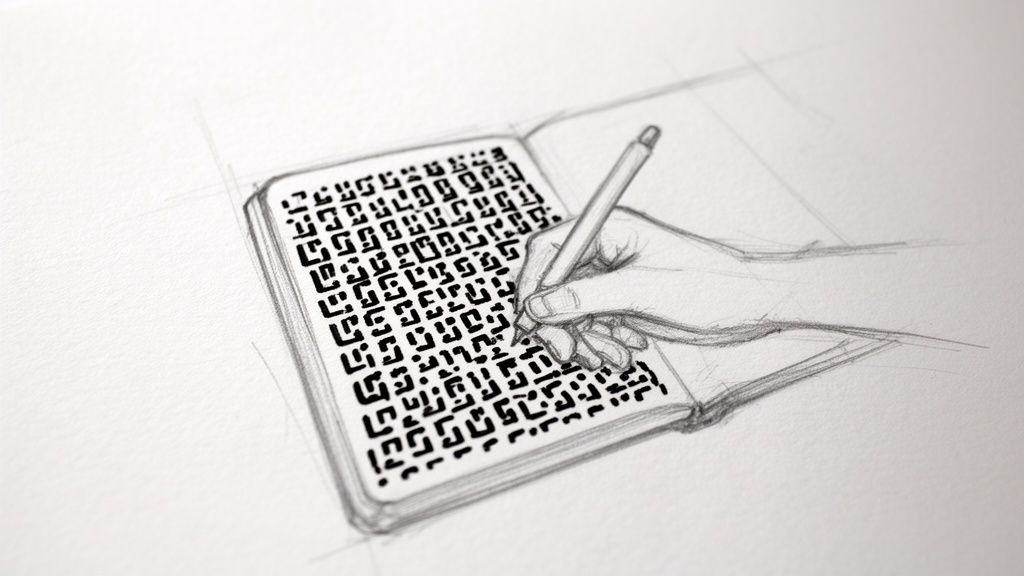
This method isn’t just for hobbyists; it’s a form of accessible art therapy used in corporate wellness programs and even hospitals to soothe anxiety and improve focus. The pioneering work of Johanna Basford brought adult coloring to the mainstream, while innovators like Mono Moment have refined it specifically for anxiety reduction by removing color choices entirely, making it a perfect tool for a quick mental reset during a hectic workday.
How to Practice Creative Mindfulness at Work
You can integrate this calming practice into your routine with just a few intentional minutes.
- Schedule a 20-Minute Art Break: Treat it like a meeting. Block out time in your calendar for a non-negotiable coloring session with your Mono Moment book to decompress between demanding tasks.
- Create a Dedicated Space: Designate a small, quiet corner of your desk or a break room for your coloring practice. Having your Mono Moment coloring book and brush pen set ready removes friction.
- Pair with Mindful Breathing: Sync your breath with your coloring. Inhale as you outline a small section and exhale slowly as you fill it in, deepening the calming effect.
- Track Your Mood: Notice how you feel before and after a session. Recognizing the shift in your stress levels reinforces the habit and its tangible benefits.
To discover more about how guided creativity can calm your mind, explore these powerful art therapy activities for adults on mono-moment.com and find a practice that resonates with you.
3. Movement and Physical Exercise
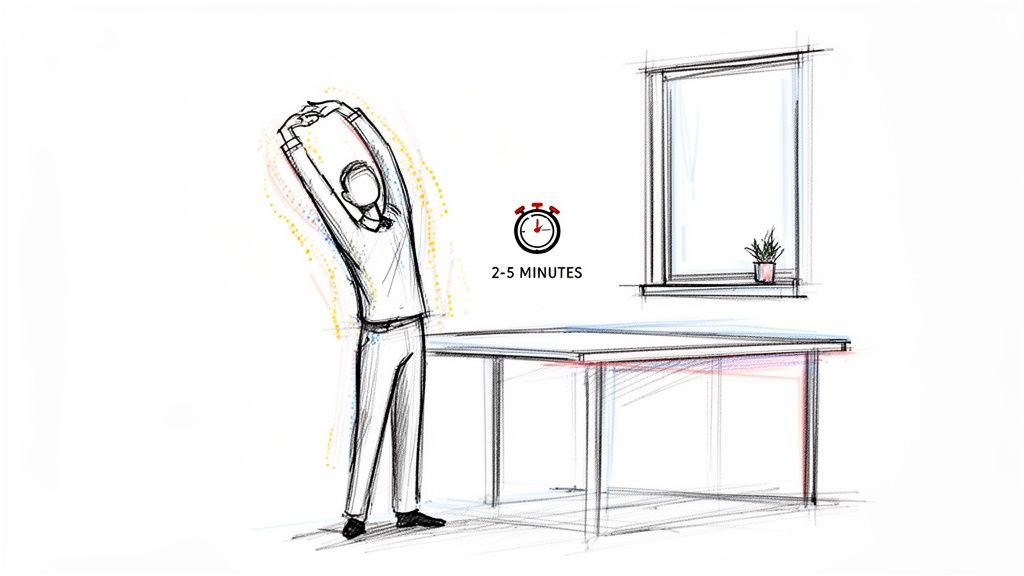
Regular physical activity is one of the most effective workplace stress management techniques for counteracting the body’s physiological stress response. Movement releases endorphins, which are natural mood elevators, and helps metabolize excess stress hormones like cortisol. For professionals tied to a desk, even brief "micro-movement" breaks can provide immediate relief by boosting circulation, easing muscle tension, and resetting mental focus without needing a full gym session.
This principle is widely embraced by innovative companies. Microsoft and Amazon provide on-site fitness facilities, while "walking meetings" have become a standard practice in tech to combine collaboration with light exercise. The American Heart Association champions regular movement for its clear mental and physical health benefits, proving that even small doses of activity are powerful tools for well-being.
How to Practice Movement at Work
Integrating movement doesn't require a major schedule overhaul. Focus on small, consistent actions that fit into your existing workday.
- Schedule 5-Minute Breaks: Set a recurring timer to get up and stretch or walk every 90 minutes. This prevents physical stagnation and mental fatigue.
- Take a Walking Lunch: Use part of your lunch break for a brisk 15-minute walk outside to get fresh air and change your environment.
- Try Desk Yoga: Simple stretches for your neck, shoulders, and back can be done right at your chair. This 5-minute routine is a great starting point:
To complete this restorative cycle, combine physical movement with mental calm. Follow a 10-minute walk with 15 minutes of coloring in a Mono Moment monochrome coloring book. This powerful combination uses movement to release physical stress and coloring to settle your mind, creating a comprehensive reset for your body and brain.
4. Time Management and Boundary Setting
Effective time management isn't about doing more; it’s about doing the right things with less stress. This technique involves structuring your workday, prioritizing tasks, and setting firm boundaries between your professional and personal life. For overthinkers, this structure is a powerful antidote to anxiety, as it creates predictability and prevents the mind from spiraling over an endless to-do list. By reclaiming control over your schedule, you stop reacting to chaos and start proactively managing your energy.
This philosophy is championed by productivity experts like Cal Newport and implemented by forward-thinking companies. Basecamp, for instance, famously uses 4-day work weeks, and many European Union countries have laws protecting an employee's "right to disconnect." These real-world examples prove that strong boundaries are essential workplace stress management techniques for sustainable performance and well-being.
How to Practice Better Time Management and Boundaries
Building these skills requires conscious effort and clear communication, not radical changes.
- Time-Box Your Tasks: Assign a fixed time slot to each task on your calendar. This prevents perfectionism from taking over and ensures you make progress without getting stuck.
- Establish Digital Cutoffs: Set a specific time each evening (e.g., 6 PM) when you turn off work notifications on your phone. Communicate this boundary to your team so they know when you are and are not available.
- Schedule "Recovery" Time: Block out non-negotiable personal time in your calendar just as you would a meeting. This protects your time for activities that recharge you, preventing burnout.
To reinforce these boundaries, dedicate a scheduled 15-minute slot to a non-digital activity. Using a Mono Moment monochrome coloring book during a designated "recovery" block trains your brain to switch off from work, providing a structured and calming ritual that makes your personal time truly your own.
5. Social Connection and Peer Support
Strong workplace relationships and peer support networks directly reduce stress by providing emotional validation, practical assistance, and a sense of belonging. Humans are wired for connection; isolation amplifies anxiety, whereas shared experiences create a psychological safety net. For overthinkers, vocalizing a concern to a trusted colleague can interrupt intense rumination spirals, offering perspective and proving you aren't alone in your struggles.
This principle is validated by Brené Brown's research on vulnerability and connection, which shows that authentic relationships are essential for resilience. The long-running Harvard Study of Adult Development reinforces this, finding that strong social ties are the greatest predictor of long-term happiness and health. This makes fostering connection one of the most vital workplace stress management techniques available.
How to Foster Social Connection at Work
Building meaningful bonds doesn't require forced team-building exercises. It's about creating small, consistent opportunities for genuine interaction.
- Schedule a "Venting" Partner: Identify one trusted colleague and agree to a weekly 15-minute check-in where you can both share challenges in a supportive, judgment-free space.
- Create an Informal Wellness Group: Start a simple club centered around a relaxing activity, like a lunch-hour walking group or a team coloring session using pages from a Mono Moment book. This provides a low-pressure way to connect.
- Practice Active Listening: When a coworker shares something, put your phone down and give them your full attention. Asking thoughtful follow-up questions deepens connections far more than just waiting for your turn to speak.
To create a natural and engaging setting for these connections, introduce a shared, calming activity. Dedicating 20 minutes to a collaborative session with Mono Moment's monochrome coloring pages can break down communication barriers, sparking relaxed conversation and building camaraderie as your team creates something beautiful together.
6. Cognitive Behavioral Techniques and Thought Reframing
Cognitive Behavioral Therapy (CBT) techniques empower you to become the editor of your own thoughts. This approach helps you identify and challenge the automatic negative thinking patterns, like catastrophizing or black-and-white thinking, that fuel workplace anxiety. By learning to reframe these distortions, you can interrupt stress spirals before they take hold, which is a game-changer for overthinkers who often get stuck in worst-case scenarios. This isn't about ignoring problems; it's about developing a more balanced, realistic perspective.
This is a cornerstone of modern mental health, with Employee Assistance Programs (EAPs) frequently offering CBT-based coaching and therapy apps like BetterHelp and Talkspace making it accessible to everyone. The core idea is that changing your thoughts can change your emotional response, making it one of the most proactive and effective workplace stress management techniques available.
How to Practice Thought Reframing at Work
You can apply these powerful psychological tools in just a few minutes, directly at your desk.
- Use the "Evidence" Technique: When a catastrophic thought arises (e.g., "This project is going to fail"), grab a notebook. Write down all the evidence for that thought, and then all the evidence against it. This simple act forces logic into an emotional situation.
- Label Your Thoughts: Acknowledge an anxious thought without merging with it by saying, "This is a worry thought, not a fact." This creates distance and reduces its power. To learn more about how this can help you, read our guide on how to calm an overactive mind.
- Journal Before a Break: Spend five minutes writing down whatever is causing you stress. Externalizing the worry makes it feel more manageable and less overwhelming.
After a journaling session, solidify your new, calmer perspective with a tactile activity. Spending 15 minutes with a Mono Moment monochrome coloring book helps quiet the mental chatter, giving your brain a focused, creative task to engage with after the hard work of cognitive reframing.
7. Workplace Environment Optimization
Your physical workspace is not just a backdrop; it’s an active participant in your mental state. Optimizing your environment involves consciously designing your desk or office to reduce cognitive load and sensory overload. A cluttered, noisy, or poorly lit space constantly sends micro-stress signals to your brain, keeping your sympathetic nervous system on high alert. By intentionally curating a calm, organized, and personalized area, you create a sanctuary that supports focus and tranquility.
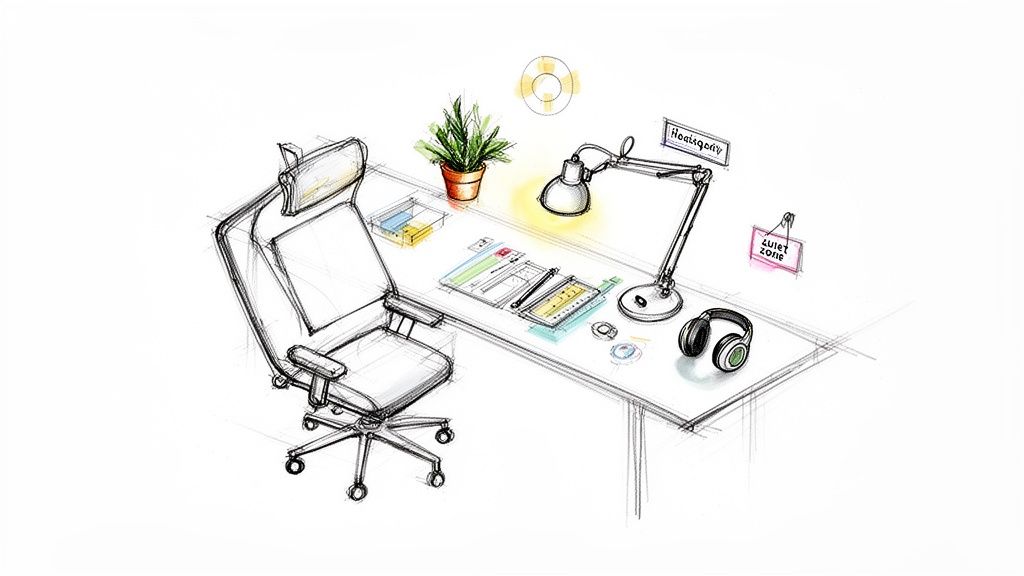
This approach is championed by leaders in workplace wellness like the WELL Building Standard and ergonomic pioneers like Herman Miller. Major companies from Google to Microsoft integrate biophilic design (natural elements) and dedicated quiet zones, recognizing that a well-designed environment is one of the most effective workplace stress management techniques for boosting productivity and well-being.
How to Optimize Your Workspace
Small, deliberate changes can have a significant impact on your daily stress levels.
- Audit Your Sensory Inputs: Assess your space. Is the lighting too harsh? Is it too noisy? Simple fixes like a desk lamp with warm light, a small plant, or noise-canceling headphones can instantly lower stress.
- Declutter Deliberately: A cluttered desk creates a cluttered mind. Spend five minutes at the end of each day clearing your workspace, leaving only the essentials for tomorrow. This creates a sense of closure and a fresh start.
- Personalize with Purpose: Add items that evoke calm and joy, such as a favorite photo or a small piece of art. Avoid overwhelming your space; choose one or two meaningful objects.
To make your optimized space a true retreat, designate a small area as a "micro-ritual" zone. Keep your Mono Moment monochrome coloring book and our three-brush pen set here, creating an inviting, screen-free station for your 15-minute breaks. This transforms your desk from a place of work into a hub for focus and restorative calm.
8. Sleep Hygiene and Recovery
Sleep is your body's non-negotiable recovery system and a cornerstone of effective stress management. When you're sleep-deprived, your brain’s emotional regulation centers are impaired, making you more susceptible to anxiety, catastrophic thinking, and burnout. Prioritizing quality sleep directly bolsters your resilience, allowing you to handle workplace pressures with a clearer, more balanced mind. It's the ultimate reset button for your nervous system.
This fundamental principle is championed by renowned sleep scientist Matthew Walker and organizations like the National Sleep Foundation. Leading tech companies, recognizing the link between rest and performance, are even integrating sleep-tracking technologies like Oura Ring and WHOOP into their corporate wellness programs, proving that good sleep is good business. Better sleep is a proactive, not reactive, tool in your arsenal of workplace stress management techniques.
How to Practice Sleep Hygiene at Work
Improving your sleep starts long before you get into bed. Small, consistent changes to your daily and evening routines can have a profound impact.
- Establish a Strict Schedule: Go to bed and wake up at the same time every day, even on weekends. This consistency regulates your body's internal clock, or circadian rhythm, improving sleep quality.
- Create a Screen-Free Wind-Down: For 30 minutes before bed, put all screens away. The blue light suppresses melatonin production, a hormone that signals your brain it's time to sleep.
- Dim the Lights: Lower the lights in your home one to two hours before bedtime to naturally encourage melatonin release and prepare your body for rest.
To create the perfect screen-free wind-down ritual, pair a cup of herbal tea with the Mono Moment monochrome coloring book. The simple, structured patterns require no creative decision-making, helping to quiet a racing mind and ease you into a state of deep relaxation, priming you for restorative sleep. For more ideas, explore our guide to building the perfect bedtime routine for better sleep on mono-moment.com.
9. Nutrition and Hydration
What you eat directly fuels your brain and body, profoundly influencing your ability to handle stress. Proper nutrition and hydration regulate blood sugar, support neurotransmitter production, and reduce inflammation, all of which are critical for emotional stability. When you're deficient in key nutrients like B vitamins or magnesium, or dehydrated, your body's stress response system is easily triggered, making you more susceptible to anxiety and cognitive fog.
This biological approach to mental wellness is championed by leaders in nutritional psychiatry like Dr. Uma Naidoo and neuroscientists like Dr. Andrew Huberman. Companies are catching on, with corporate wellness programs now featuring nutrition coaching and hydration stations as core components of their workplace stress management techniques, recognizing that a well-nourished employee is a resilient one.
How to Fuel Your Body to Fight Stress
Small, consistent dietary choices can create a significant shift in your mental clarity and mood.
- Stabilize Blood Sugar: Eat regular, balanced meals containing protein, healthy fats, and complex carbs to prevent the energy crashes that amplify anxiety. Avoid relying on sugary snacks and excessive caffeine, which create vicious cycles of spikes and slumps.
- Hydrate for Clarity: Keep a water bottle at your desk and sip consistently throughout the day. Even mild dehydration impairs cognitive function and mood regulation. For a calming alternative, switch an afternoon coffee for herbal tea like chamomile or lavender.
- Incorporate Calming Nutrients: Add magnesium-rich foods like dark leafy greens, nuts, and seeds to your diet. Magnesium is known as nature’s relaxant and helps regulate the nervous system.
To create a powerful destressing ritual, pair your calming herbal tea with a screen-free activity. Sipping on your tea while engaging in 15 minutes of coloring in a Mono Moment monochrome coloring book combines the physiological benefits of hydration with a mindful, tactile practice, helping to soothe your nervous system and reset your focus.
10. Journaling and Expressive Writing
Journaling is the practice of externalizing your thoughts and emotions onto paper, which is a powerful way to manage workplace stress. This technique, also known as expressive writing, interrupts the brain's cycle of anxious rumination by engaging its language-processing centers, effectively reducing activity in the amygdala, the brain's fear center. For overthinkers, this provides a structured way to confront and organize chaotic thoughts, preventing them from spiraling out of control.
This method isn’t just about diary-keeping; it's a cognitive tool supported by decades of research from pioneers like James Pennebaker. Leading companies and mental health professionals recommend structured journaling as a core component of workplace stress management techniques because it fosters self-awareness, clarifies priorities, and provides a tangible release for pent-up emotional pressure.
How to Practice Expressive Writing at Work
You don’t need to be a great writer; you just need to be honest with yourself for a few minutes.
- Use Structured Prompts: If you’re unsure where to start, use a simple framework. Ask yourself: “What am I worried about right now? What is the evidence for and against this worry?” This turns anxious thoughts into a problem-solving exercise.
- Try a "Worry Dump": Dedicate 10-15 minutes in the morning to write down everything causing you stress. Getting it all out prevents these thoughts from hijacking your focus throughout the day.
- Use Digital Tools: Apps like Day One, Journey, and Penzu offer password-protected spaces to journal anywhere, with helpful features like reminders and structured templates.
To complete this mental decluttering, follow your journaling session with a focused, creative activity. Spending 15 minutes with a Mono Moment monochrome coloring book provides the perfect cognitive shift, moving your mind from analytical processing to a state of calm, creative flow. This combination is a powerful ritual for managing stress.
10-Technique Comparison: Workplace Stress Management
| Item | Implementation Complexity 🔄 | Resources & Time ⚡ | Expected Outcomes ⭐📊 | Ideal Use Cases 💡 | Key Advantages ⭐ |
|---|---|---|---|---|---|
| Mindfulness Meditation and Focused Breathing | 🔄 Low — simple technique; requires daily discipline | ⚡ 5–30 min/day; no equipment | ⭐⭐⭐⭐📊 Reduces cortisol/amygdala activation; improves emotional regulation | 💡 Quick desk breaks, pre-meeting calm, pairing with creative tasks | ⭐ Accessible, scalable, strong research support |
| Creative Mindfulness: Structured Coloring and Art Therapy | 🔄 Low — minimal skill; requires Mono Moment book and pens | ⚡ 15–30 min sessions; coloring book + pen/marker | ⭐⭐⭐📊 Immediate calming; reduces perfectionism and rumination (activity-specific) | 💡 Transition rituals, non-digital breaks, short creative resets | ⭐ Decision-free Mono Moment design reduces choice anxiety; tactile completion |
| Movement and Physical Exercise | 🔄 Medium — scalable but needs form/motivation | ⚡ 2–30+ min; basic exercises require no equipment | ⭐⭐⭐⭐📊 Fast cortisol reduction; improves sleep, focus, resilience | 💡 Micro-breaks, energy resets, group wellness or walking meetings | ⭐ Rapid physiological relief; broad physical & mental benefits |
| Time Management and Boundary Setting | 🔄 Medium — planning, communication, habit change | ⚡ Initial setup time; ongoing calendar maintenance | ⭐⭐⭐⭐📊 Lowers chronic stress; increases focus and predictable recovery time | 💡 Preventing overload, deep work blocks, protecting personal time | ⭐ Long-term stress prevention; increases sense of control |
| Social Connection and Peer Support | 🔄 Medium — trust-building and facilitation needed | ⚡ Ongoing time investment; integrates into work routines | ⭐⭐⭐📊 Reduces isolation; improves coping and accountability (variable by group) | 💡 Mentorship, ERGs, team wellness activities, peer check-ins | ⭐ Emotional validation and practical problem‑solving |
| Cognitive Behavioral Techniques and Thought Reframing | 🔄 High — requires skill development or professional guidance | ⚡ Regular practice; possible therapist/coaching sessions | ⭐⭐⭐⭐⭐📊 Targets root cognitive causes; durable anxiety reduction over time | 💡 Persistent anxiety, therapy, structured self-help programs | ⭐ Long-term resilience through evidence-based cognitive skills |
| Workplace Environment Optimization | 🔄 Medium — audit + physical changes; may need budget/approval | ⚡ Variable cost/time; one-time and ongoing tweaks | ⭐⭐⭐⭐📊 Passive stress reduction; improves productivity and comfort | 💡 Open offices, noise issues, ergonomics and sensory design needs | ⭐ Passive benefits that reduce cognitive load without active effort |
| Sleep Hygiene and Recovery | 🔄 Medium — consistent routines and environment control required | ⚡ 30–120 min nightly wind-down; low-cost behavioral changes | ⭐⭐⭐⭐⭐📊 Strong restoration effects; reduces amygdala reactivity and vulnerability | 💡 Chronic fatigue, high reactivity, those needing recovery-focused practices | ⭐ High-impact foundational intervention that boosts other techniques |
| Nutrition and Hydration | 🔄 Medium — planning, education, and habit changes | ⚡ Daily ongoing effort; affordable options possible | ⭐⭐⭐📊 Stabilizes mood/energy; supports neurotransmitter function and resilience | 💡 Stress with energy crashes, long-term wellbeing and performance | ⭐ Addresses biological foundations; synergizes with all other practices |
| Journaling and Expressive Writing | 🔄 Low — simple method but requires honesty and structure | ⚡ 10–15 min sessions; pen & paper or app | ⭐⭐⭐⭐📊 Externalizes rumination; clarifies thoughts and reduces emotional intensity | 💡 Pre/post creative work, morning worry clearing, tracking progress | ⭐ Affordable, portable, evidence-backed method to offload worry |
Your Next Step: From Knowing to Doing
You have just explored a comprehensive toolkit of ten powerful workplace stress management techniques. From the immediate calm of focused breathing to the long-term benefits of sleep hygiene and cognitive reframing, each strategy offers a unique pathway to reclaiming your equilibrium. We've navigated the science behind mindfulness, the practicality of boundary setting, and the necessity of physical movement, all with a single goal: to empower you to transform stress from an overwhelming force into a manageable challenge.
The crucial insight is that knowledge alone doesn't alleviate pressure. True change begins when you bridge the gap between knowing what to do and actually doing it. The most common hurdle isn't a lack of options but rather a surplus of them, leading to decision fatigue when you're already feeling depleted.
The Power of a Single, Simple Step
Rather than attempting to implement all ten techniques at once, the most effective approach is to select just one that feels both appealing and achievable right now. For the busy professional, the overthinker, or anyone craving a genuine mental break, the simplest starting point is often the one that demands the least cognitive effort. This is where creative mindfulness, particularly the Mono Moment monochrome coloring book, truly excels. It provides a tangible, tactile anchor in the present moment, offering a structured escape from the relentless cycle of thoughts about deadlines, emails, and to-do lists.
This isn't just about distraction; it's about intentional disengagement. It's a micro-ritual that signals to your brain that the workday is over, creating a vital psychological boundary between professional demands and personal restoration. By engaging your hands and senses in a simple, repetitive task, you activate the "rest and digest" part of your nervous system, effectively lowering cortisol levels and quieting the mental noise that fuels anxiety.
Creating Your Decision-Free Sanctuary
Imagine ending your workday not by scrolling through your phone or replaying stressful conversations, but with a deliberate 20-minute ritual that requires zero complex decisions. This is the core philosophy behind the Mono Moment monochrome coloring practice. We've intentionally stripped away the overwhelming choice of colors, a common source of creative paralysis, to provide a purely meditative experience.
Your only task is to fill a space with one of three shades of grey using our three-brush pen set, allowing you to focus entirely on the physical sensation of the pen meeting paper. This intentional simplicity makes it one of the most accessible and sustainable workplace stress management techniques you can adopt. It’s a guaranteed pocket of peace in an otherwise chaotic day, a tool to help you process, decompress, and transition gracefully into your evening. Don’t just manage your stress-transform your relationship with it.
Ready to turn insight into action with a simple, beautiful ritual? Explore the Mono Moment collection of monochrome coloring books and our curated three-brush pen set at Mono Moment and discover how a 20-minute, decision-free practice can become your most powerful tool for workplace wellness.

The One Color Coloring Book
A single-pen, decision-free coloring book on 160 gsm cream paper — engineered for the wind-down ritual described above.
 Pair it with the 3 Dual Tip Brush Pens — $5 instead of $9.95 in the Book + Pens bundle.